Free Tools
Tooth Numbering Chart
Every tooth has a number so it can be named exactly in a chart, an X-ray report, or a treatment plan. In the United States, adult teeth are numbered 1 to 32 in the Universal system. Most other countries use the two-digit FDI system, and some clinicians still use Palmer notation. Tap any tooth below to see its name and its number in all three systems.
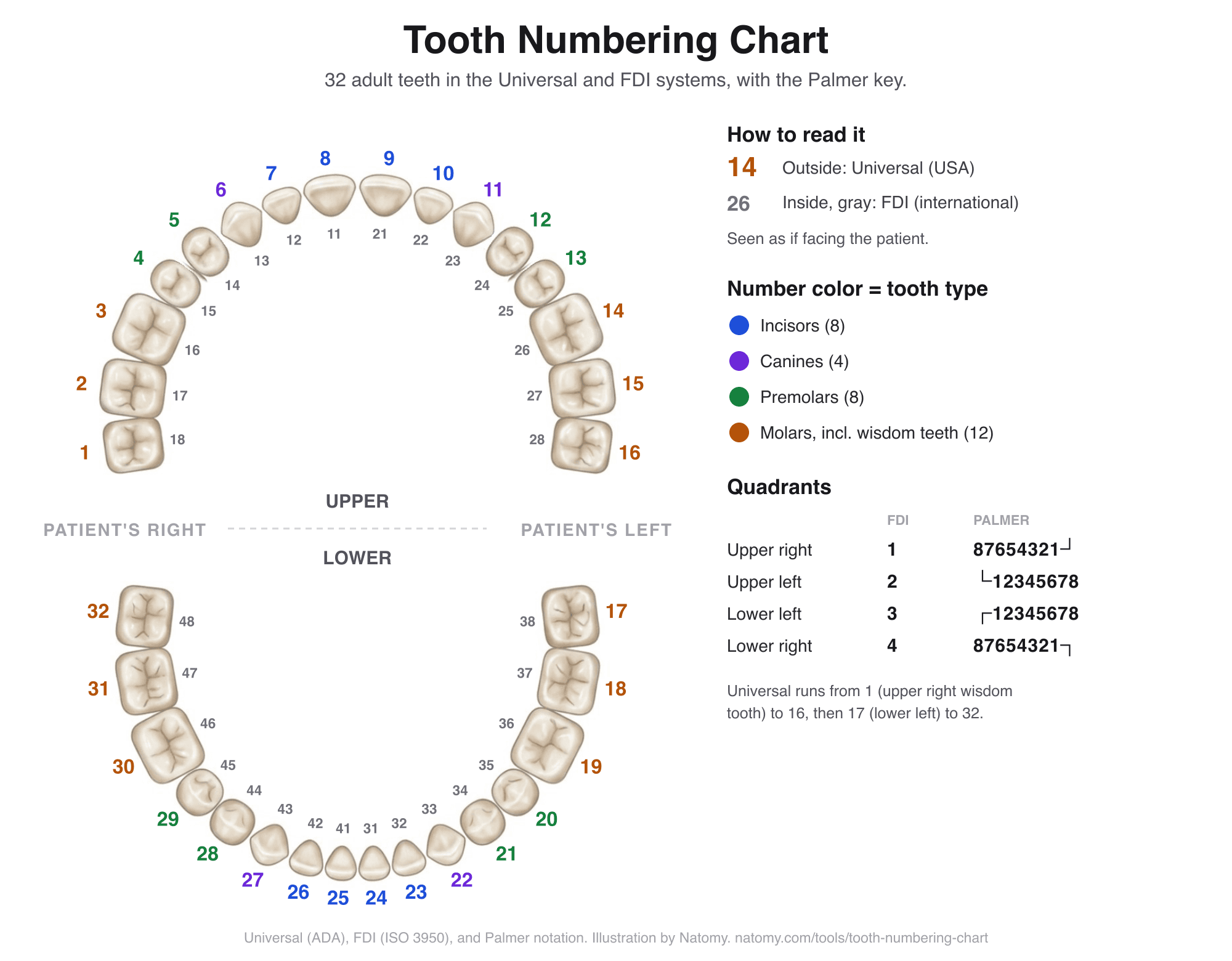
Download the adult chart (PNG) or the baby teeth chart (PNG) for a clinic, a case file, or teaching.
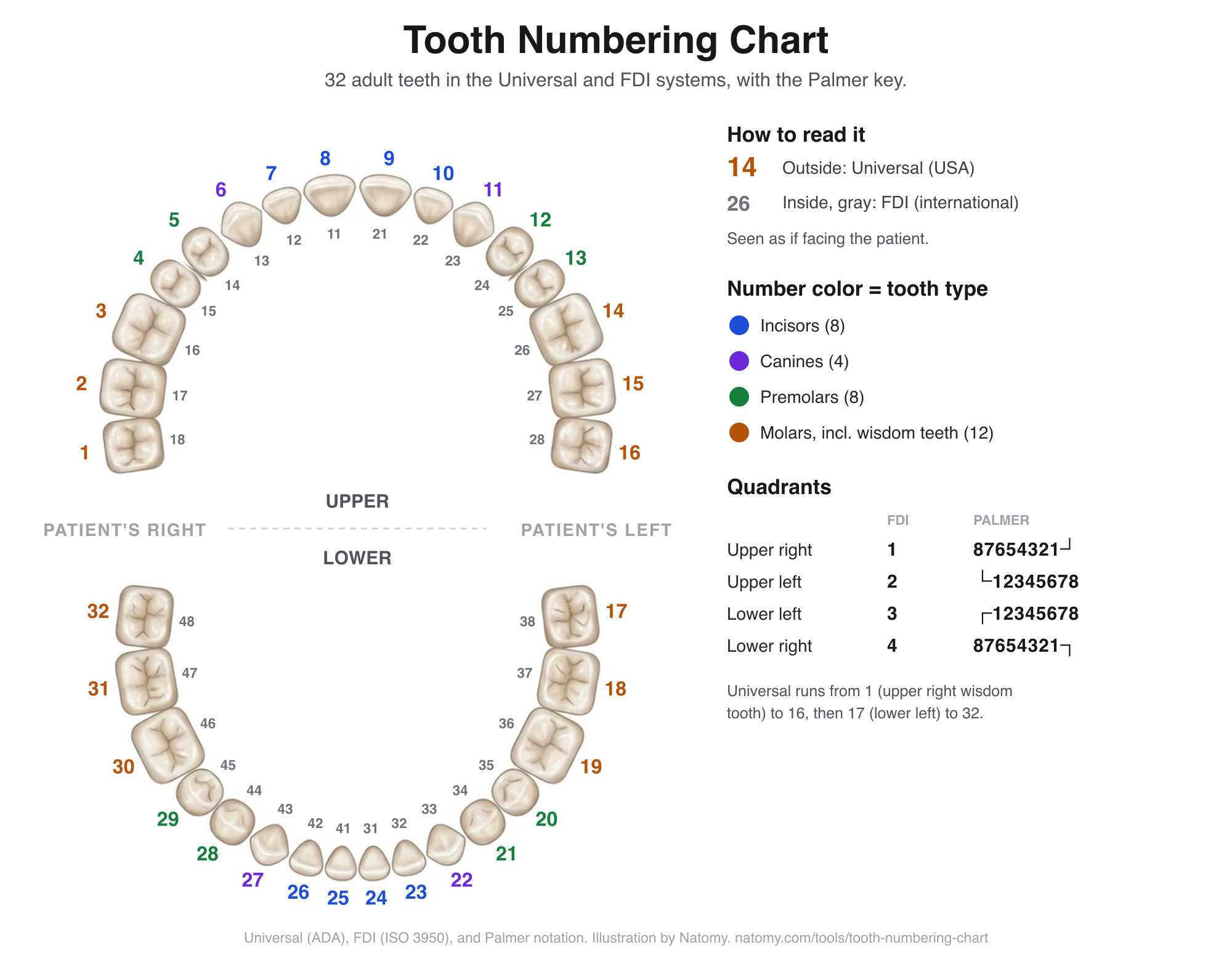
Find a tooth and convert its number
Switch between adult and baby teeth and between numbering systems. Tap a tooth, or type a number from a record to see which tooth it is.
The three tooth numbering systems
Universal system (United States)
The Universal system, the system recognized by the American Dental Association and used by most US dentists, gives each adult tooth a number from 1 to 32. Counting starts at the upper right third molar (wisdom tooth), runs along the upper jaw to the upper left third molar (16), drops to the lower left third molar (17), and runs back along the lower jaw to the lower right third molar (32). Baby teeth use capital letters A to T in the same order.
FDI system (international, ISO 3950)
The FDI World Dental Federation system uses two digits. The first is the quadrant: 1 upper right, 2 upper left, 3 lower left, and 4 lower right (5 to 8 for baby teeth, in the same order). The second is the tooth, counting from 1 at the midline to 8 at the back. So 11 is the upper right central incisor, 36 the lower left first molar, and 48 the lower right wisdom tooth. Say each digit separately: "three six", not "thirty-six".
Palmer notation
Palmer notation, also called the Zsigmondy-Palmer system, numbers the teeth in each quadrant 1 to 8 from the midline (A to E for baby teeth) and draws a corner bracket that shows the quadrant, as if the lines were the midline and the biting plane. 6┘ is the upper right first molar and ┌3 the lower left canine. Because the symbols are hard to type, records often write them as UR6 or LL3.
Adult teeth numbers: all 32 teeth
| Universal | FDI | Palmer | Tooth | Comes in |
|---|---|---|---|---|
| 1 | 18 | 8┘ (UR8) | Upper right third molar (wisdom tooth) | 17 to 21 years |
| 2 | 17 | 7┘ (UR7) | Upper right second molar | 12 to 13 years |
| 3 | 16 | 6┘ (UR6) | Upper right first molar | 6 to 7 years |
| 4 | 15 | 5┘ (UR5) | Upper right second premolar (second bicuspid) | 10 to 12 years |
| 5 | 14 | 4┘ (UR4) | Upper right first premolar (first bicuspid) | 10 to 11 years |
| 6 | 13 | 3┘ (UR3) | Upper right canine (cuspid) | 11 to 12 years |
| 7 | 12 | 2┘ (UR2) | Upper right lateral incisor | 8 to 9 years |
| 8 | 11 | 1┘ (UR1) | Upper right central incisor | 7 to 8 years |
| 9 | 21 | └1 (UL1) | Upper left central incisor | 7 to 8 years |
| 10 | 22 | └2 (UL2) | Upper left lateral incisor | 8 to 9 years |
| 11 | 23 | └3 (UL3) | Upper left canine (cuspid) | 11 to 12 years |
| 12 | 24 | └4 (UL4) | Upper left first premolar (first bicuspid) | 10 to 11 years |
| 13 | 25 | └5 (UL5) | Upper left second premolar (second bicuspid) | 10 to 12 years |
| 14 | 26 | └6 (UL6) | Upper left first molar | 6 to 7 years |
| 15 | 27 | └7 (UL7) | Upper left second molar | 12 to 13 years |
| 16 | 28 | └8 (UL8) | Upper left third molar (wisdom tooth) | 17 to 21 years |
| 17 | 38 | ┌8 (LL8) | Lower left third molar (wisdom tooth) | 17 to 21 years |
| 18 | 37 | ┌7 (LL7) | Lower left second molar | 11 to 13 years |
| 19 | 36 | ┌6 (LL6) | Lower left first molar | 6 to 7 years |
| 20 | 35 | ┌5 (LL5) | Lower left second premolar (second bicuspid) | 11 to 12 years |
| 21 | 34 | ┌4 (LL4) | Lower left first premolar (first bicuspid) | 10 to 12 years |
| 22 | 33 | ┌3 (LL3) | Lower left canine (cuspid) | 9 to 10 years |
| 23 | 32 | ┌2 (LL2) | Lower left lateral incisor | 7 to 8 years |
| 24 | 31 | ┌1 (LL1) | Lower left central incisor | 6 to 7 years |
| 25 | 41 | 1┐ (LR1) | Lower right central incisor | 6 to 7 years |
| 26 | 42 | 2┐ (LR2) | Lower right lateral incisor | 7 to 8 years |
| 27 | 43 | 3┐ (LR3) | Lower right canine (cuspid) | 9 to 10 years |
| 28 | 44 | 4┐ (LR4) | Lower right first premolar (first bicuspid) | 10 to 12 years |
| 29 | 45 | 5┐ (LR5) | Lower right second premolar (second bicuspid) | 11 to 12 years |
| 30 | 46 | 6┐ (LR6) | Lower right first molar | 6 to 7 years |
| 31 | 47 | 7┐ (LR7) | Lower right second molar | 11 to 13 years |
| 32 | 48 | 8┐ (LR8) | Lower right third molar (wisdom tooth) | 17 to 21 years |
Tooth types
- Incisors (8): the flat front teeth that cut food. Universal 7 to 10 and 23 to 26.
- Canines (4): the pointed corner teeth, also called cuspids or eye teeth. Universal 6, 11, 22, and 27. The upper canines have the longest roots of any teeth.
- Premolars (8): also called bicuspids, between the canines and molars. Universal 4, 5, 12, 13, 20, 21, 28, and 29. Children have no premolars; they replace the baby molars.
- Molars (12): the broad back teeth that grind food, including the four wisdom teeth (third molars).
Reading a dental chart: the patient's right is on your left
Dental charts are drawn as if you are facing the patient. The patient's right side appears on the left of the chart, which is why Universal tooth 1 is in the top left corner. Dental X-rays are usually mounted the same way. Mixing up sides is a common source of charting errors, so check the side labels on every chart and film.
Baby teeth numbering chart
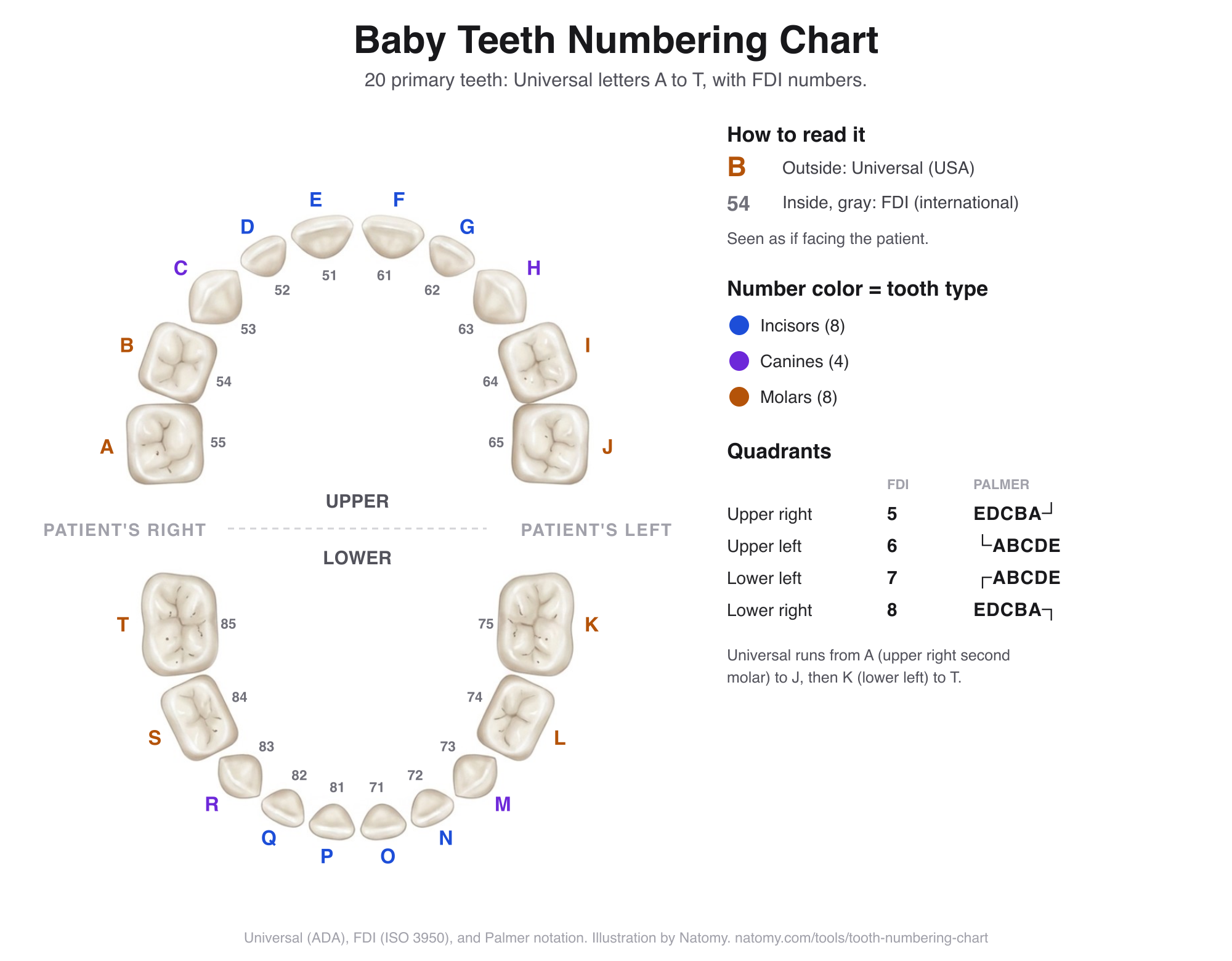
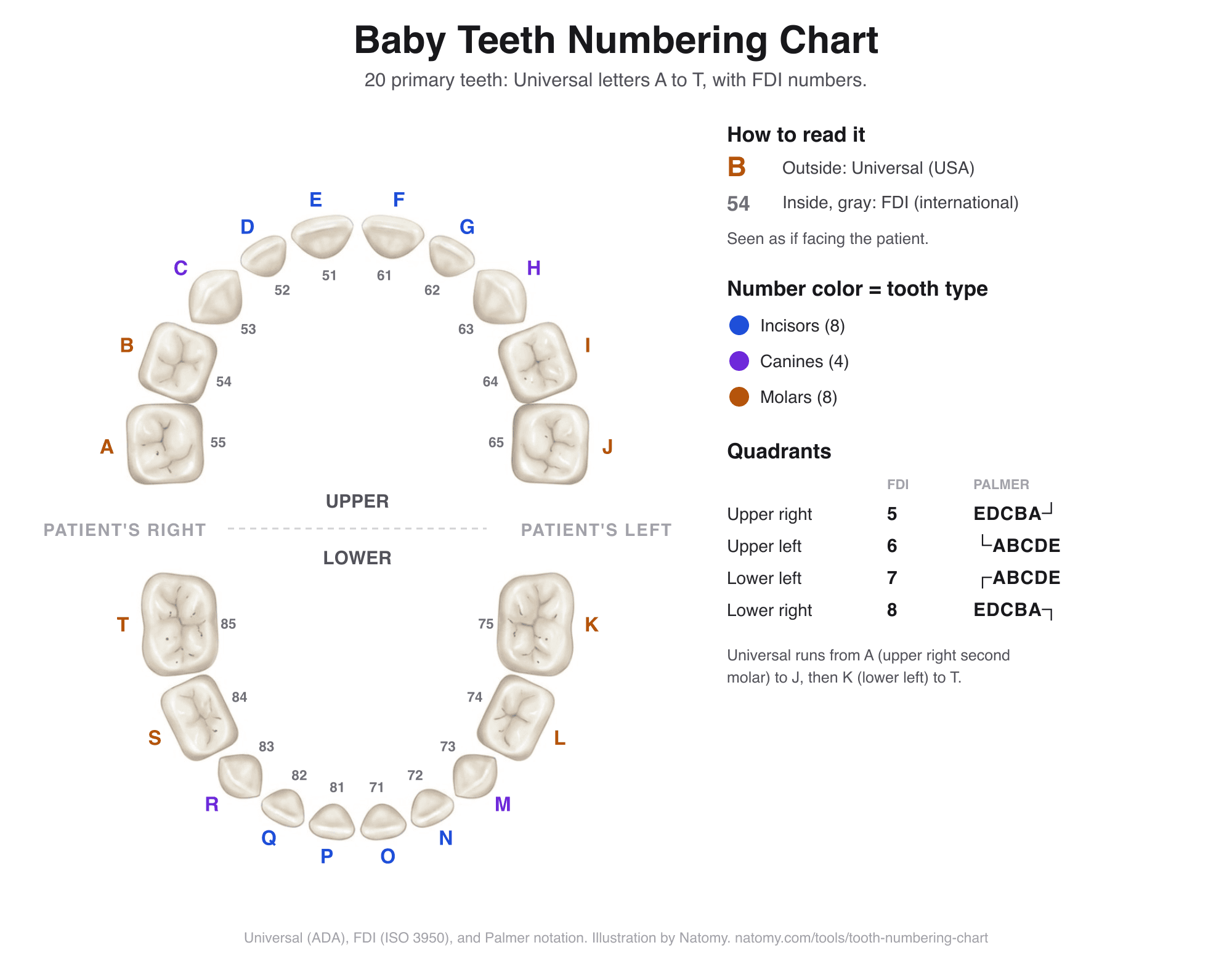
Children have 20 baby (primary) teeth: 8 incisors, 4 canines, and 8 molars. The Universal system labels them A to T, and the FDI system numbers them 51 to 85. Baby teeth usually start coming in at around 6 months, and all 20 are usually in by about age 3. They start falling out at about 6, and the last ones are usually gone by about 12.
| Universal | FDI | Palmer | Tooth | Comes in | Falls out |
|---|---|---|---|---|---|
| A | 55 | E┘ (URE) | Upper right second molar | 25 to 33 months | 10 to 12 years |
| B | 54 | D┘ (URD) | Upper right first molar | 13 to 19 months | 9 to 11 years |
| C | 53 | C┘ (URC) | Upper right canine (cuspid) | 16 to 22 months | 10 to 12 years |
| D | 52 | B┘ (URB) | Upper right lateral incisor | 9 to 13 months | 7 to 8 years |
| E | 51 | A┘ (URA) | Upper right central incisor | 8 to 12 months | 6 to 7 years |
| F | 61 | └A (ULA) | Upper left central incisor | 8 to 12 months | 6 to 7 years |
| G | 62 | └B (ULB) | Upper left lateral incisor | 9 to 13 months | 7 to 8 years |
| H | 63 | └C (ULC) | Upper left canine (cuspid) | 16 to 22 months | 10 to 12 years |
| I | 64 | └D (ULD) | Upper left first molar | 13 to 19 months | 9 to 11 years |
| J | 65 | └E (ULE) | Upper left second molar | 25 to 33 months | 10 to 12 years |
| K | 75 | ┌E (LLE) | Lower left second molar | 23 to 31 months | 10 to 12 years |
| L | 74 | ┌D (LLD) | Lower left first molar | 14 to 18 months | 9 to 11 years |
| M | 73 | ┌C (LLC) | Lower left canine (cuspid) | 17 to 23 months | 9 to 12 years |
| N | 72 | ┌B (LLB) | Lower left lateral incisor | 10 to 16 months | 7 to 8 years |
| O | 71 | ┌A (LLA) | Lower left central incisor | 6 to 10 months | 6 to 7 years |
| P | 81 | A┐ (LRA) | Lower right central incisor | 6 to 10 months | 6 to 7 years |
| Q | 82 | B┐ (LRB) | Lower right lateral incisor | 10 to 16 months | 7 to 8 years |
| R | 83 | C┐ (LRC) | Lower right canine (cuspid) | 17 to 23 months | 9 to 12 years |
| S | 84 | D┐ (LRD) | Lower right first molar | 14 to 18 months | 9 to 11 years |
| T | 85 | E┐ (LRE) | Lower right second molar | 23 to 31 months | 10 to 12 years |
When teeth come in
The ages in the tables are typical ranges, and many healthy children are a few months early or late. The first permanent teeth are usually the first molars and the lower central incisors, at about 6 to 7 years. Wisdom teeth, if they come in at all, usually appear between 17 and 21.
Tooth numbers in dental malpractice and injury cases
Tooth numbers carry a lot of weight in dental records. In malpractice cases, a common question is whether the tooth that was treated matches the tooth in the diagnosis, the X-rays, the consent form, and the treatment notes. Common causes of wrong-tooth extractions include a mixed-up number, a side reversed on a chart, and a referral written in a different numbering system.
Removal of lower wisdom teeth (Universal 17 and 32, FDI 38 and 48) carries a known risk of injury to the inferior alveolar and lingual nerves. Most of these injuries recover, but a small number cause lasting numbness of the lip, chin, or tongue. In personal injury cases, broken and knocked-out teeth after car crashes, falls, and assaults are documented tooth by tooth, and reviewers match those numbers against the emergency, imaging, and dental treatment records.
Illustrate dental and facial injuries
Natomy turns records, imaging, and prompts into clear, labeled medical illustrations of teeth, jaws, and facial injuries, such as tooth fractures, jaw fractures, and nerve injuries, for patient education and medical-legal exhibits. See examples in the Natomy atlas and our labeled skull diagrams.
Try Natomy TodayFAQ
How are teeth numbered?+
In the United States, the Universal system numbers adult teeth 1 to 32. Tooth 1 is the upper right wisdom tooth, the numbers run across the upper jaw to 16 (upper left wisdom tooth), drop to 17 (lower left wisdom tooth), and run back across the lower jaw to 32 (lower right wisdom tooth). Most other countries use the two-digit FDI system instead.
Which tooth is number 1?+
In the Universal system, tooth 1 is the upper right third molar (wisdom tooth). In the FDI system, there is no tooth 1: the upper right wisdom tooth is 18, and numbers start at 11, the upper right central incisor.
What numbers are the wisdom teeth?+
Universal: 1 (upper right), 16 (upper left), 17 (lower left), and 32 (lower right). FDI: 18, 28, 38, and 48. Some people never develop some or all of them.
What numbers are the front teeth?+
The two upper front teeth (central incisors) are 8 and 9 in the Universal system and 11 and 21 in the FDI system. The two lower front teeth are 24 and 25 (Universal) or 31 and 41 (FDI).
What is tooth number 30?+
In the Universal system, tooth 30 is the lower right first molar, the big back tooth that comes in around age 6. Its FDI number is 46. First molars are among the teeth most often filled and crowned.
What is tooth number 14?+
It depends on the system. In the Universal system, 14 is the upper left first molar. In the FDI system, 14 is the upper right first premolar (Universal tooth 5). This is why records should always say which system they use.
How many teeth do adults have?+
A full adult set is 32 teeth: 8 incisors, 4 canines, 8 premolars, and 12 molars, including the 4 wisdom teeth. Many adults have 28 because their wisdom teeth were removed or never formed.
How are baby teeth numbered?+
Children have 20 baby (primary) teeth. The Universal system labels them with letters A to T, starting at the upper right second molar. The FDI system uses quadrants 5 to 8, so baby teeth run from 51 to 85.
Do dentists in other countries use the same tooth numbers?+
Usually not. The Universal system is used mainly in the United States. Most other countries use the FDI system (ISO 3950), and the Palmer system is still used by some dentists and orthodontists, especially in the United Kingdom. When records cross borders or clinics, check which system was used.
Sources: American Dental Association, Universal tooth designation system and eruption charts (MouthHealthy). International Organization for Standardization. ISO 3950:2016 Dentistry, Designation system for teeth and areas of the oral cavity. FDI World Dental Federation two-digit notation. Palmer C., 1870 and 1891, after Zsigmondy A., 1861 (as reviewed in Harris EF. Tooth-coding systems in the clinical dental setting. Dental Anthropology, 2005). Chart and illustrations by Natomy. For education and documentation only; always confirm a tooth against the clinical record and imaging.
Related free tools
Free Online DICOM Viewer (3D)
Open a CT or MRI DICOM folder in your browser and view it in 3D, with AI anatomy labeling. Nothing is uploaded.
Try it free
Interactive Dermatome Map
Tap the body to see each nerve root's skin area, test point, myotome, reflex, and disc level. Free printable chart.
Try it free
Myotome Chart and Motor Score
Tap a nerve root to see its key muscle, test position, and reflex. Grade strength 0 to 5 for the ISNCSCI motor score.
Try it free
Manual Muscle Testing Grades
MMT grading scale chart from 0 to 5 with plus and minus grades, and a grade finder that writes the note for you.
Try it free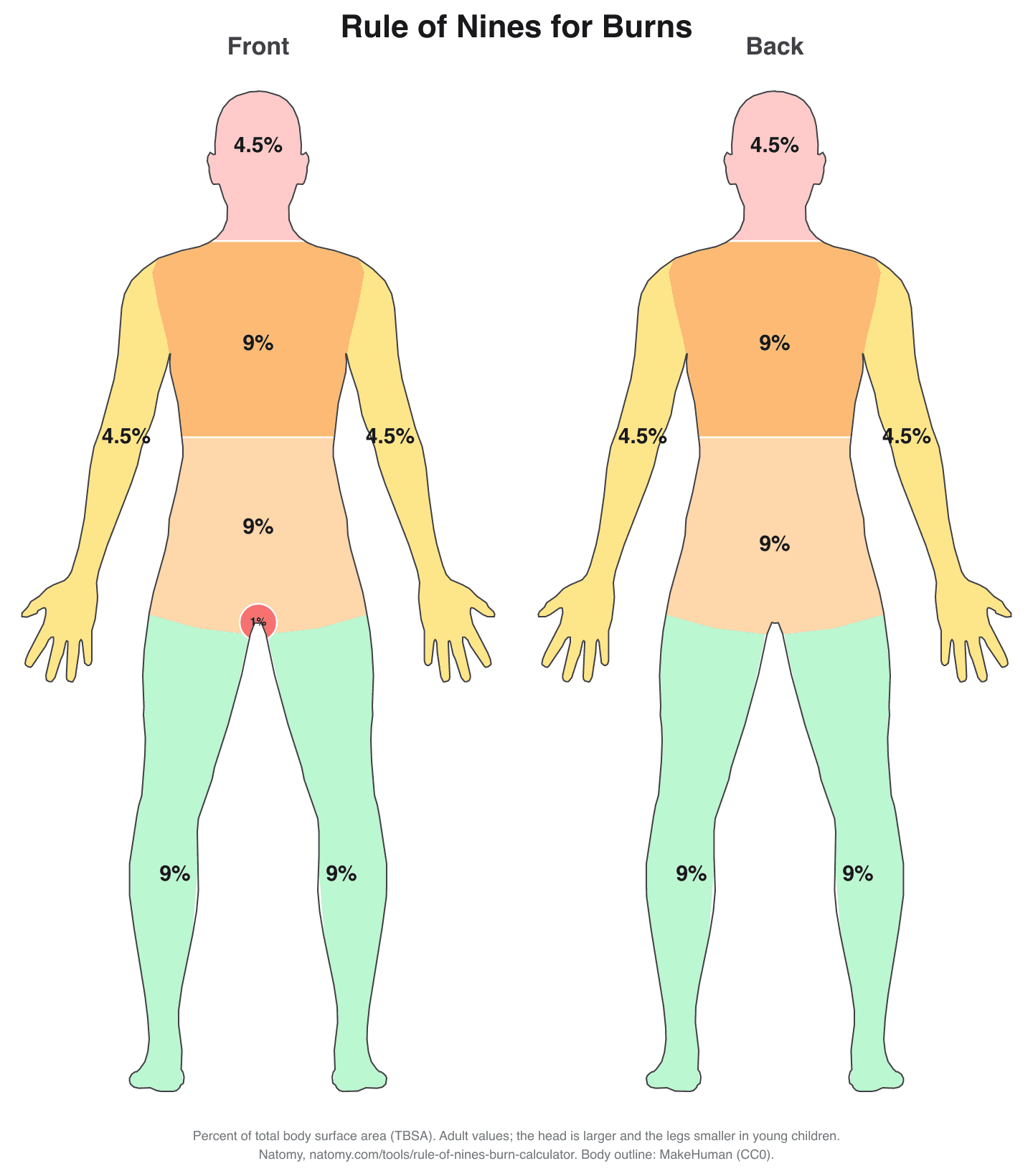
Rule of Nines Burn Calculator
Click the burned areas to get the total body surface area (TBSA), with the Parkland formula and a printable burn chart.
Try it free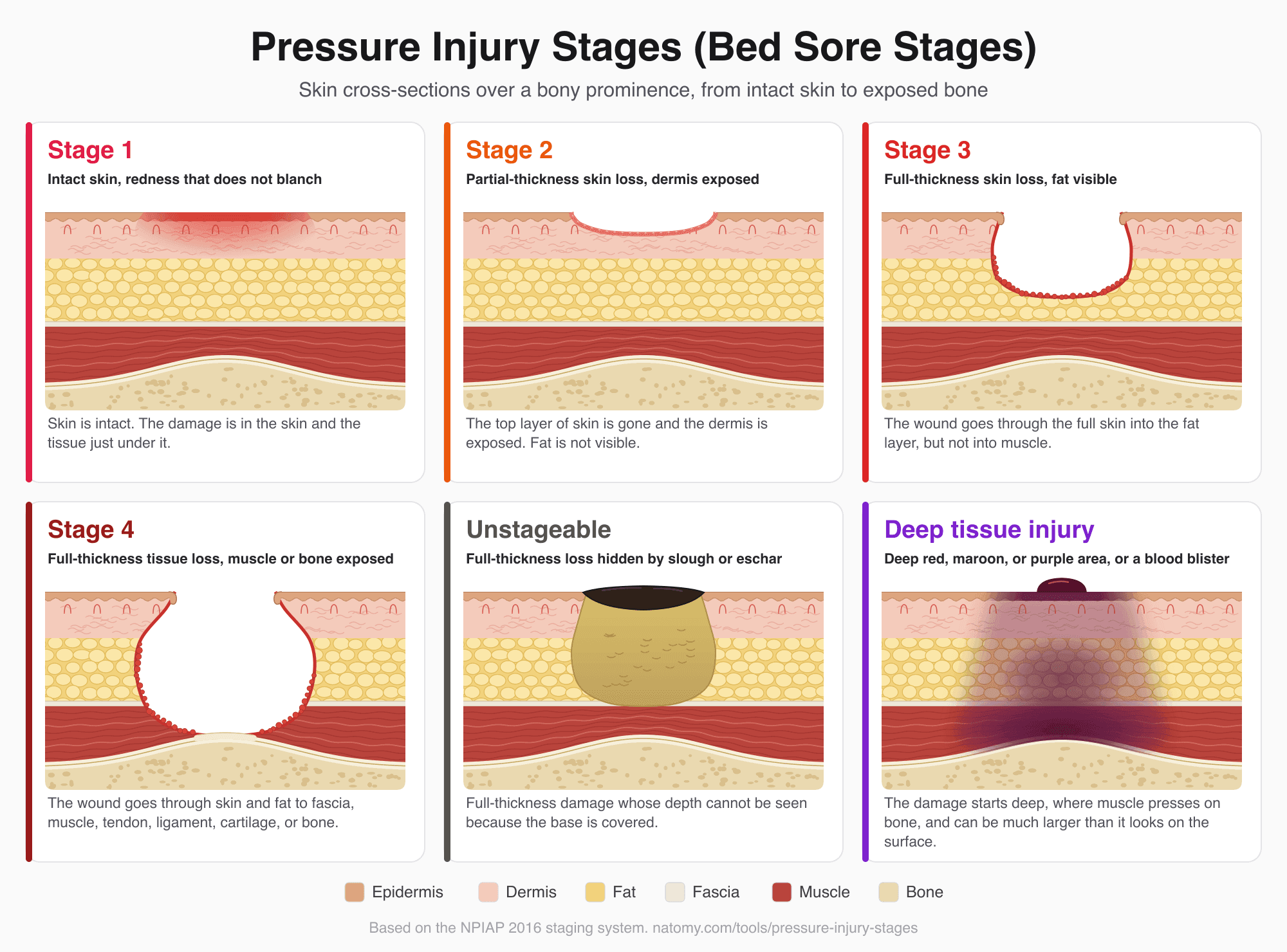
Pressure Injury (Bed Sore) Stages
Illustrated pressure ulcer stages chart, Stage 1 to 4, unstageable, and deep tissue injury, with a stage finder and wound note.
Try it free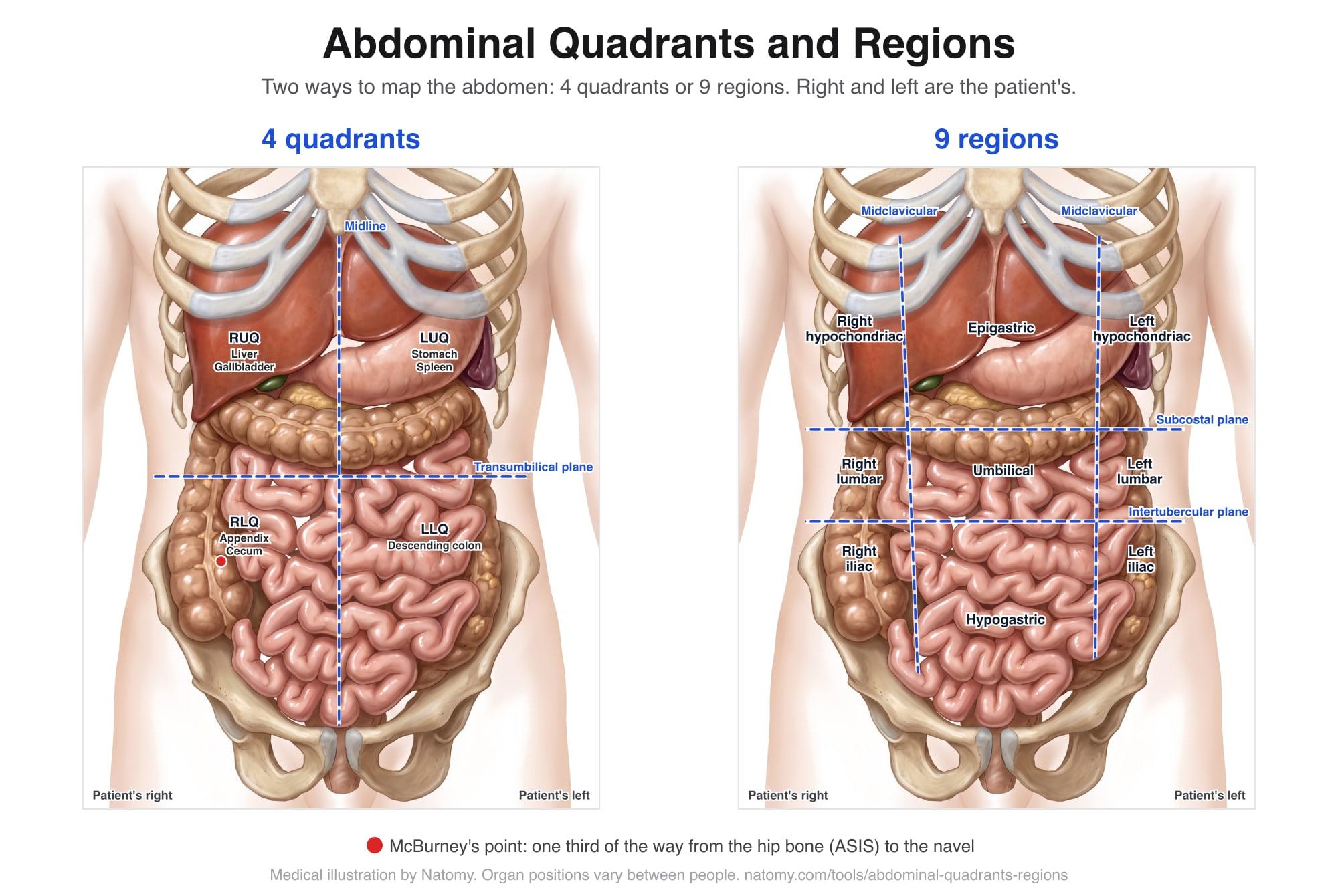
Abdominal Quadrants and 9 Regions
Tap an illustrated abdomen to see the organs in each quadrant or region and common causes of pain there. Free printable chart.
Try it free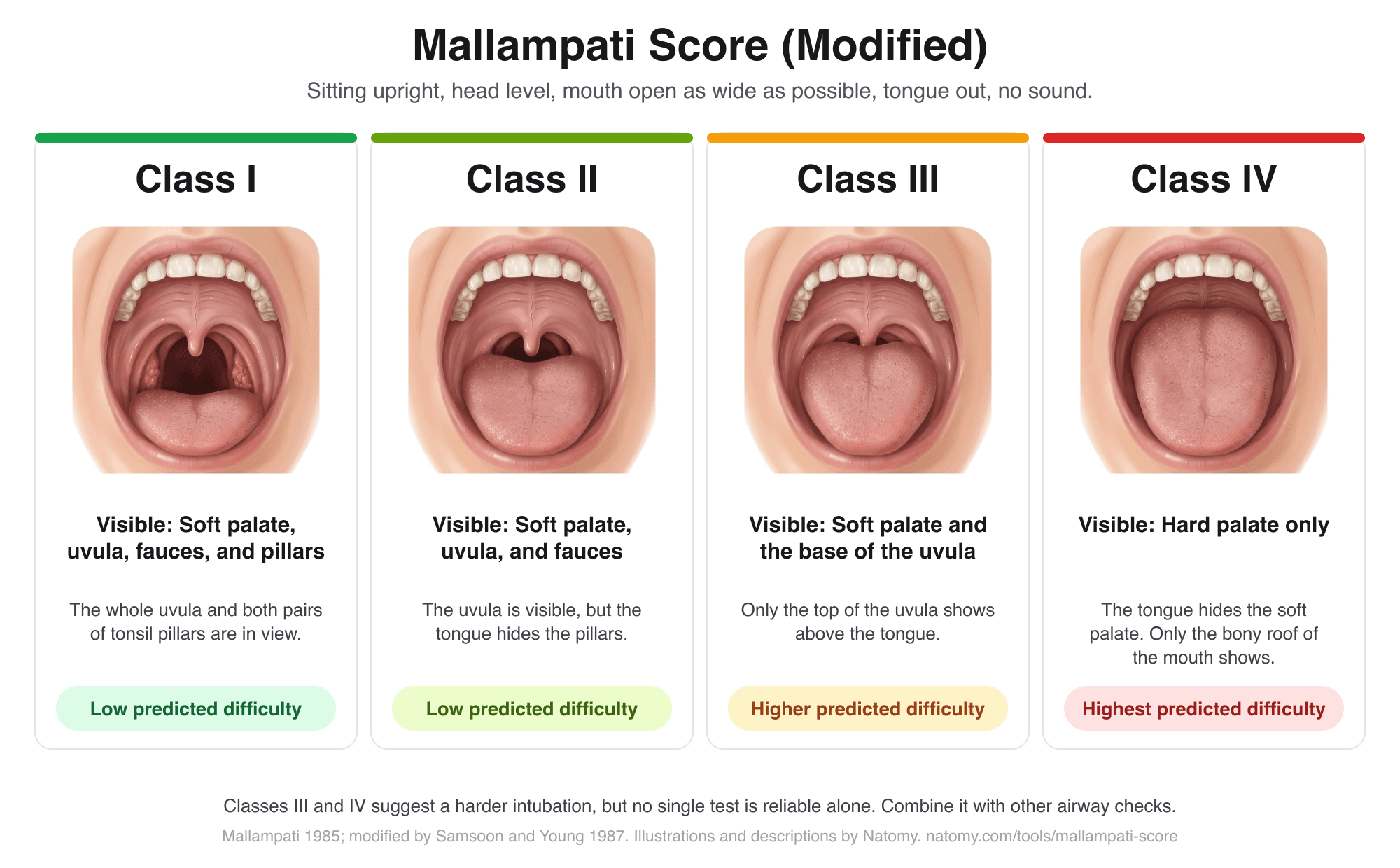
Mallampati Score Classifier
Match an open-mouth view to Mallampati classes I to IV with illustrated pictures, add other airway findings, and copy an airway note.
Try it free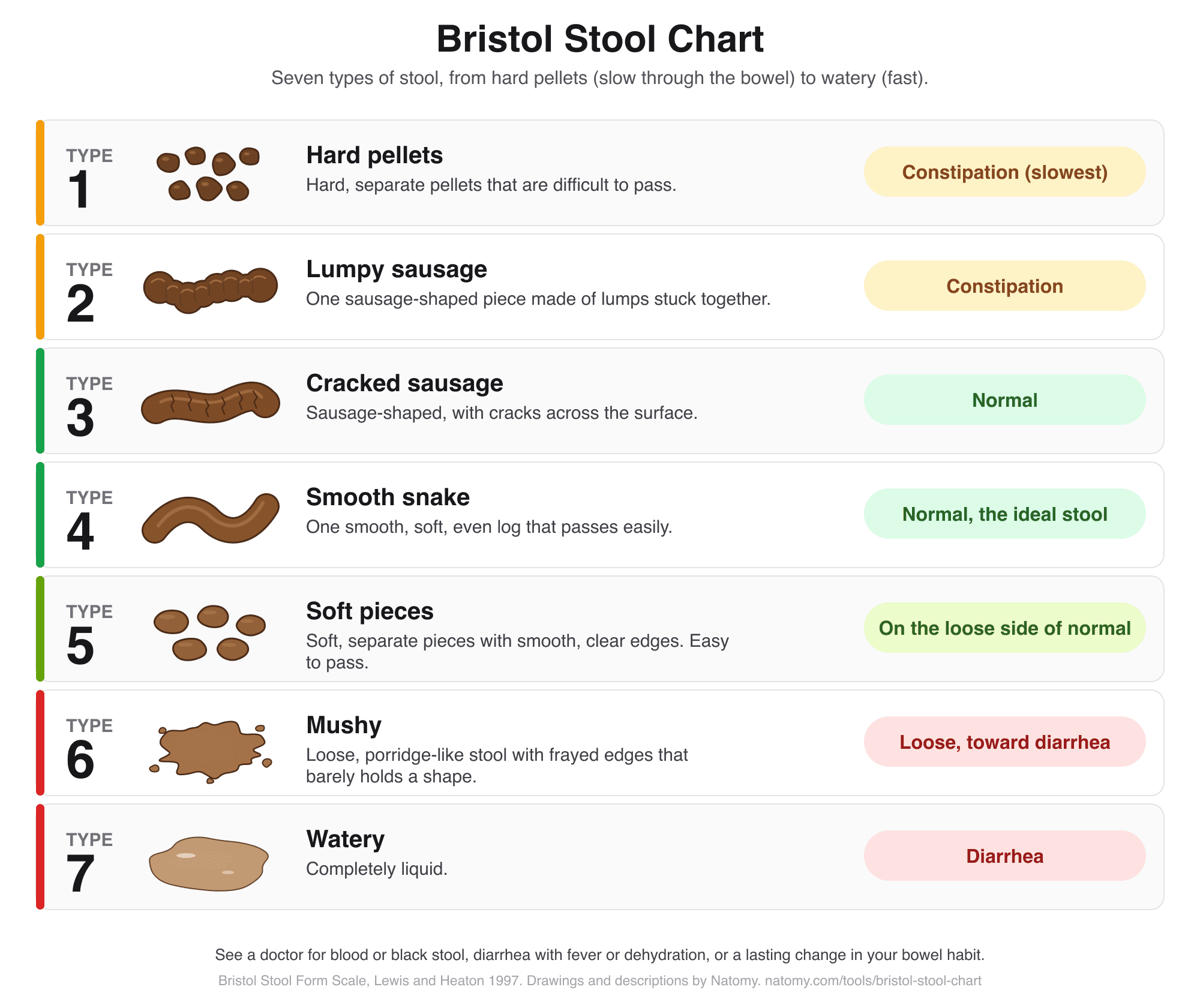
Bristol Stool Chart
Find your stool type from 1 to 7 on an illustrated chart, see what it means, and keep a simple bowel diary for your doctor.
Try it free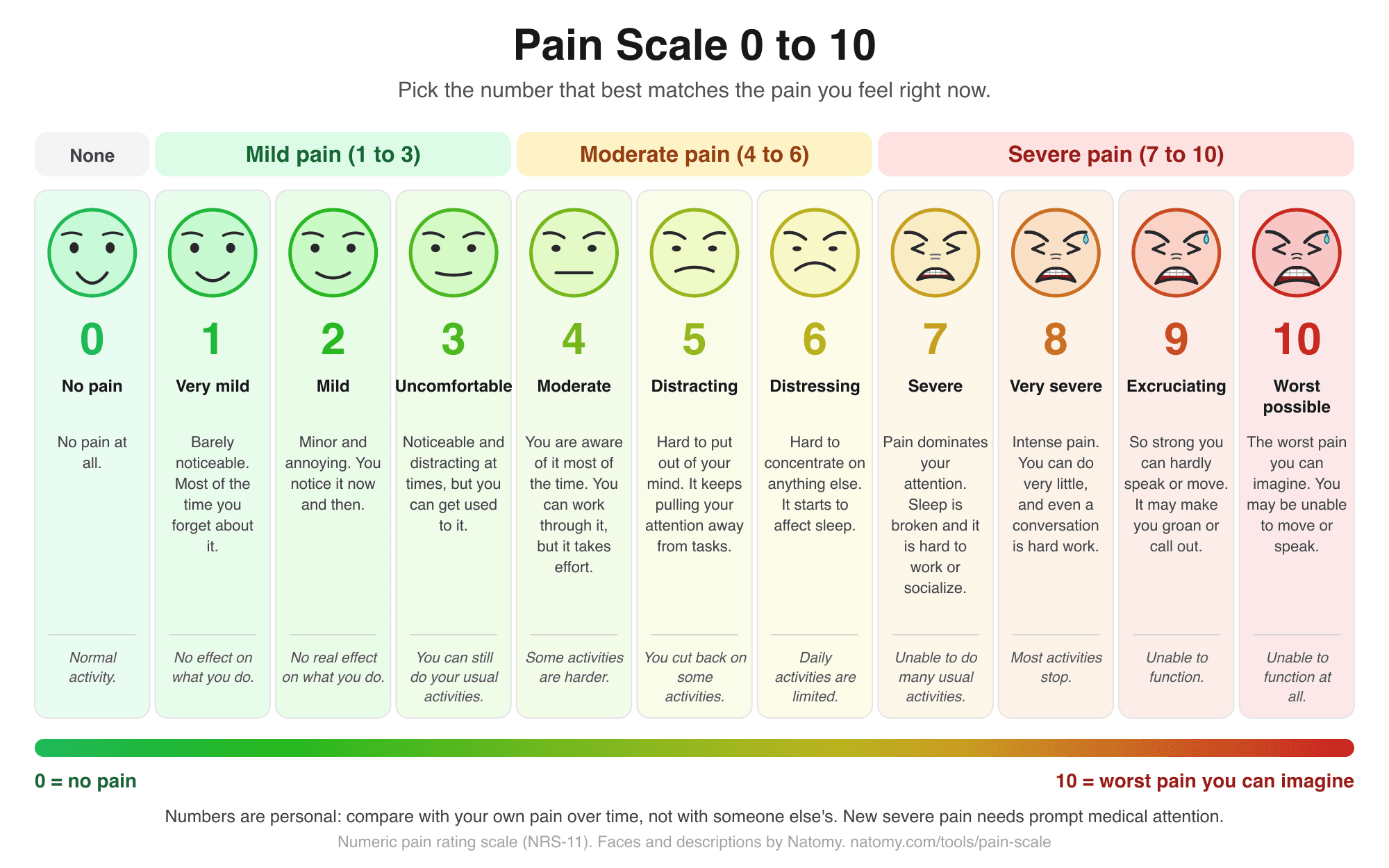
Pain Scale 0 to 10 Chart
Rate pain from 0 to 10 with drawn faces, see what mild, moderate, and severe mean, and copy a pain journal entry.
Try it free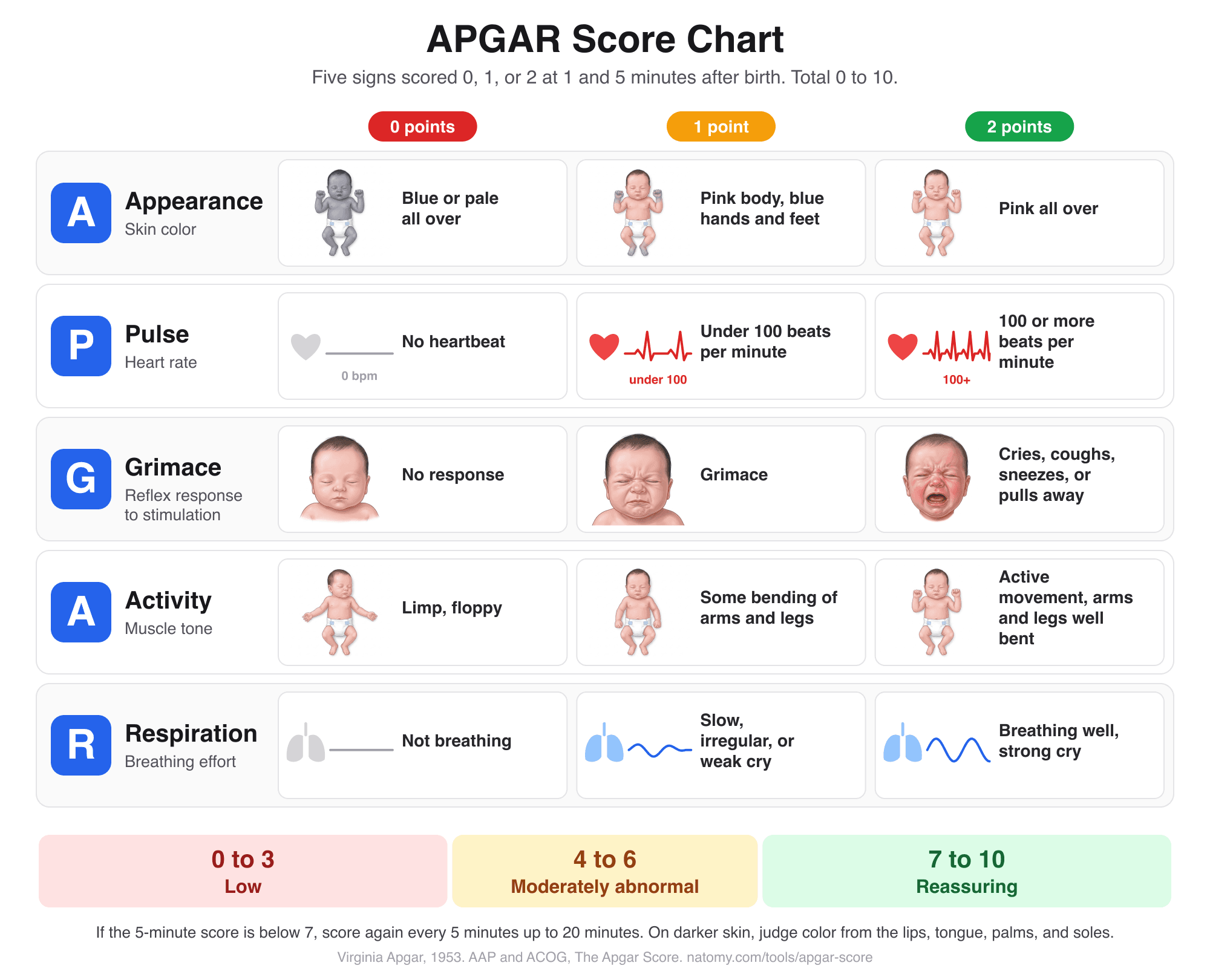
APGAR Score Chart and Calculator
Score the 5 newborn signs at 1, 5, and 10 minutes with an illustrated chart, what normal and low scores mean, and a note for the record.
Try it free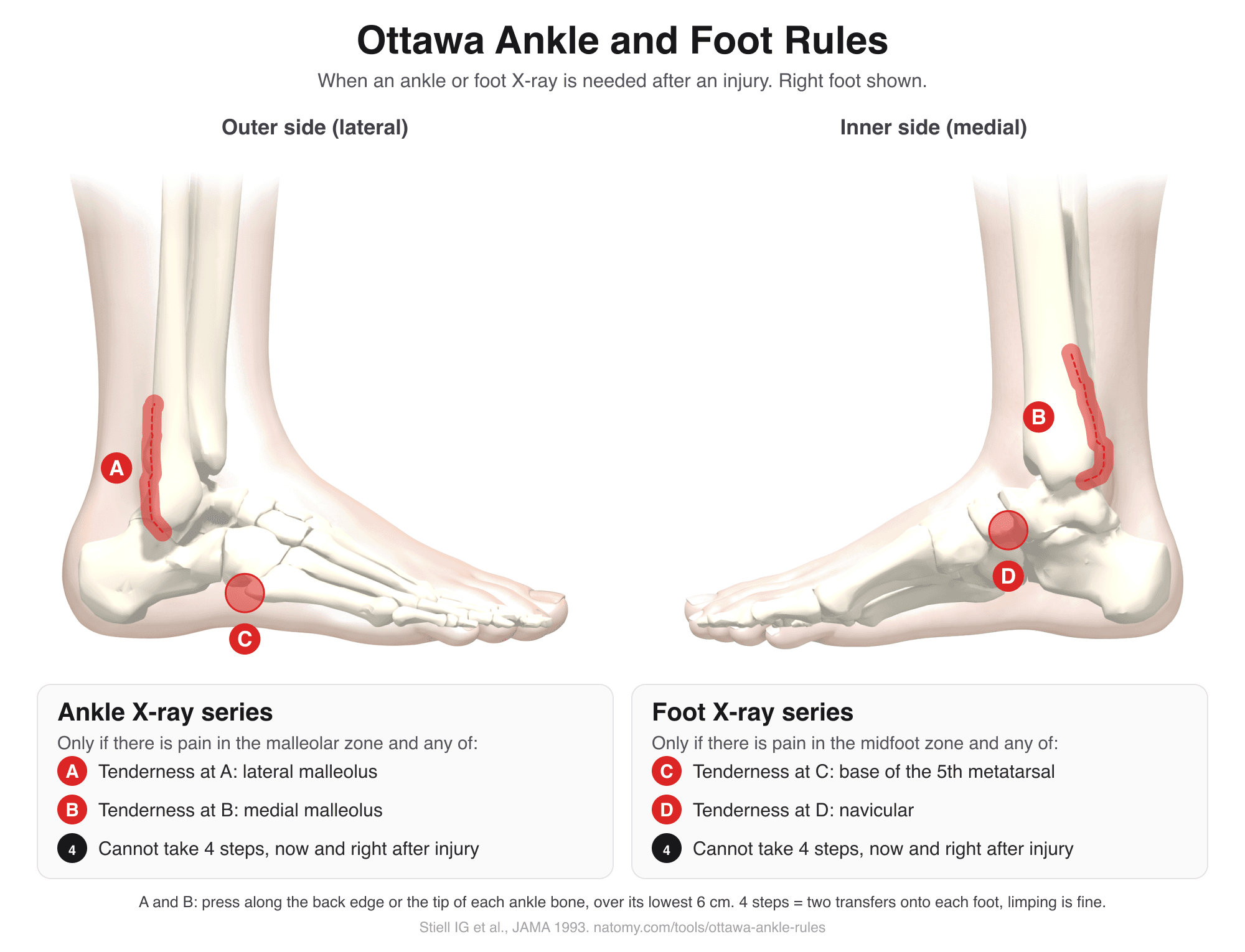
Ottawa Ankle Rules
Tap the tender spots on an illustrated ankle and foot to see if the Ottawa rules call for an X-ray. Includes the Ottawa knee rule.
Try it free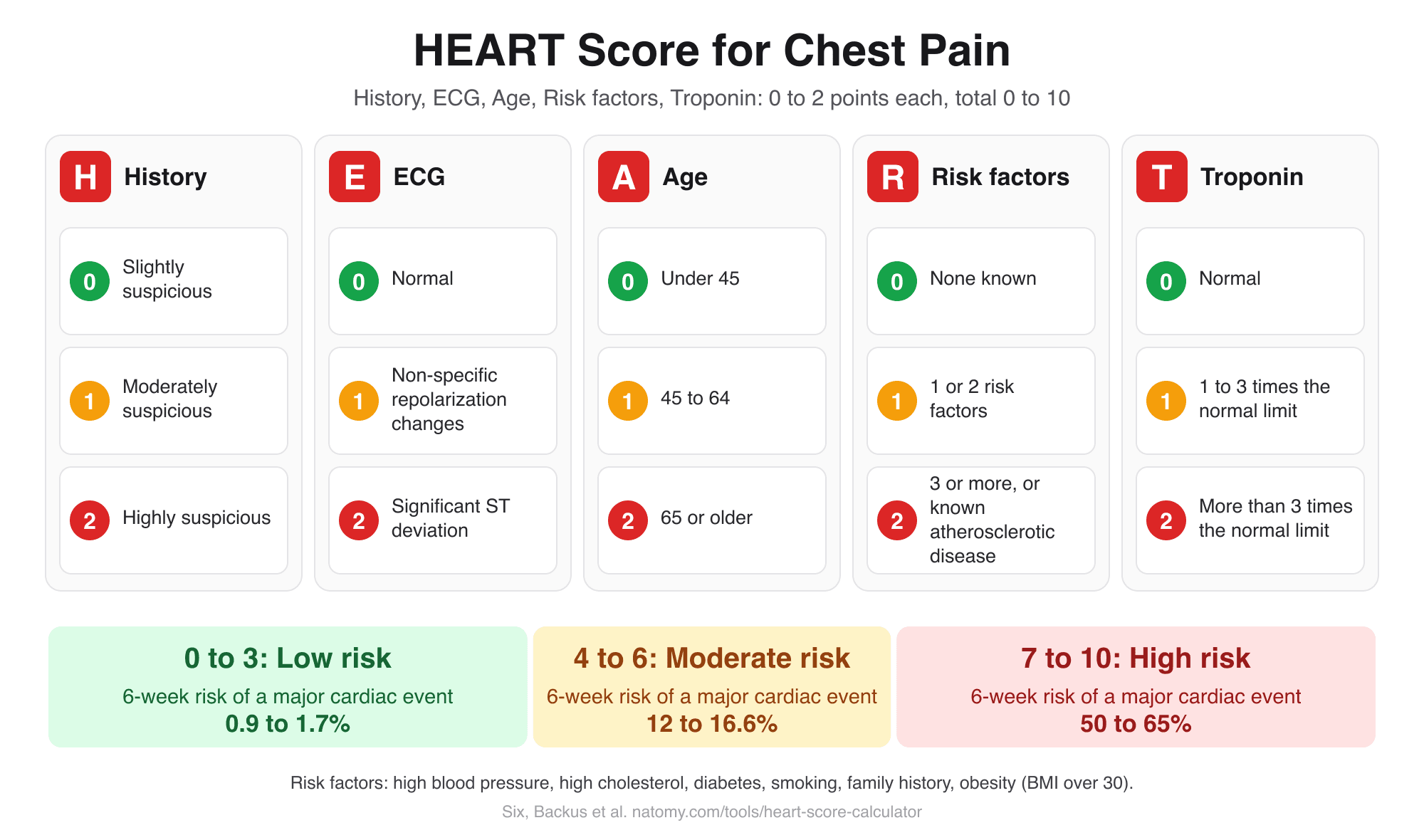
HEART Score Calculator
Score history, ECG, age, risk factors, and troponin for chest pain to get the HEART score, risk group, and 6-week MACE risk.
Try it free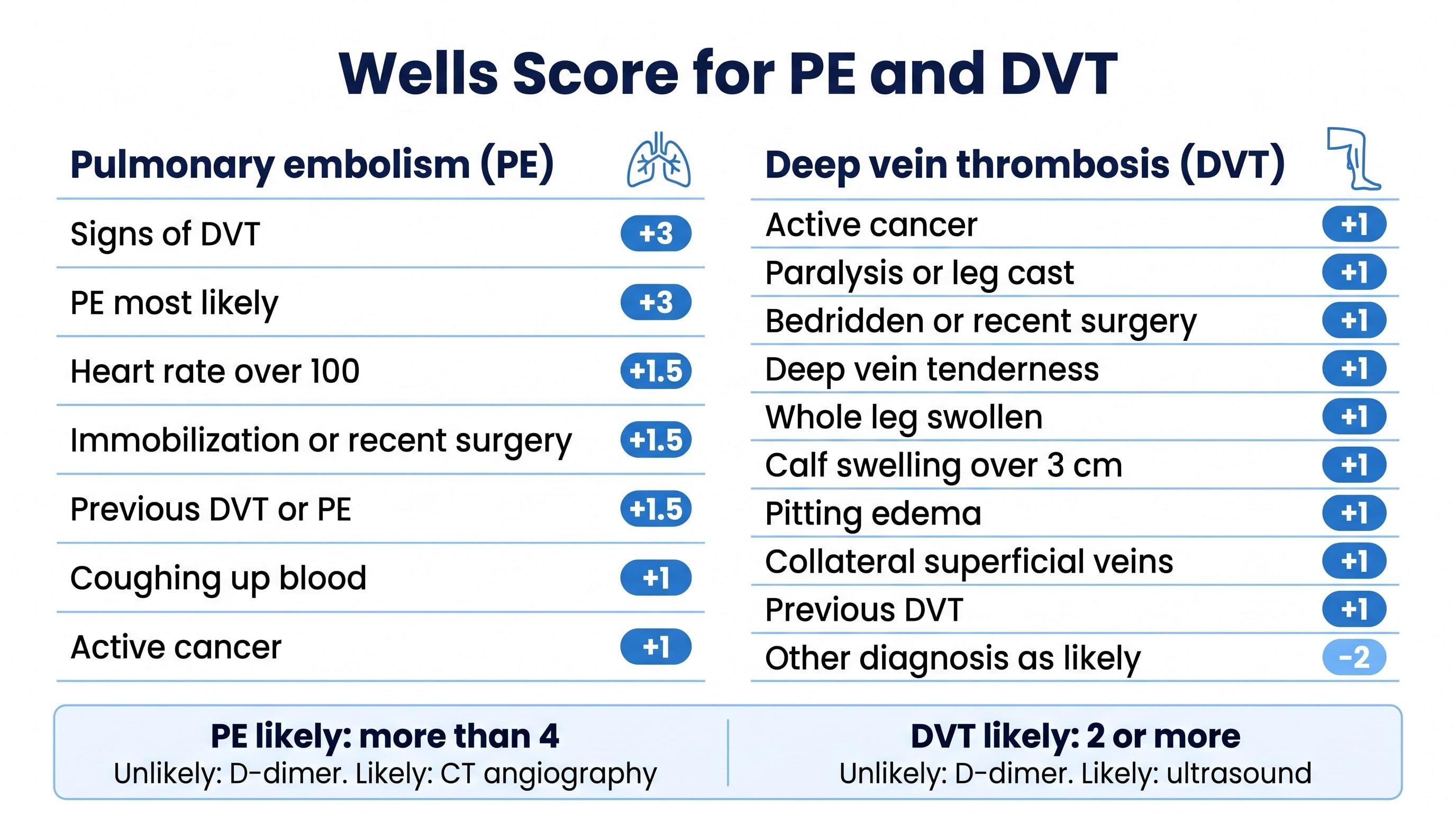
Wells Score Calculator (PE and DVT)
Check the Wells criteria for pulmonary embolism or deep vein thrombosis to get the score, the risk group, and the next test.
Try it free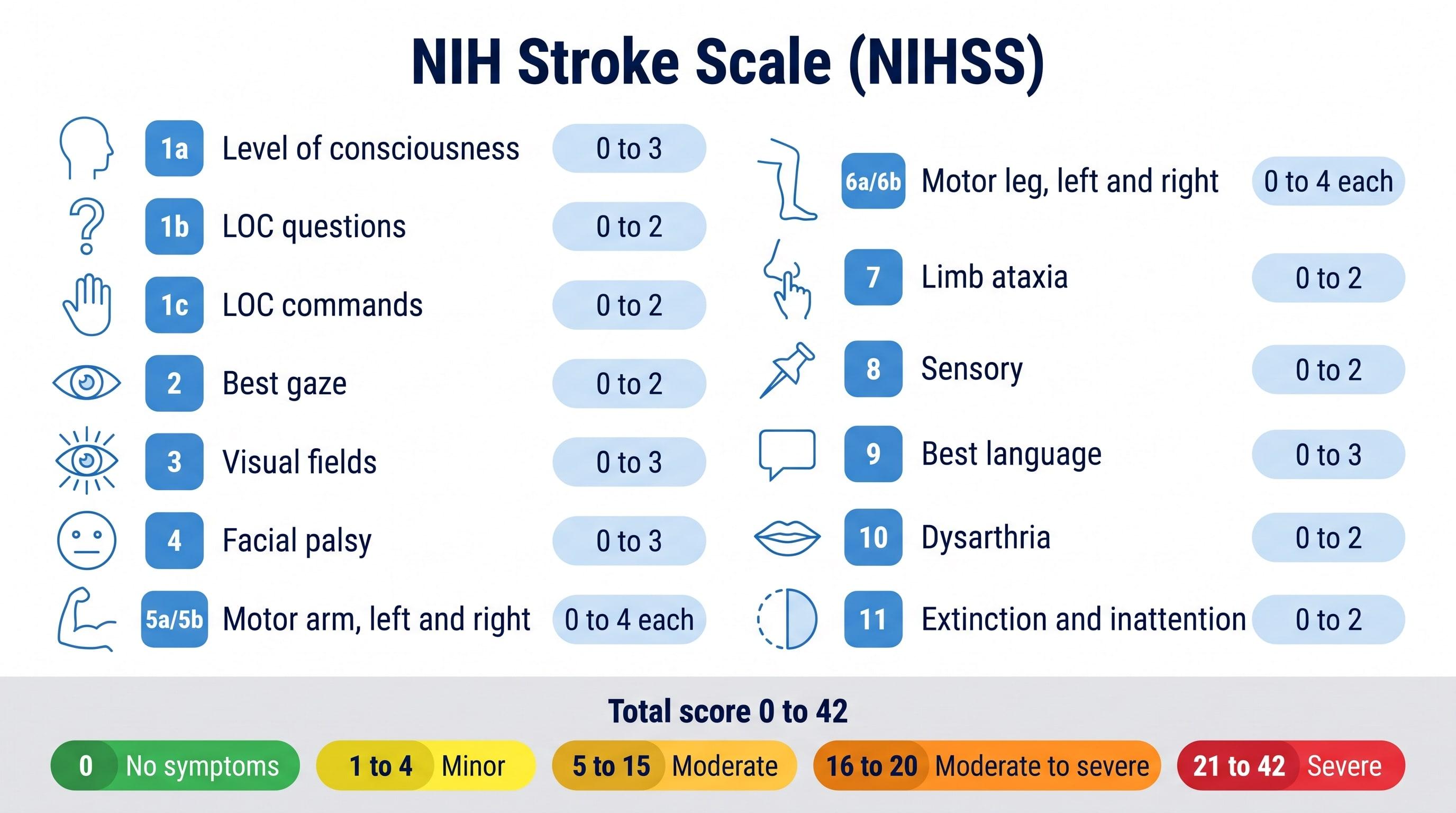
NIHSS Calculator (NIH Stroke Scale)
Score all 15 NIH Stroke Scale items to get the NIHSS total from 0 to 42 and the stroke severity range.
Try it free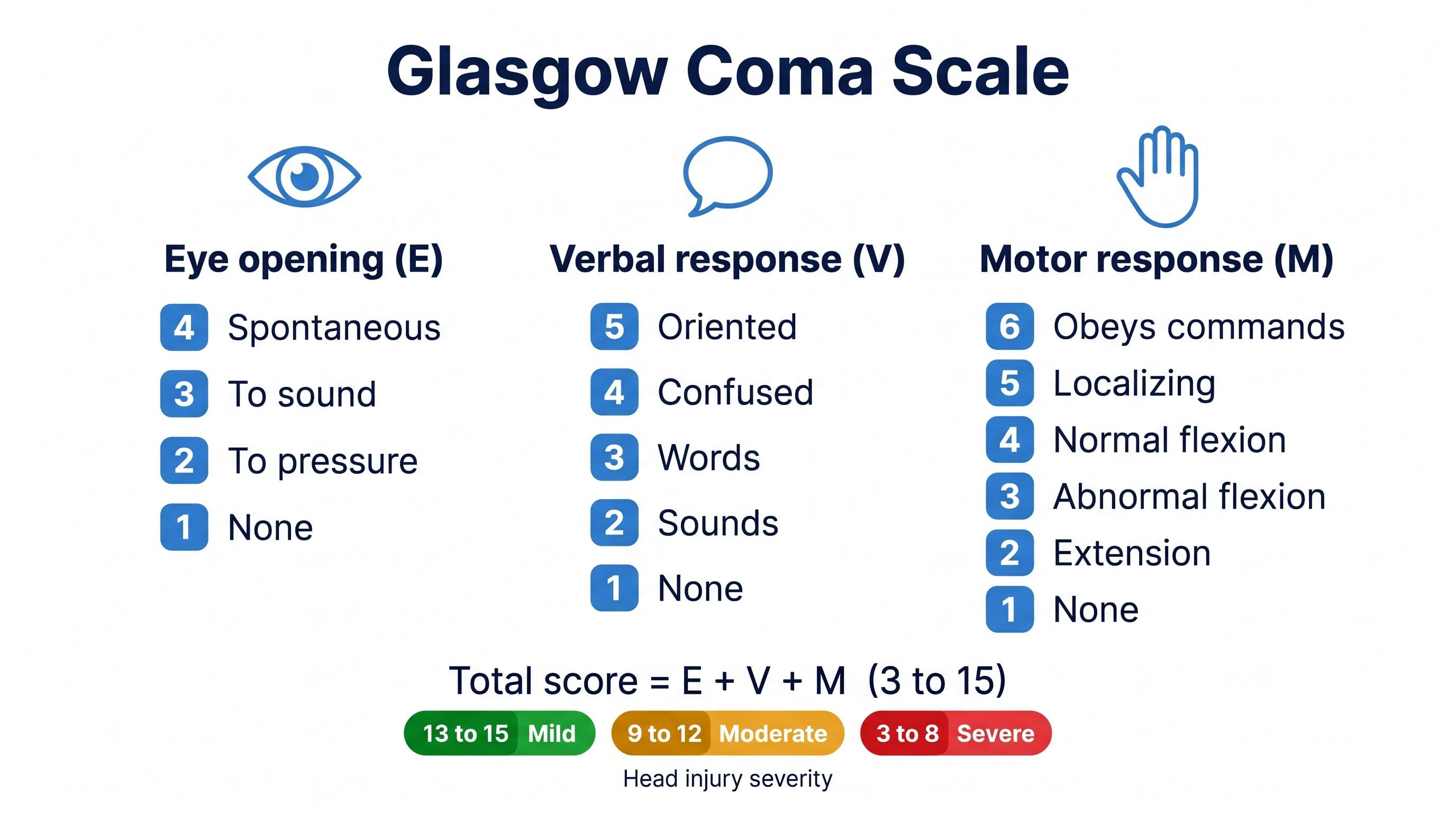
Glasgow Coma Scale Calculator
Score eye, verbal, and motor responses to get the GCS total, E V M code, severity range, and GCS-P.
Try it free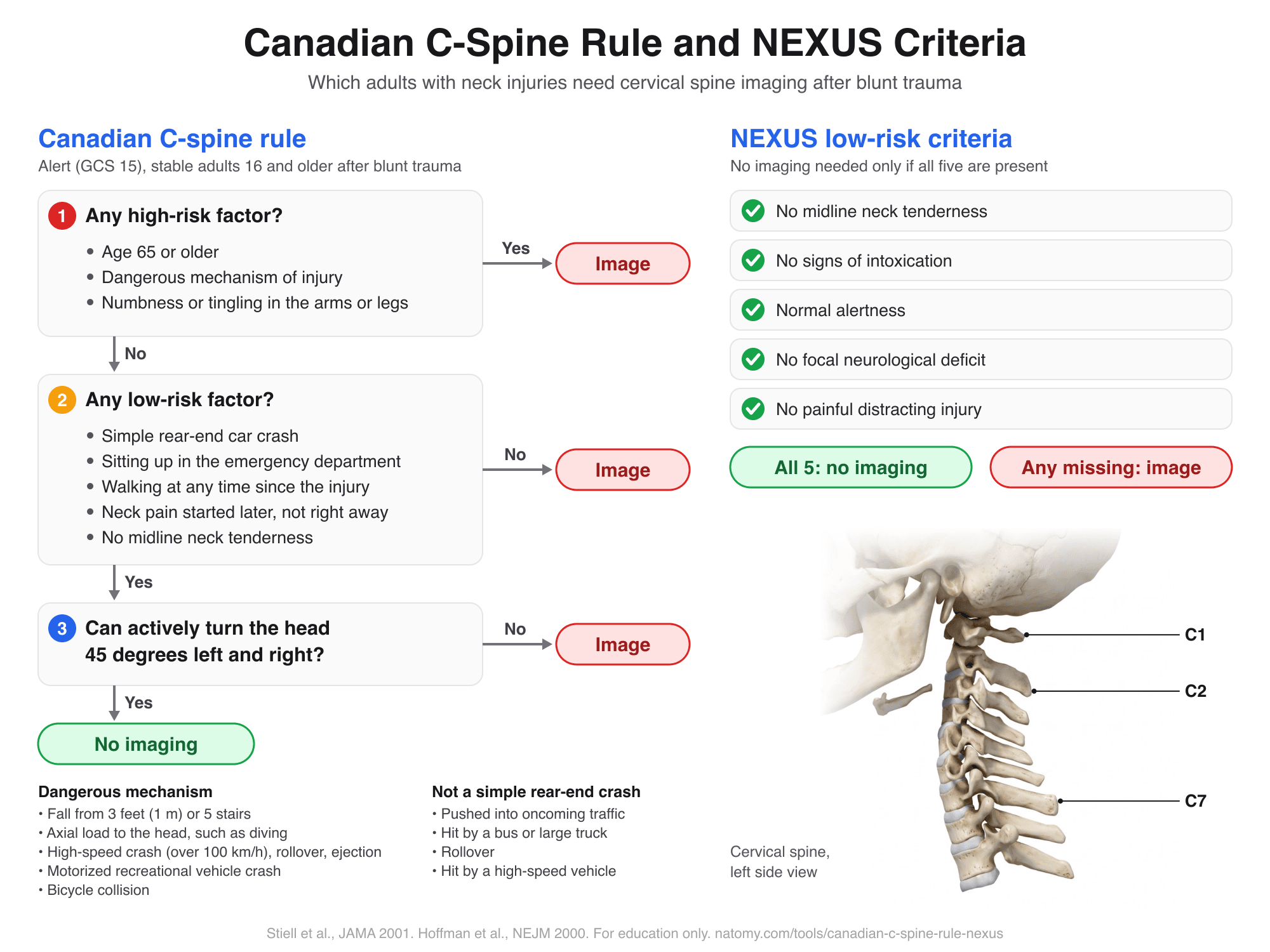
Canadian C-Spine Rule and NEXUS
Run the Canadian C-spine rule or the NEXUS criteria step by step to see which adults need neck imaging after trauma.
Try it free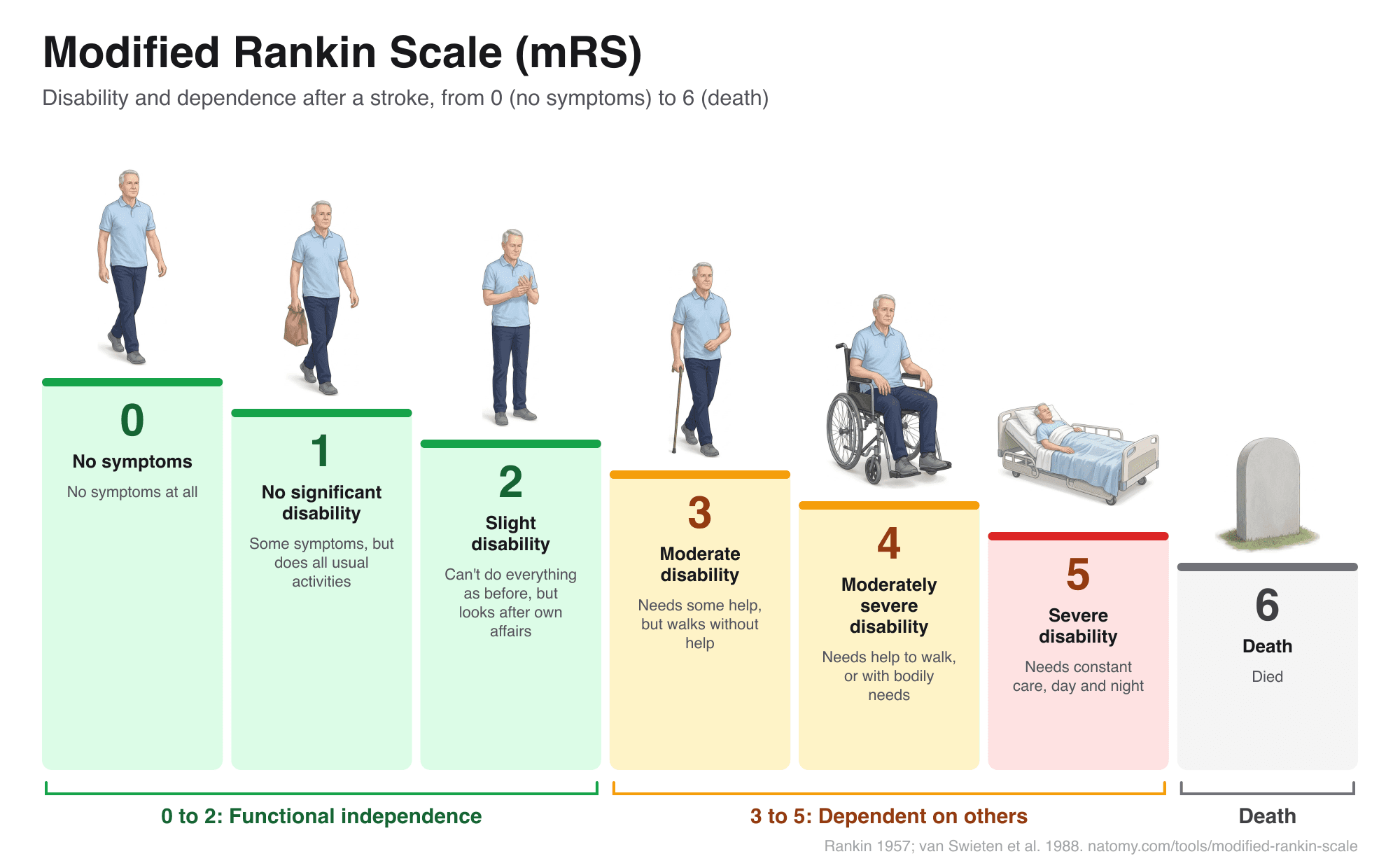
Modified Rankin Scale (mRS)
Illustrated mRS chart from 0 to 6 with a question-based score finder, what each grade means after a stroke, and a copyable note.
Try it free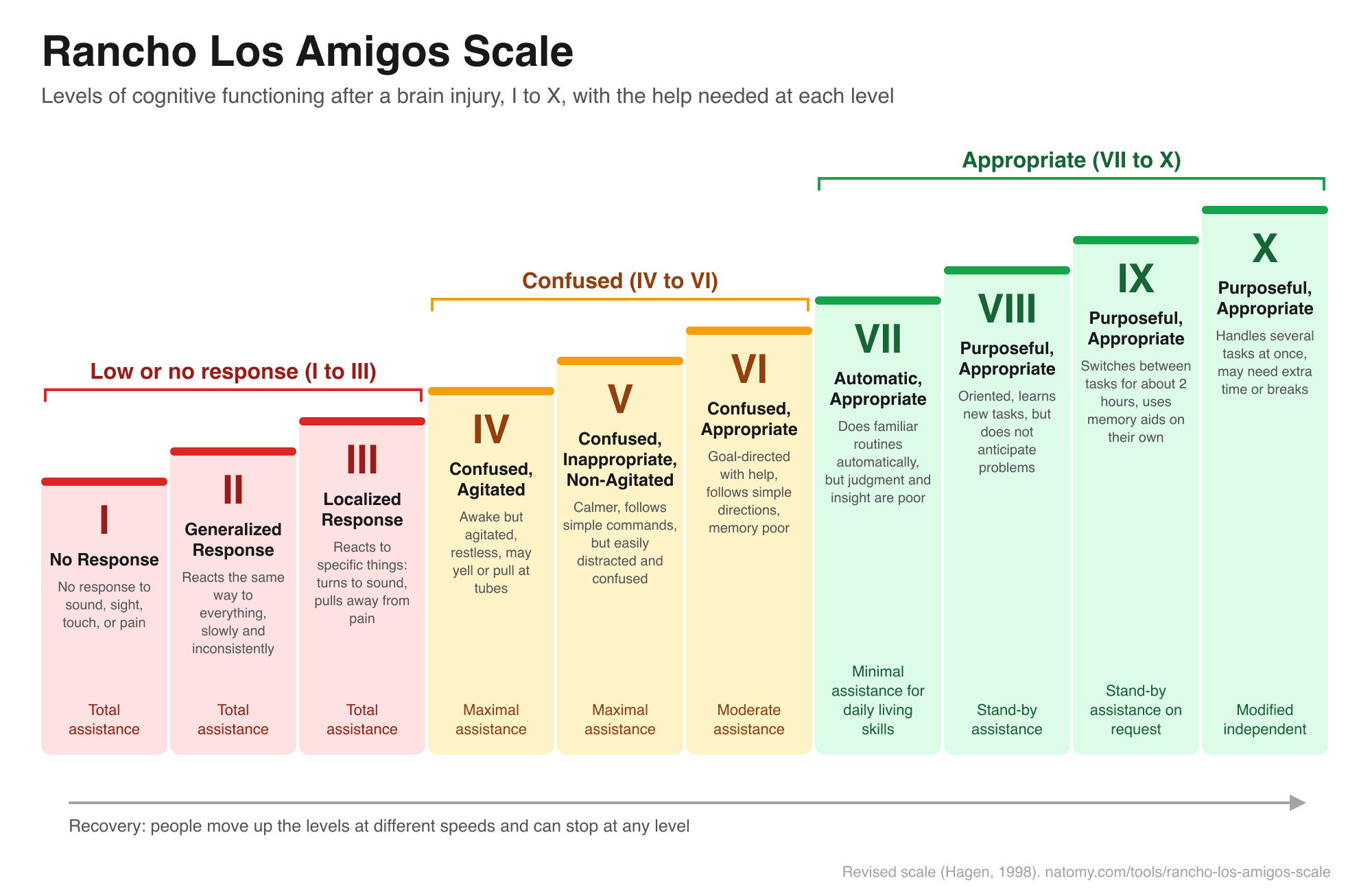
Rancho Los Amigos Scale
The 10 levels of cognitive functioning after a brain injury, with a level finder, what to expect, and how to help.
Try it free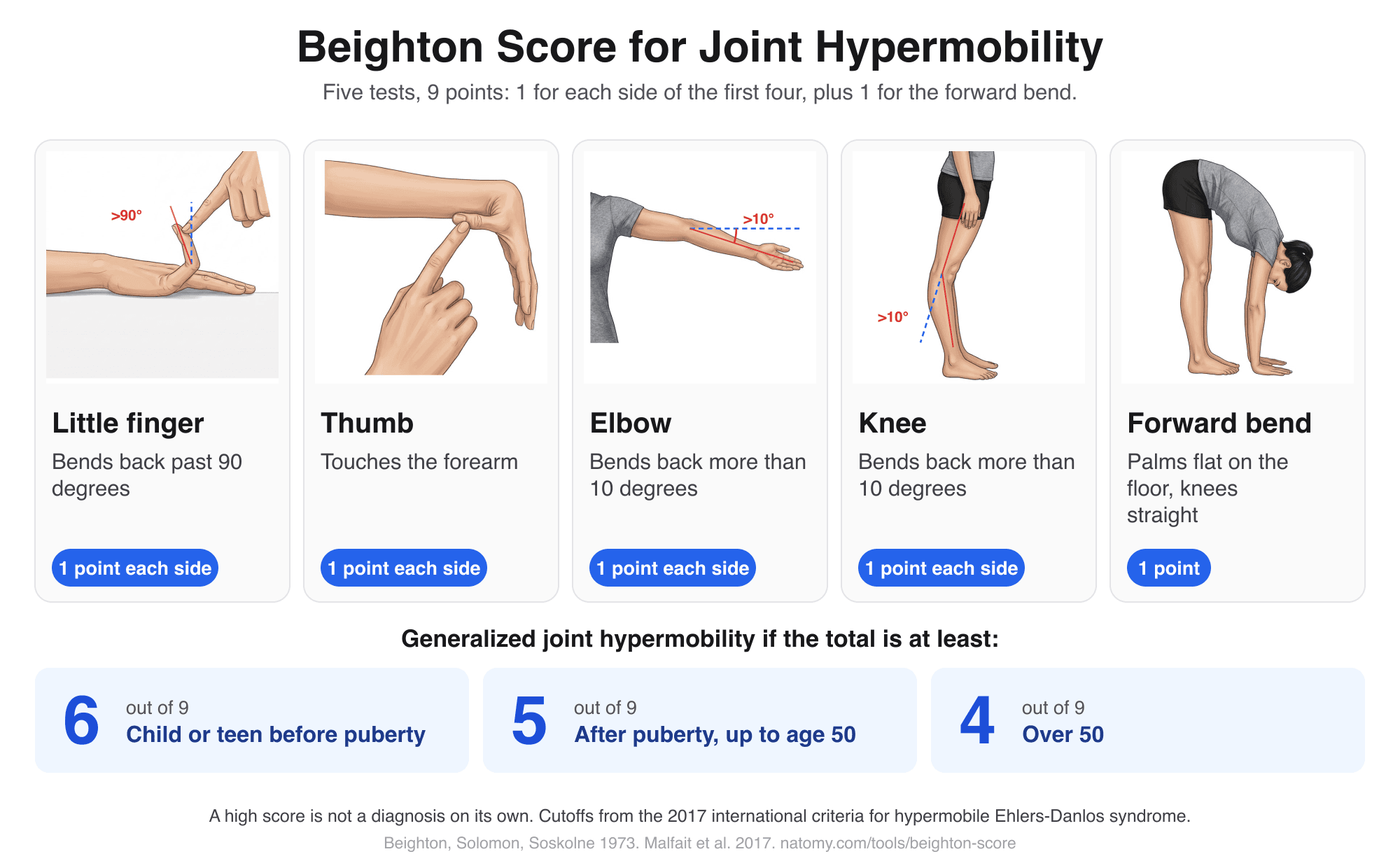
Beighton Score Calculator
Illustrated hypermobility test: score the 5 Beighton movements out of 9, compare with the age cutoff, and copy a note.
Try it free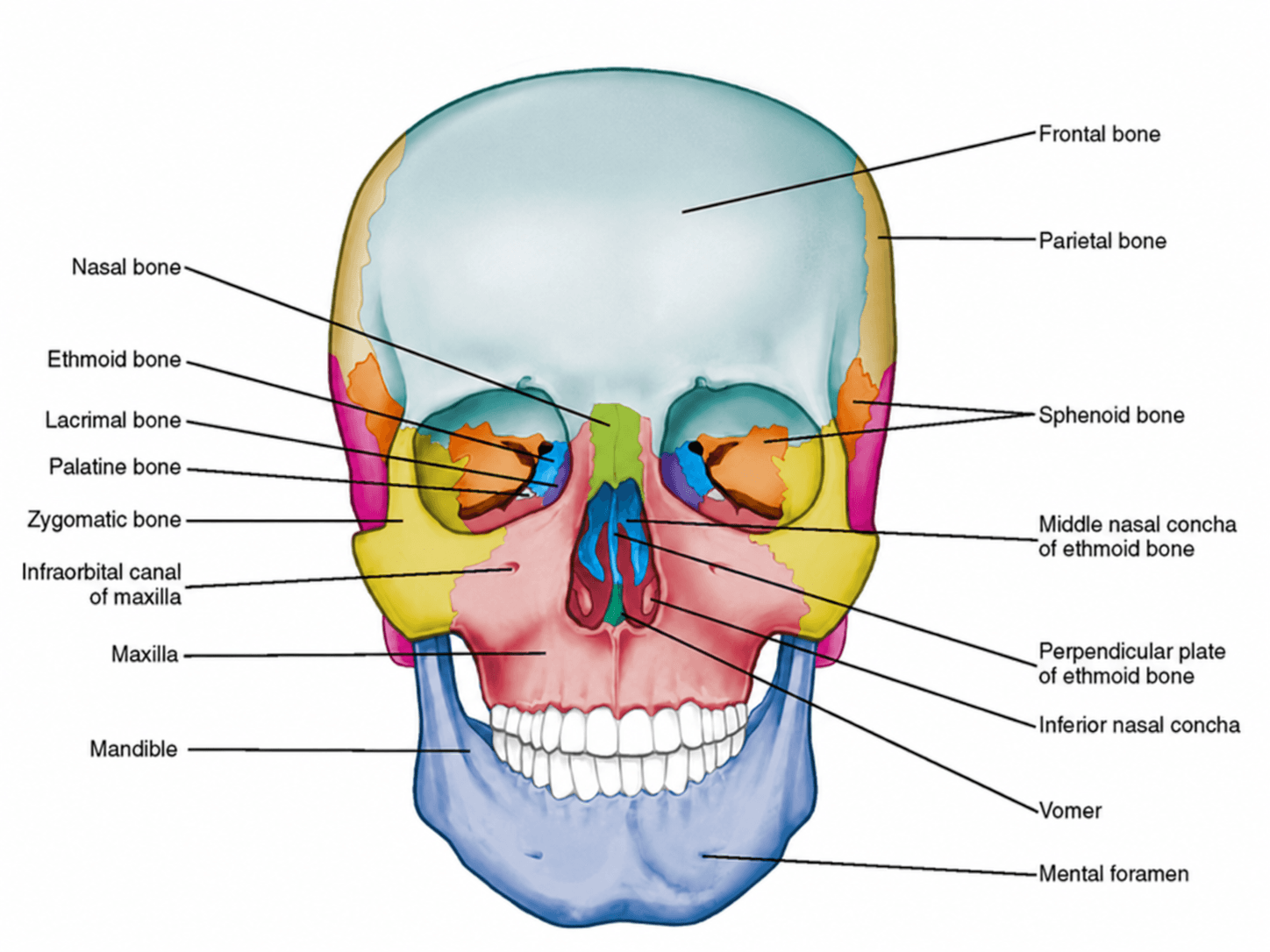
Anterior View of Skull Labeled
Free labeled and unlabeled anterior view of the skull, downloadable as PNG.
Try it free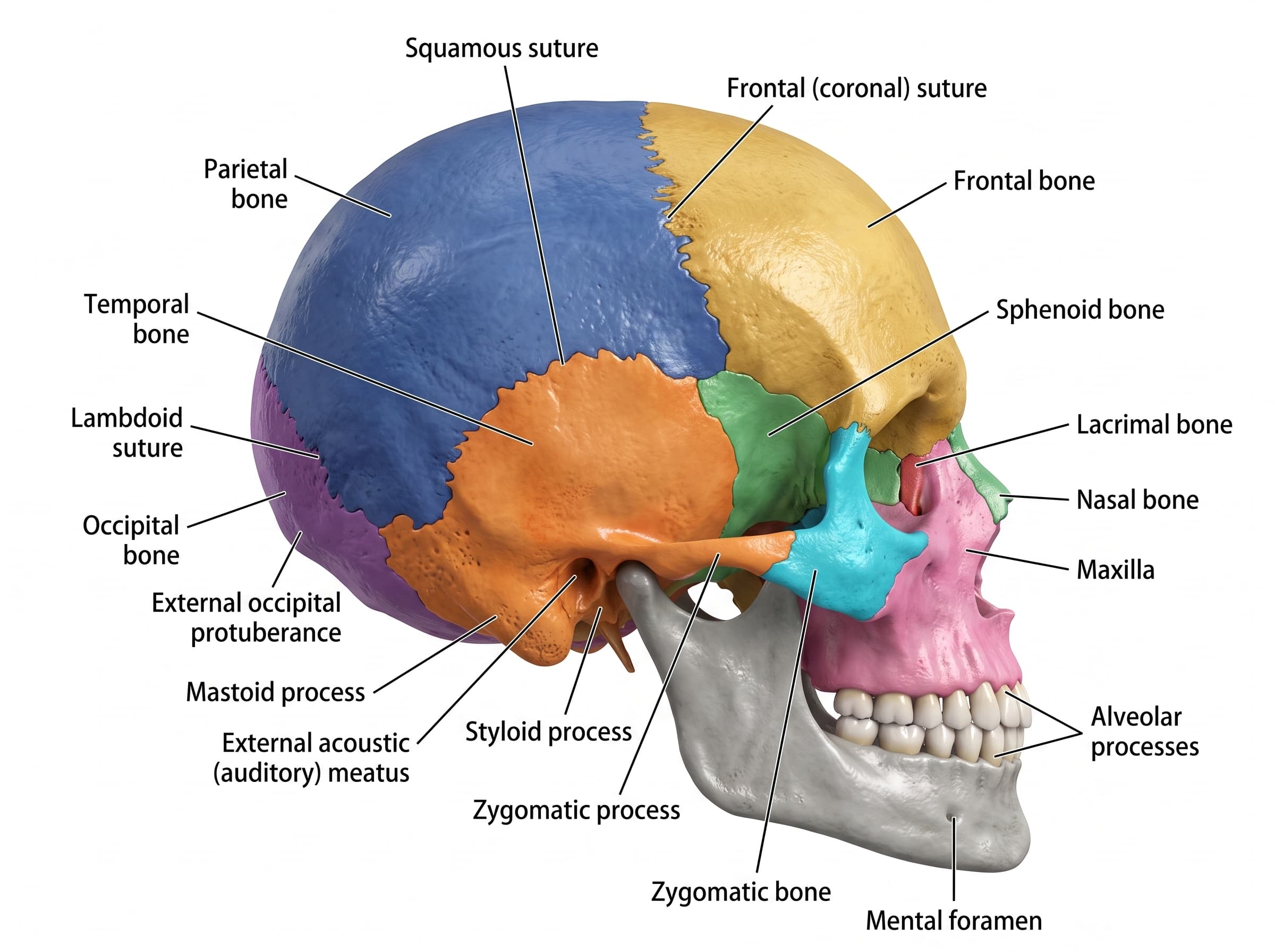
Lateral View of Skull Labeled
Free labeled and unlabeled lateral view of the skull, downloadable as PNG.
Try it free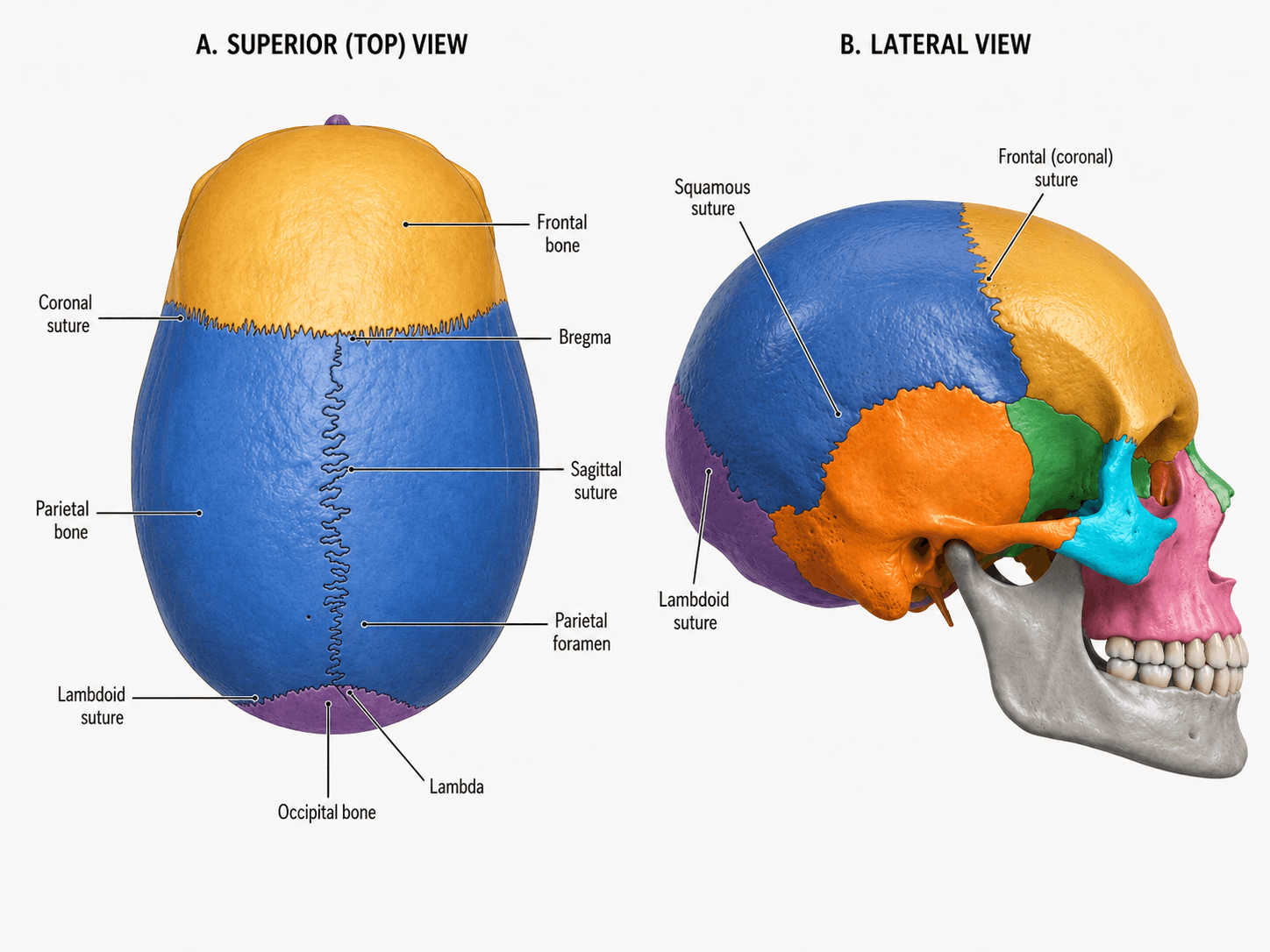
Skull Sutures Labeled
Free labeled and unlabeled skull sutures diagram, superior and lateral views, downloadable as PNG.
Try it free