Free Tools
Bristol Stool Chart
The Bristol stool chart sorts stool into seven types by shape and texture. Types 1 and 2 point to constipation, types 3 and 4 are normal, type 5 is soft, and types 6 and 7 point to diarrhea. The type gives a rough idea of how quickly stool moved through your bowel. Find your type below and keep a simple bowel diary to show your doctor.
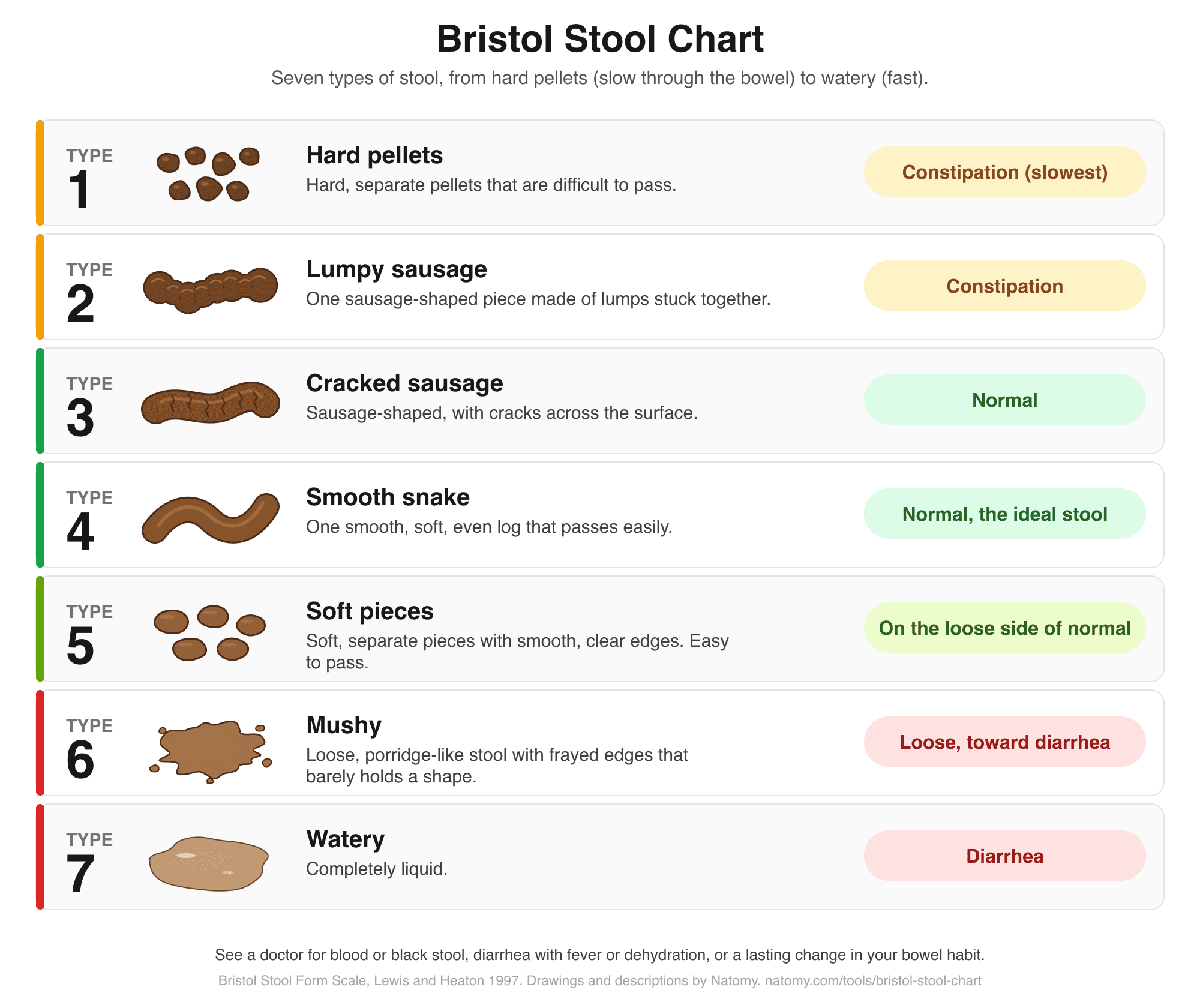
Download the chart (PNG) to print for a clinic, a care home, or a bathroom wall.
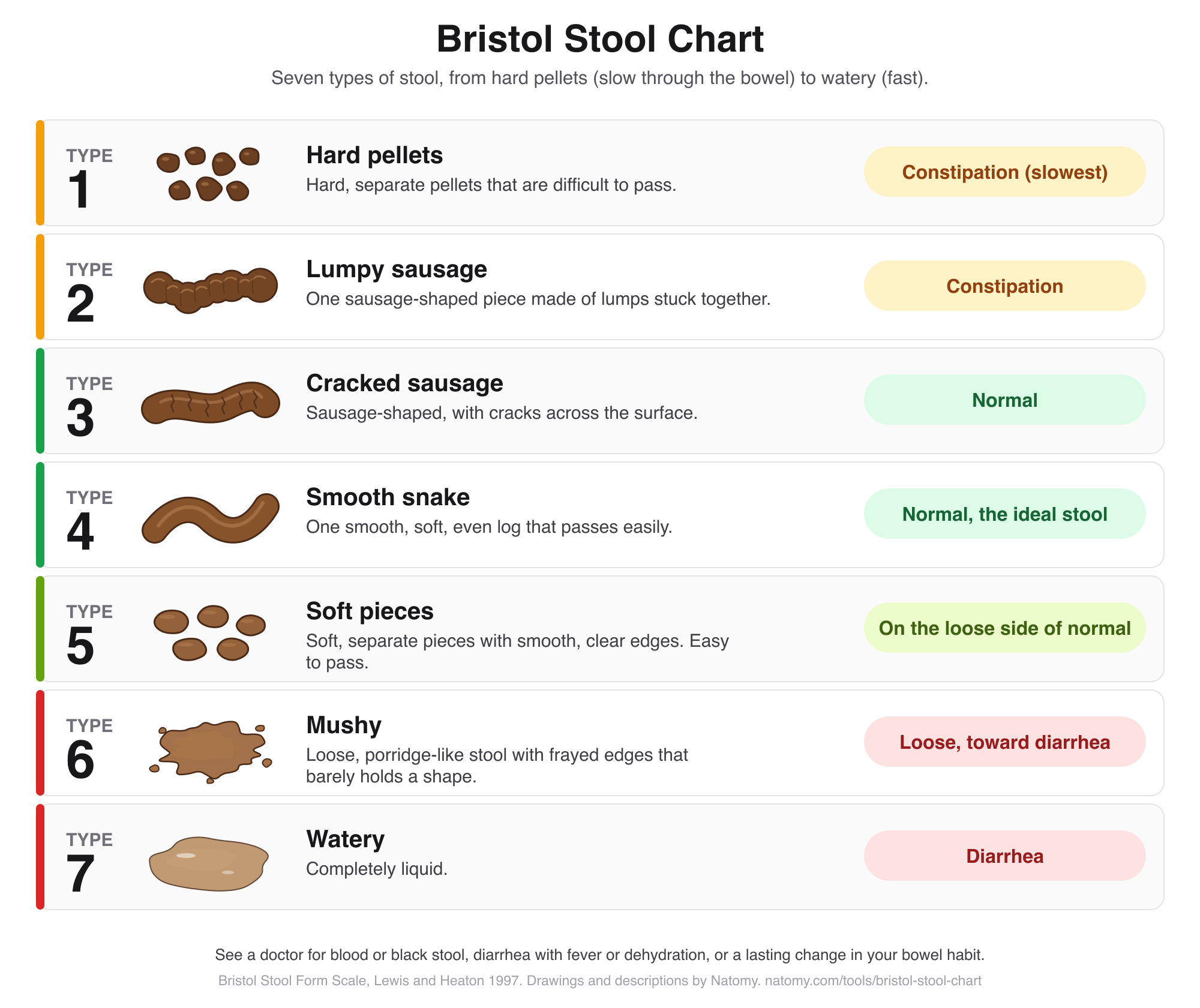
Find your stool type
Tap the drawing that looks most like yours to see what it means, then add it to your bowel diary.
When to see a doctor, whatever the type
- Blood in or on the stool, or black, tarry stool
- Diarrhea lasting more than 2 days in an adult or more than 1 day in a child, or with fever or signs of dehydration (any fever in a baby)
- Severe or constant belly pain
- Constipation with vomiting, a swollen belly, or no gas passing
- A lasting change in bowel habit, especially after age 45 to 50 (at any age if it comes with blood)
- Unexplained weight loss, or waking at night to have diarrhea
The 7 Bristol stool types
| Type | What it looks like | What it usually means |
|---|---|---|
| 1 | Hard pellets. Hard, separate pellets that are difficult to pass. | Constipation (slowest) |
| 2 | Lumpy sausage. One sausage-shaped piece made of lumps stuck together. | Constipation |
| 3 | Cracked sausage. Sausage-shaped, with cracks across the surface. | Normal |
| 4 | Smooth snake. One smooth, soft, even log that passes easily. | Normal, the ideal stool |
| 5 | Soft pieces. Soft, separate pieces with smooth, clear edges. Easy to pass. | On the loose side of normal |
| 6 | Mushy. Loose, porridge-like stool with frayed edges that barely holds a shape. | Loose, toward diarrhea |
| 7 | Watery. Completely liquid. | Diarrhea |
What your stool type says about your bowel
Stool picks up its shape in the large bowel (colon), where water is drawn back into the body. The longer stool stays there, the drier and harder it gets. In the 1997 study that tested the scale, stool type was linked to how long food took to pass through the gut, more strongly than how often people went. That makes it a simple, rough everyday guide to transit time.
Constipation. Stool has moved slowly through the bowel, so more water has been drawn out. Often hard to pass.
Normal. The easiest stools to pass. Type 4 is often called the ideal.
Soft. Usually normal, but on the loose side. More common when stool moves through faster.
Diarrhea. Stool has moved quickly through the bowel, with little time for water to be absorbed.
Common causes of hard and loose stools
Types 1 and 2
- Too little fiber or fluid, or too little movement
- Ignoring the urge to go, travel, and changes in routine
- Medicines such as opioid painkillers, iron, some antacids, and some antidepressants
- Pregnancy, an underactive thyroid, and conditions that affect the nerves or muscles of the bowel
- Constipation-predominant irritable bowel syndrome
Types 6 and 7
- Viral or bacterial gut infections and food poisoning, the most common cause of sudden diarrhea
- Antibiotics, which can also lead to C. difficile infection
- Lactose intolerance, celiac disease, and too much caffeine, alcohol, or sugar-free sweeteners
- Inflammatory bowel disease (Crohn's disease or ulcerative colitis)
- Diarrhea-predominant irritable bowel syndrome
- Severe constipation: watery stool can leak around a hard mass of stool stuck in the rectum (overflow), which is easy to mistake for diarrhea, especially in older adults
How often should you poop?
Anywhere from three times a day to three times a week is common in healthy adults. Frequency matters less than whether stools are easy to pass and whether your pattern has changed. In a study of about 1,900 adults in East Bristol, only about 6 in 10 stools were a normal type, and fewer than half of people had what is usually called normal bowel function. So an occasional type 2 or 6 is not a cause for worry.
Stool color
The Bristol scale covers shape, not color, but color is often the next question.
- Brown: Normal. The color comes from bile broken down in the gut.
- Green: Usually harmless: leafy greens, green food coloring, iron, or stool moving through quickly.
- Yellow, greasy, and foul-smelling: Can mean fat is not being absorbed, as in celiac disease or pancreas problems. Worth a check if it keeps happening.
- Pale, gray, or clay-colored: Can mean bile is not reaching the gut, for example from a blocked bile duct or liver disease. See a doctor. In a baby, pale or white stool needs a same-day check.
- Black and tarry: Can mean bleeding high in the gut, such as from a stomach ulcer. Get urgent care. Iron tablets and bismuth (Pepto-Bismol) can also turn stool black, but not sticky.
- Red or maroon: Can mean bleeding, usually lower in the gut, such as from hemorrhoids, a tear, or the colon. Maroon stool can also come from heavy bleeding higher up. Beets and red food coloring can look similar, but see a doctor about any blood in your stool.
When to see a doctor
- Blood in or on the stool, or black, tarry stool
- Diarrhea lasting more than 2 days in an adult or more than 1 day in a child, or with fever or signs of dehydration (any fever in a baby)
- Severe or constant belly pain
- Constipation with vomiting, a swollen belly, or no gas passing
- A lasting change in bowel habit, especially after age 45 to 50 (at any age if it comes with blood)
- Unexplained weight loss, or waking at night to have diarrhea
Get emergency care for heavy bleeding, black tarry stool with dizziness or fainting, or severe belly pain with a swollen, hard belly.
The Bristol stool chart and IBS
Doctors use the Bristol types to sort irritable bowel syndrome into subtypes under the Rome IV criteria. They look at the days with abnormal bowel movements and count how many stools were hard (types 1 and 2) and how many were loose (types 6 and 7):
- IBS with constipation (IBS-C): more than a quarter hard, and less than a quarter loose.
- IBS with diarrhea (IBS-D): more than a quarter loose, and less than a quarter hard.
- Mixed IBS (IBS-M): more than a quarter hard and more than a quarter loose.
- Unclassified (IBS-U): does not fit any of the above.
A bowel diary like the one above makes this much easier to work out at an appointment.
Bowel charts in hospitals and nursing homes
Hospitals, nursing homes, and care homes often record each resident's bowel movements by Bristol type. The record helps staff catch constipation before it becomes a fecal impaction, spot infectious diarrhea such as C. difficile early, and judge whether fluids and laxatives are working.
In nursing home neglect and medical malpractice cases, those bowel records are often reviewed alongside the care plan, fluid charts, and medication records. Days with no bowel movement recorded, constipation that went unaddressed, or diarrhea that was not tested or isolated can all bear on whether reasonable care was given. Related conditions include pressure injuries, which loose stool and incontinence make more likely.
History of the Bristol stool chart
The scale grew out of work by Dr. Ken Heaton's team at the Bristol Royal Infirmary in England in the early 1990s. In 1997, Dr. Stephen Lewis and Dr. Heaton published the seven-type version and showed that stool form, which people can judge for themselves, changes with how fast stool passes through the gut. It is now used worldwide in clinics, care homes, and research on the bowel, including drug trials.
Illustrate digestive conditions
Natomy turns records, imaging, and prompts into clear, labeled medical illustrations of the digestive system, such as bowel obstruction, inflammatory bowel disease, and hemorrhoids, for patient education and medical-legal exhibits. See examples in the Natomy atlas.
Try Natomy TodayFAQ
What is the Bristol stool chart?+
It is a chart that sorts stool into seven types by shape and texture, from hard pellets (type 1) to completely liquid stool (type 7). It was developed by Dr. Ken Heaton's team at the Bristol Royal Infirmary and University of Bristol, and published in its seven-type form by Dr. Stephen Lewis and Dr. Heaton in 1997. It is used by doctors, nurses, and researchers to describe bowel movements without guesswork.
What is a healthy stool type?+
Types 3 and 4 are considered normal. Type 4, smooth and soft like a sausage or snake, is often called the ideal because it is the easiest to pass. Type 5 is usually normal too, on the loose side.
What does type 1 or type 2 stool mean?+
Hard lumps or a lumpy sausage mean stool has moved slowly through the bowel and lost a lot of water. That is a sign of constipation. More fluids, more fiber added slowly, and more movement usually help. See a doctor if it lasts, is new, or comes with pain, vomiting, or blood.
What does type 6 or type 7 stool mean?+
Mushy or watery stool means stool has moved quickly through the bowel, with little time for water to be absorbed. That is diarrhea. Most short bouts come from infections or food and settle in a few days. Drink plenty of fluids, and see a doctor if it lasts more than 2 days in an adult (more than 1 day in a child), or comes with fever, blood, or signs of dehydration.
How often should you poop?+
Anywhere from three times a day to three times a week is common in healthy adults. What matters most is what is normal for you, and whether stools are easy to pass. A lasting change from your usual pattern is worth mentioning to a doctor.
Can the Bristol stool chart diagnose IBS?+
Not on its own. Irritable bowel syndrome is diagnosed from symptoms over time, mainly belly pain at least one day a week for 3 months, linked to bowel movements, with limited tests to check for other causes. Once IBS is diagnosed, the Bristol types are used to sort it into subtypes: mostly constipation, mostly diarrhea, or mixed.
What does it mean if my stool type changes a lot?+
Some day-to-day change is normal and follows what you eat and drink, stress, travel, and medicines. Switching often between hard and loose stools is common in IBS. A new, lasting change, especially after age 45 to 50 or with blood or weight loss, should be checked.
Is the Bristol stool chart used for children?+
Yes. A simpler five-type version for children has been tested: children from about age 6 can use it if the descriptions are read to them, and from about age 8 on their own. Parents usually rate stools for younger children. For babies and toddlers still in diapers, the Brussels Infant and Toddler Stool Scale is used instead, since the Bristol scale was not designed for stools in a diaper.
Why do hospitals and nursing homes use the Bristol stool chart?+
It gives staff a shared way to record every bowel movement, so problems such as constipation, fecal impaction, and infectious diarrhea are spotted early. Hospitals usually test for C. difficile only when a patient has three or more unformed stools in 24 hours with no other explanation, such as laxatives. Many US labs count this as type 6 or 7, while UK guidance includes types 5 to 7.
Sources: Lewis SJ, Heaton KW. Stool form scale as a useful guide to intestinal transit time. Scand J Gastroenterol. 1997;32(9):920-924. Heaton KW, Radvan J, Cripps H, Mountford RA, Braddon FE, Hughes AO. Defecation frequency and timing, and stool form in the general population: a prospective study. Gut. 1992;33(6):818-824. Lacy BE, Mearin F, Chang L, et al. Bowel disorders. Gastroenterology. 2016;150(6):1393-1407. McDonald LC, Gerding DN, Johnson S, et al. Clinical practice guidelines for Clostridium difficile infection in adults and children. Clin Infect Dis. 2018;66(7):e1-e48. Lane MM, Czyzewski DI, Chumpitazi BP, Shulman RJ. Reliability and validity of a modified Bristol Stool Form Scale for children. J Pediatr. 2011;159(3):437-441. Huysentruyt K, Koppen I, Benninga M, et al. The Brussels Infant and Toddler Stool Scale. J Pediatr Gastroenterol Nutr. 2019;68(2):207-213. Drawings and descriptions are by Natomy. For education and tracking only; not a substitute for medical advice.
Related free tools
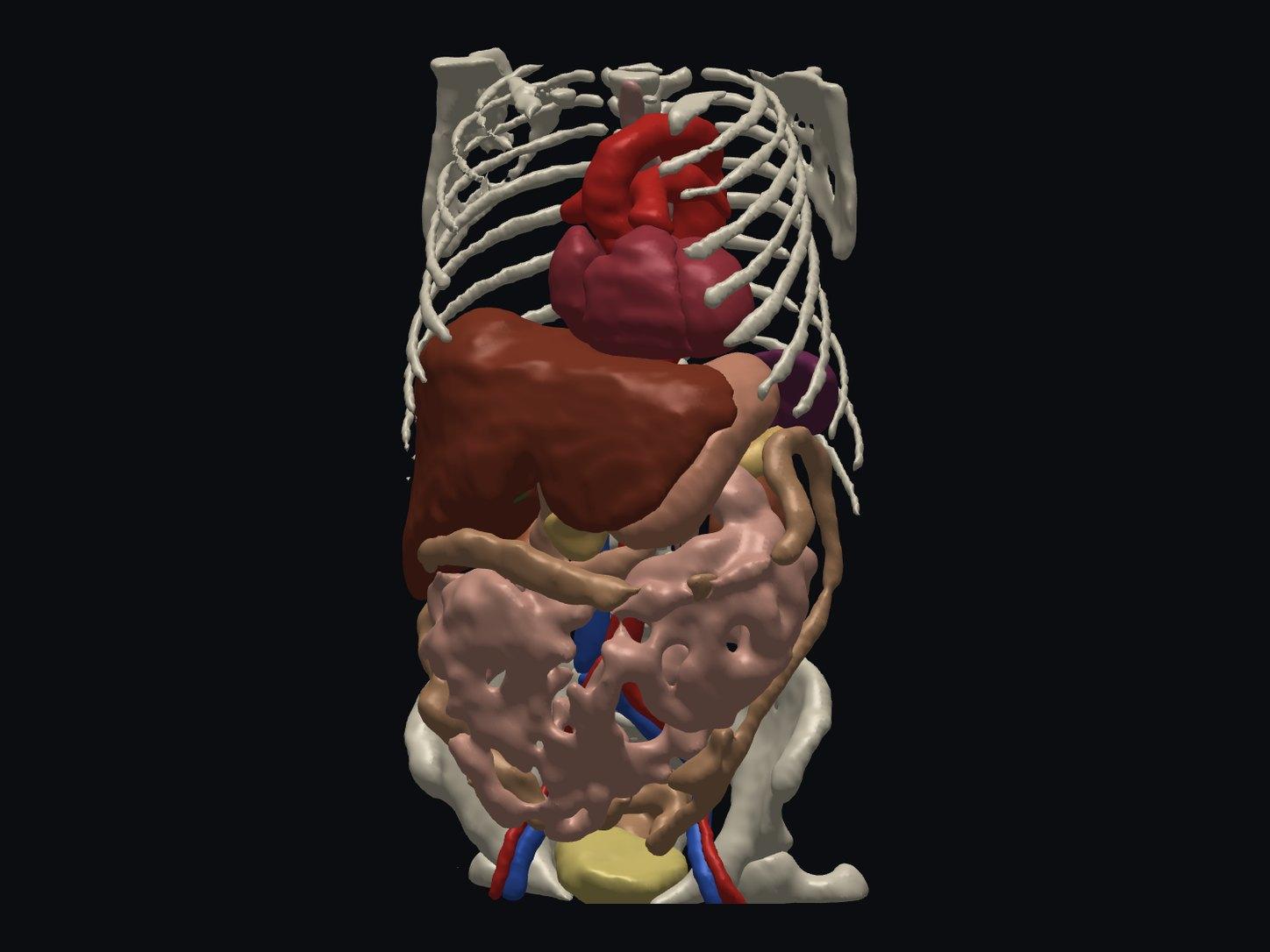
Free Online DICOM Viewer (3D)
Open a CT or MRI DICOM folder in your browser and view it in 3D, with AI anatomy labeling. Nothing is uploaded.
Try it free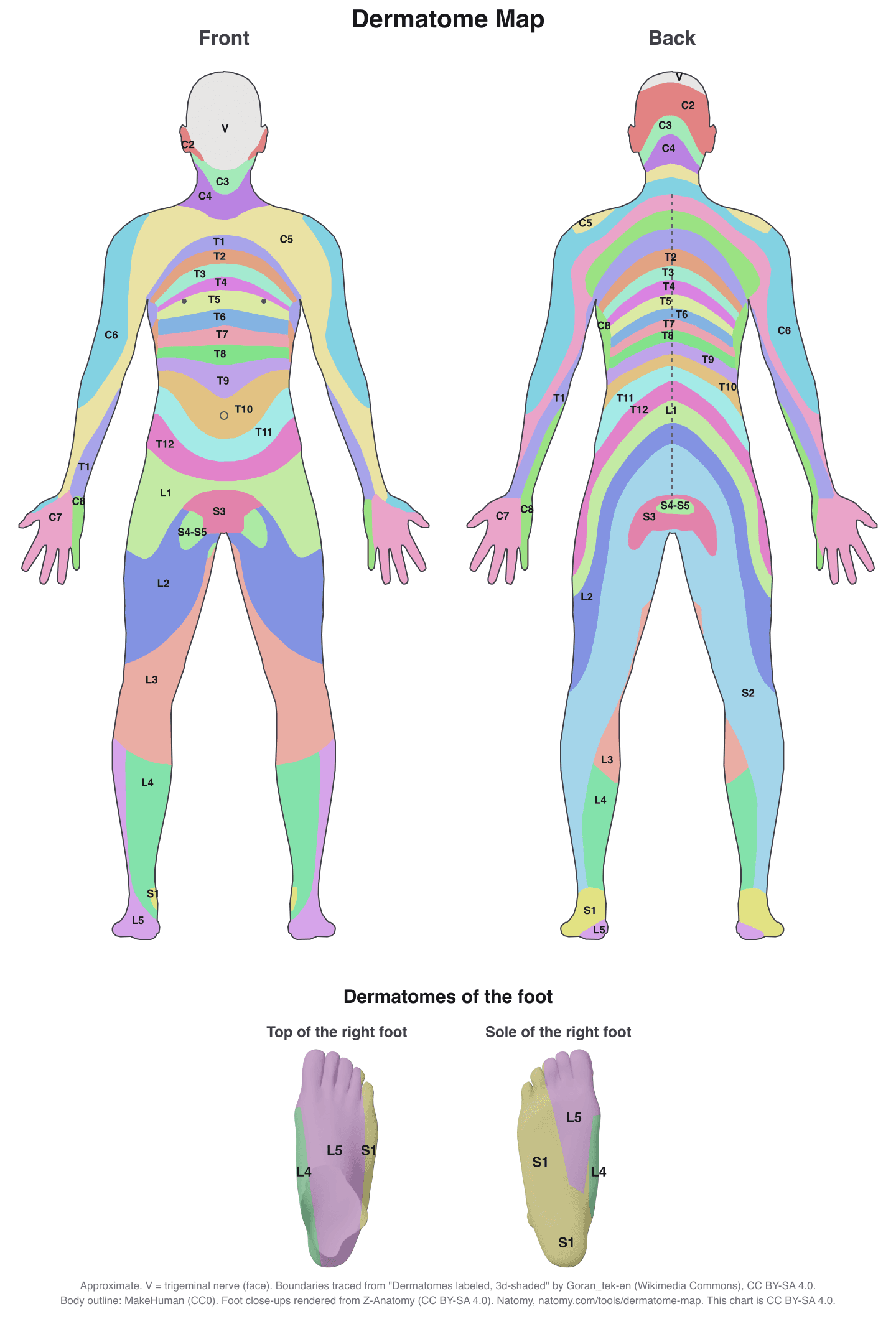
Interactive Dermatome Map
Tap the body to see each nerve root's skin area, test point, myotome, reflex, and disc level. Free printable chart.
Try it free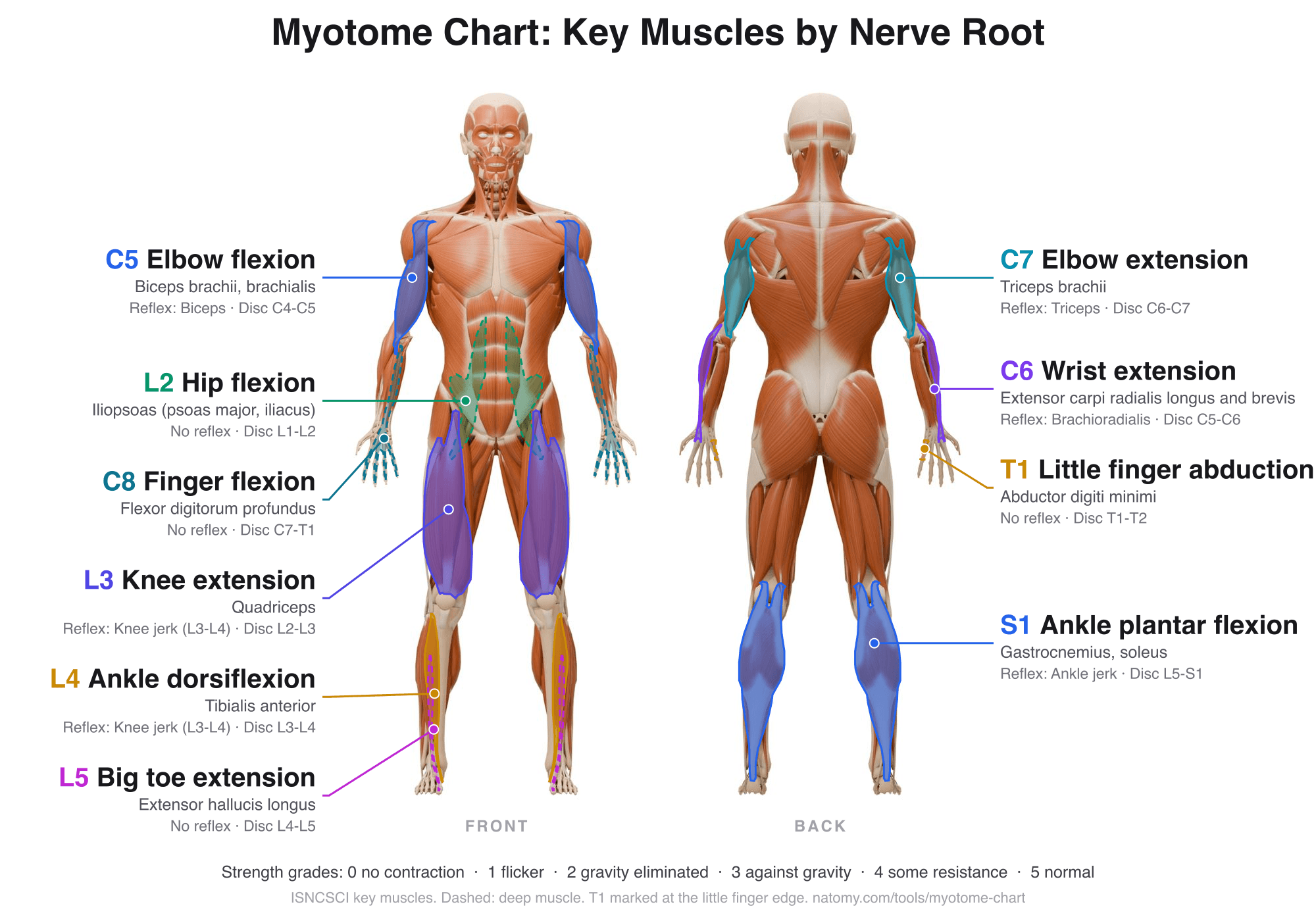
Myotome Chart and Motor Score
Tap a nerve root to see its key muscle, test position, and reflex. Grade strength 0 to 5 for the ISNCSCI motor score.
Try it free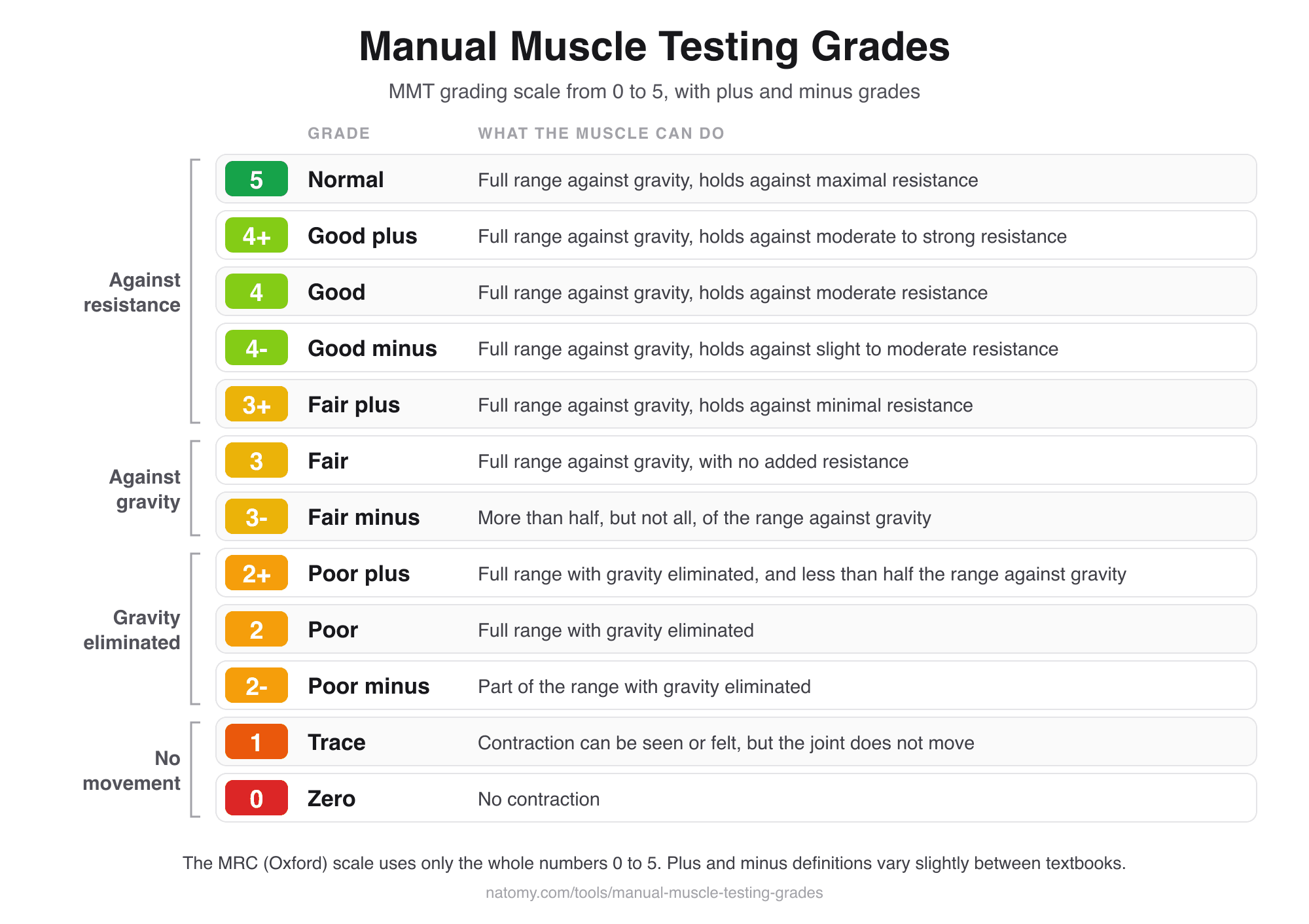
Manual Muscle Testing Grades
MMT grading scale chart from 0 to 5 with plus and minus grades, and a grade finder that writes the note for you.
Try it free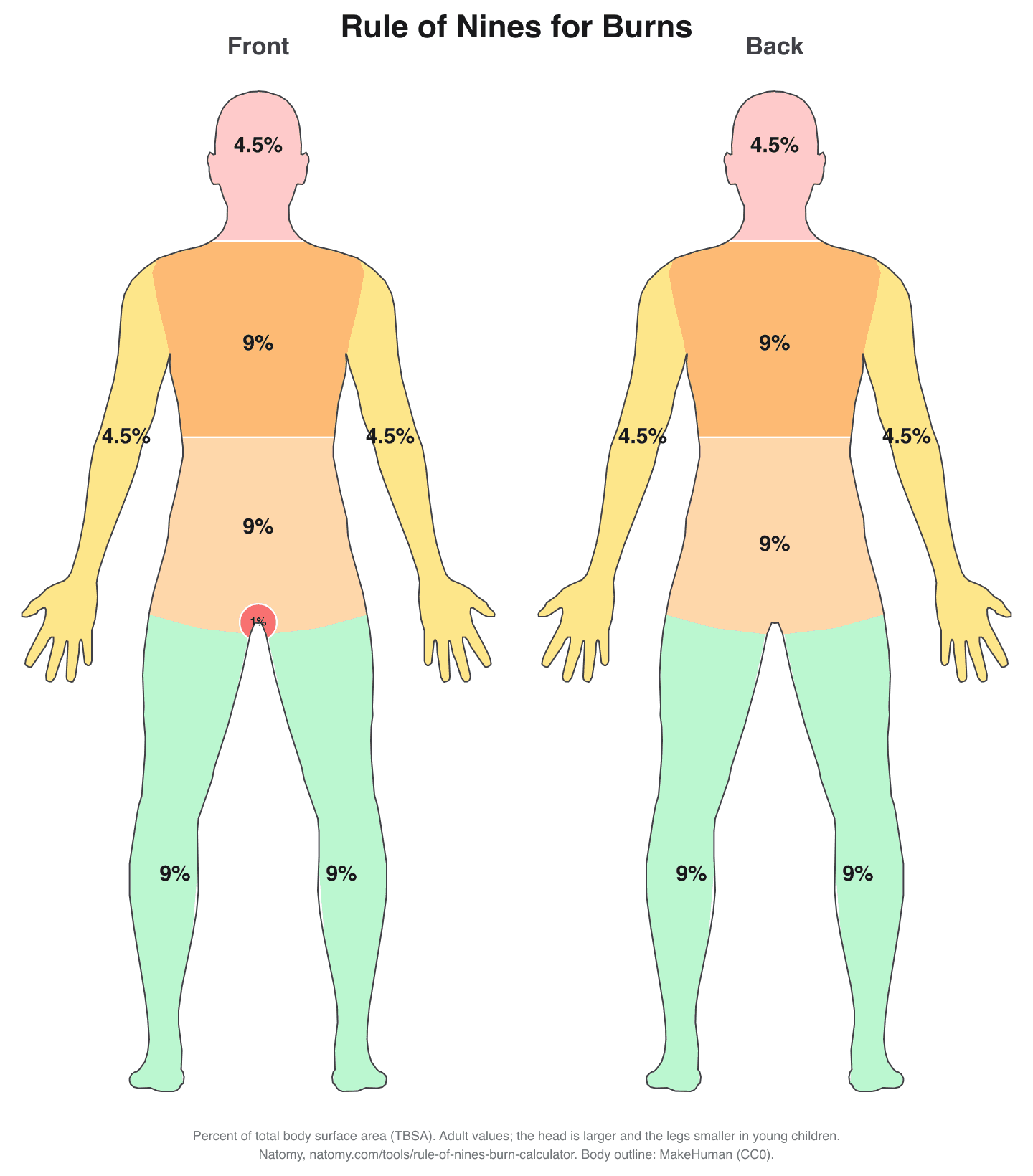
Rule of Nines Burn Calculator
Click the burned areas to get the total body surface area (TBSA), with the Parkland formula and a printable burn chart.
Try it free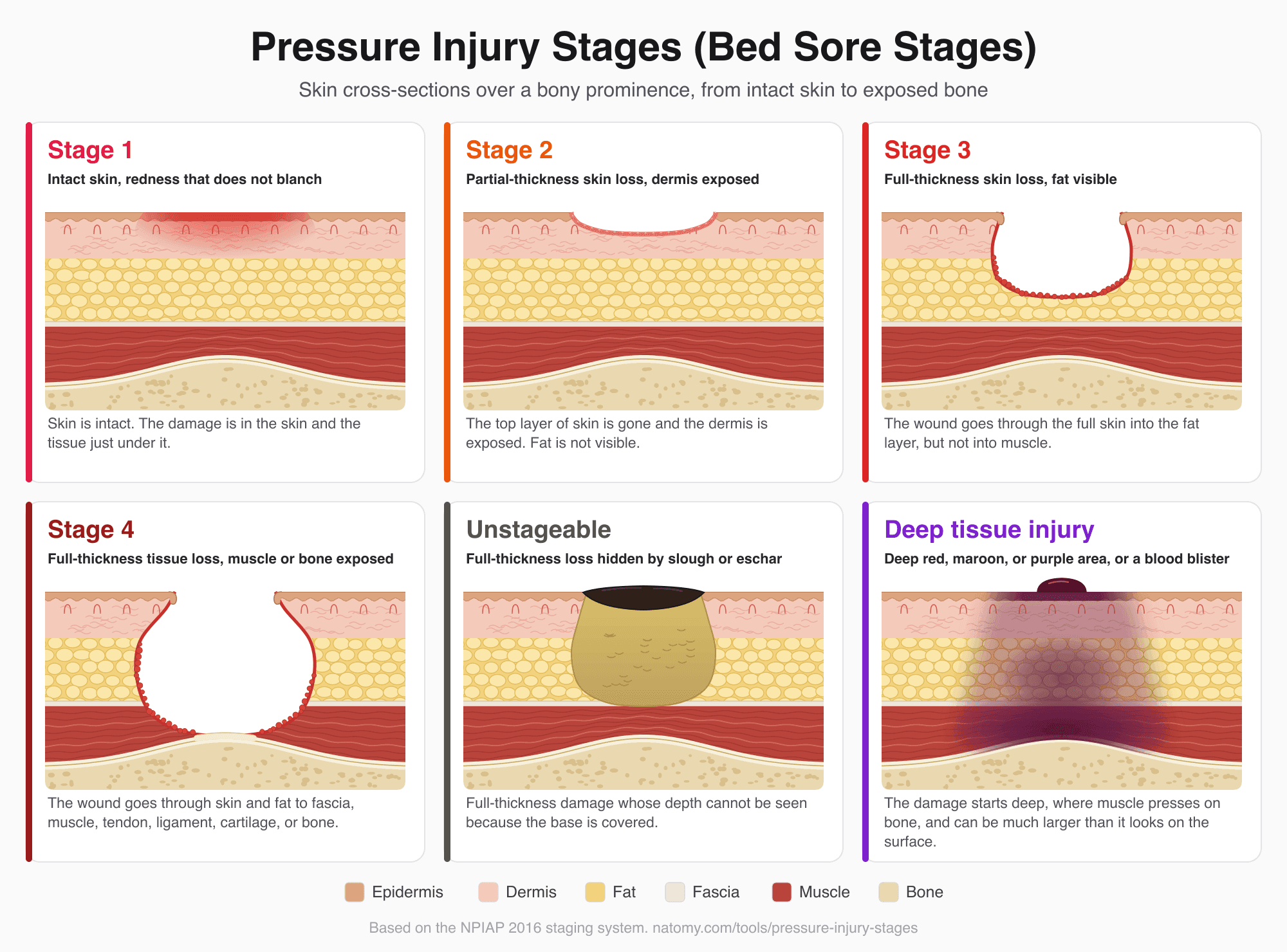
Pressure Injury (Bed Sore) Stages
Illustrated pressure ulcer stages chart, Stage 1 to 4, unstageable, and deep tissue injury, with a stage finder and wound note.
Try it free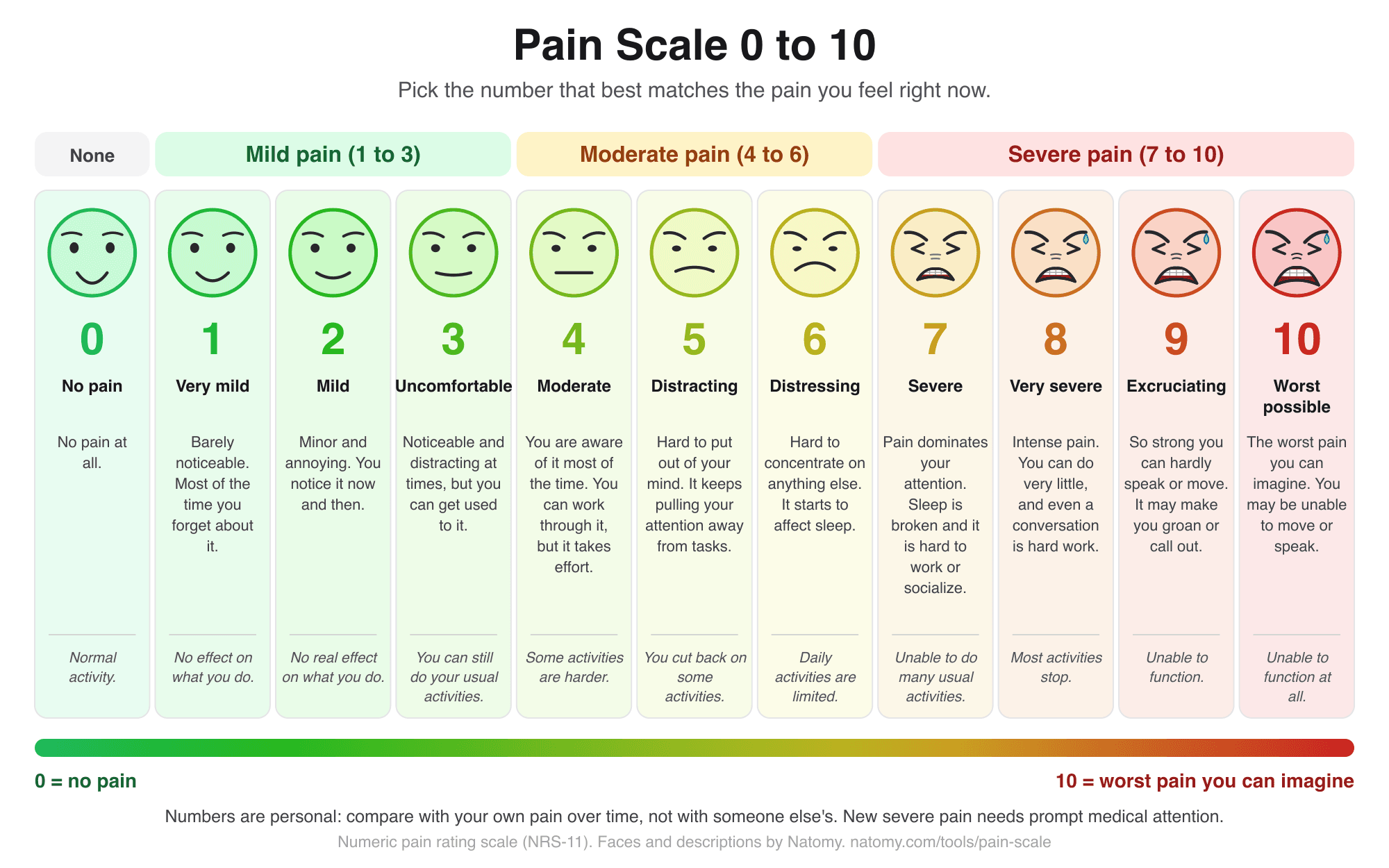
Pain Scale 0 to 10 Chart
Rate pain from 0 to 10 with drawn faces, see what mild, moderate, and severe mean, and copy a pain journal entry.
Try it free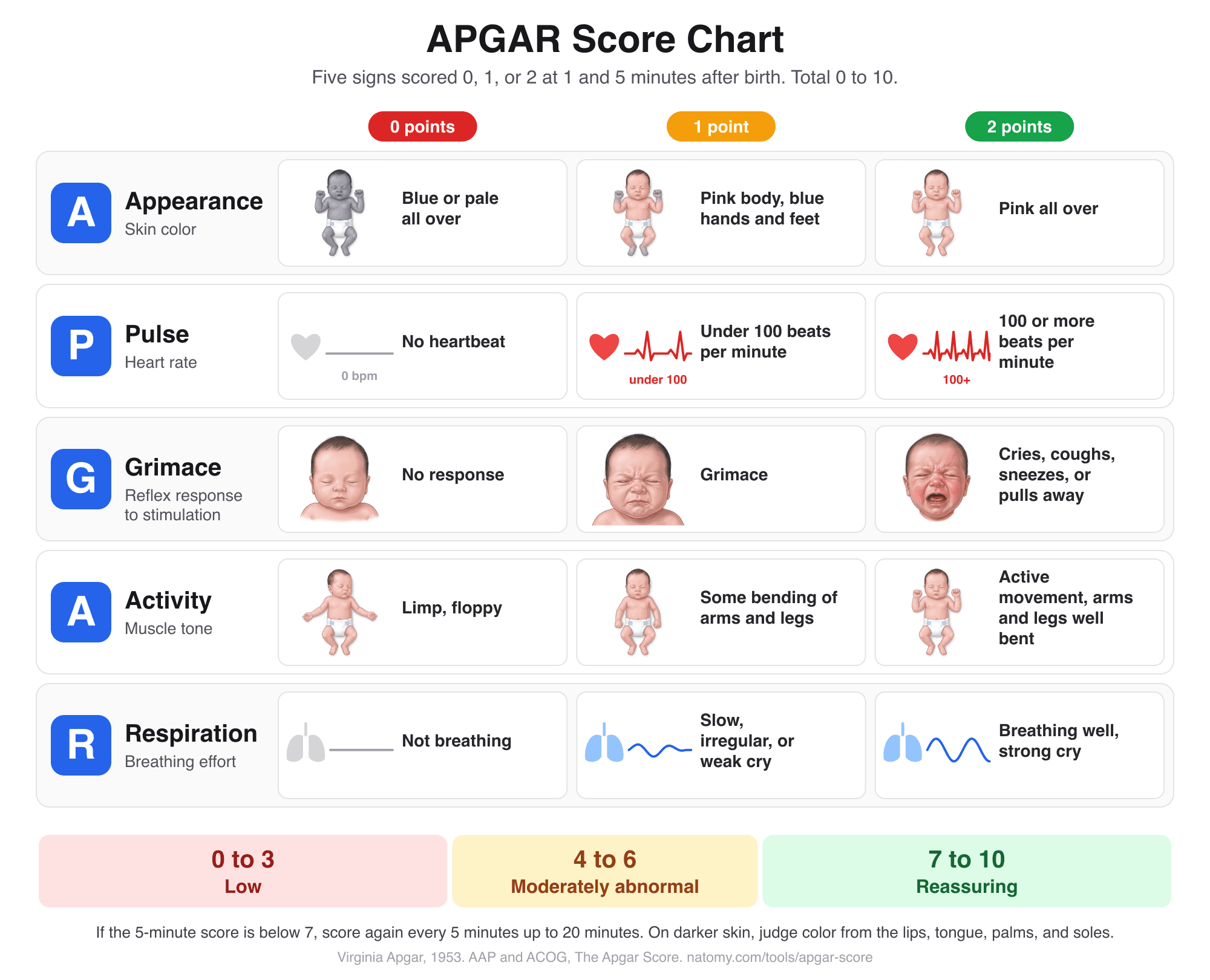
APGAR Score Chart and Calculator
Score the 5 newborn signs at 1, 5, and 10 minutes with an illustrated chart, what normal and low scores mean, and a note for the record.
Try it free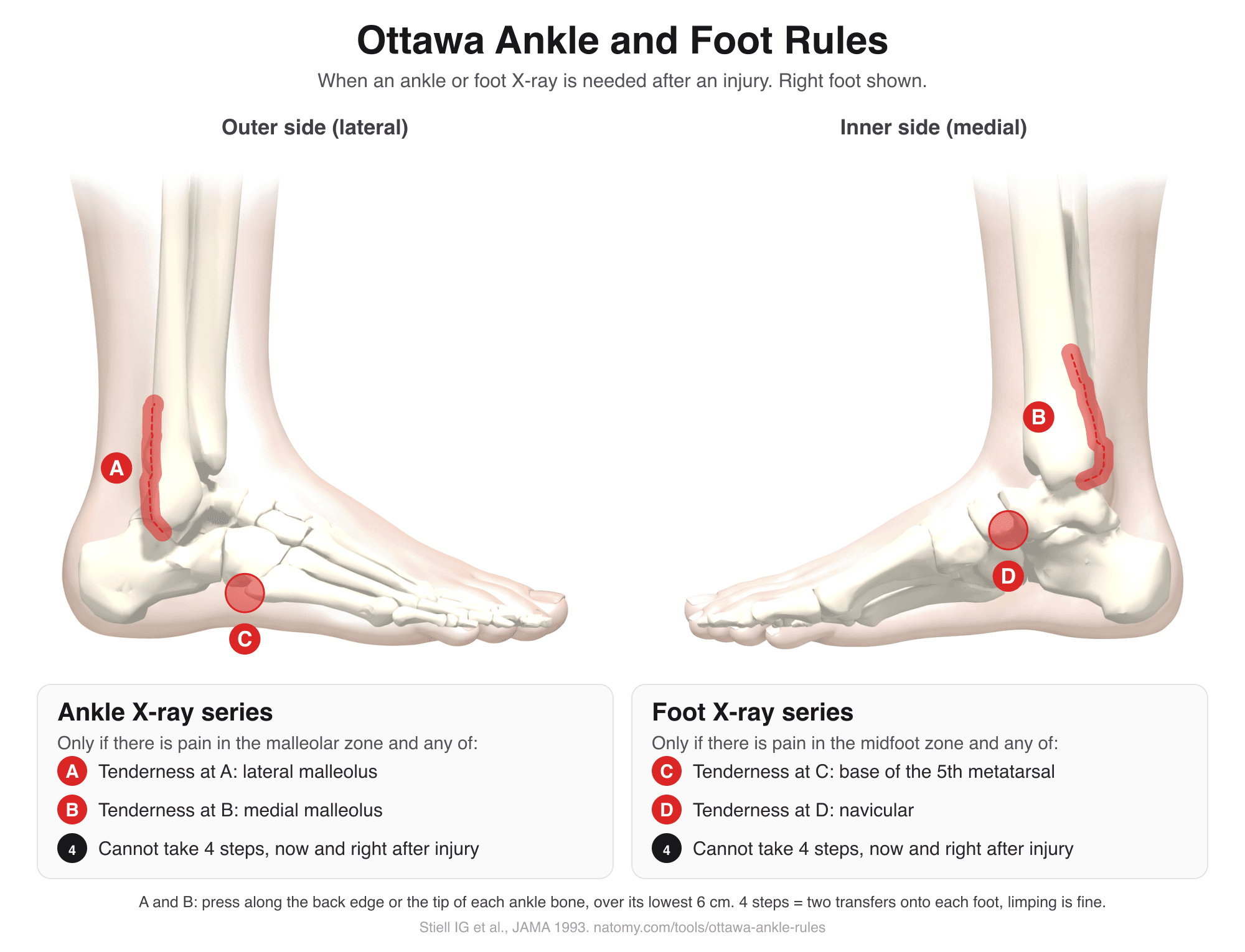
Ottawa Ankle Rules
Tap the tender spots on an illustrated ankle and foot to see if the Ottawa rules call for an X-ray. Includes the Ottawa knee rule.
Try it free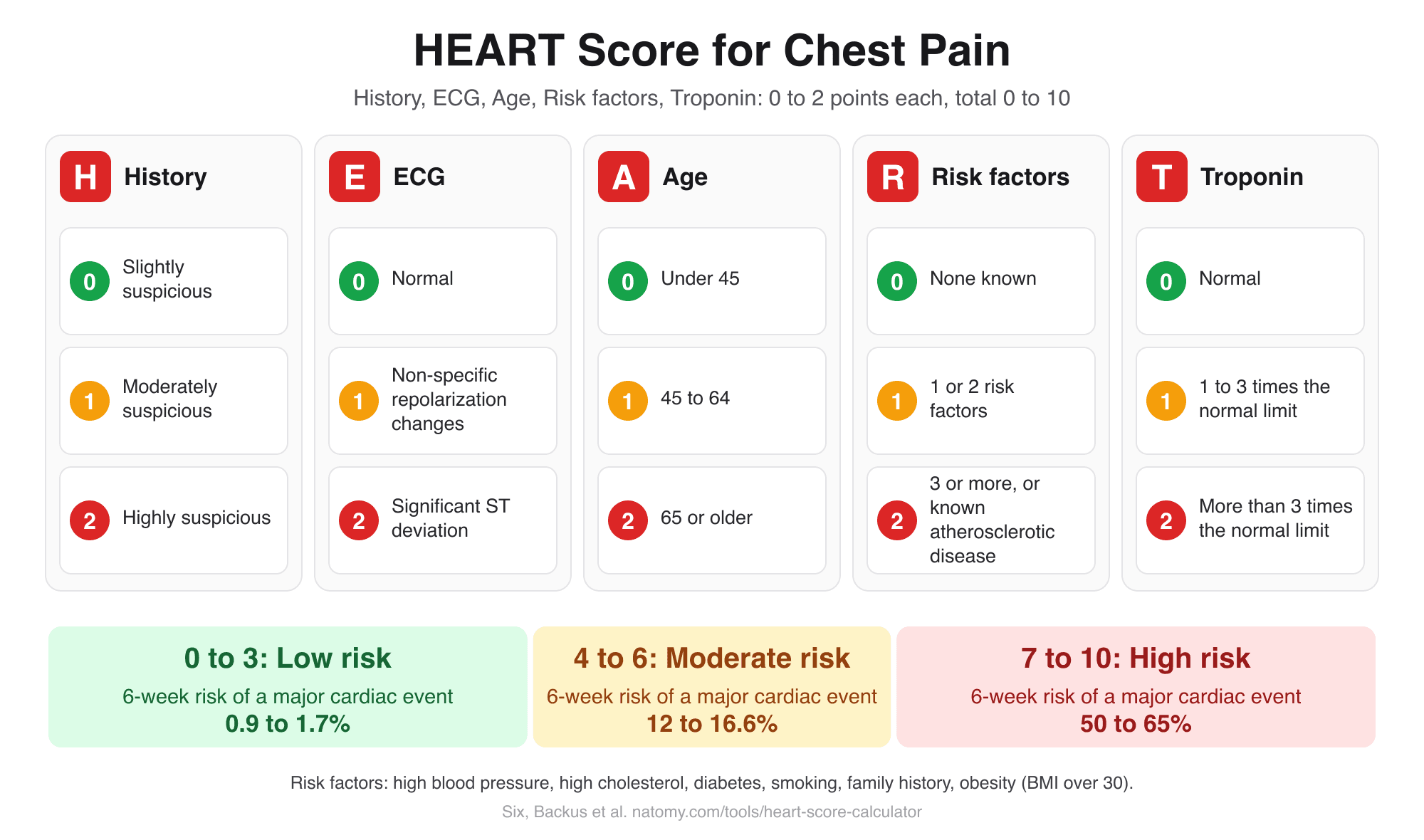
HEART Score Calculator
Score history, ECG, age, risk factors, and troponin for chest pain to get the HEART score, risk group, and 6-week MACE risk.
Try it free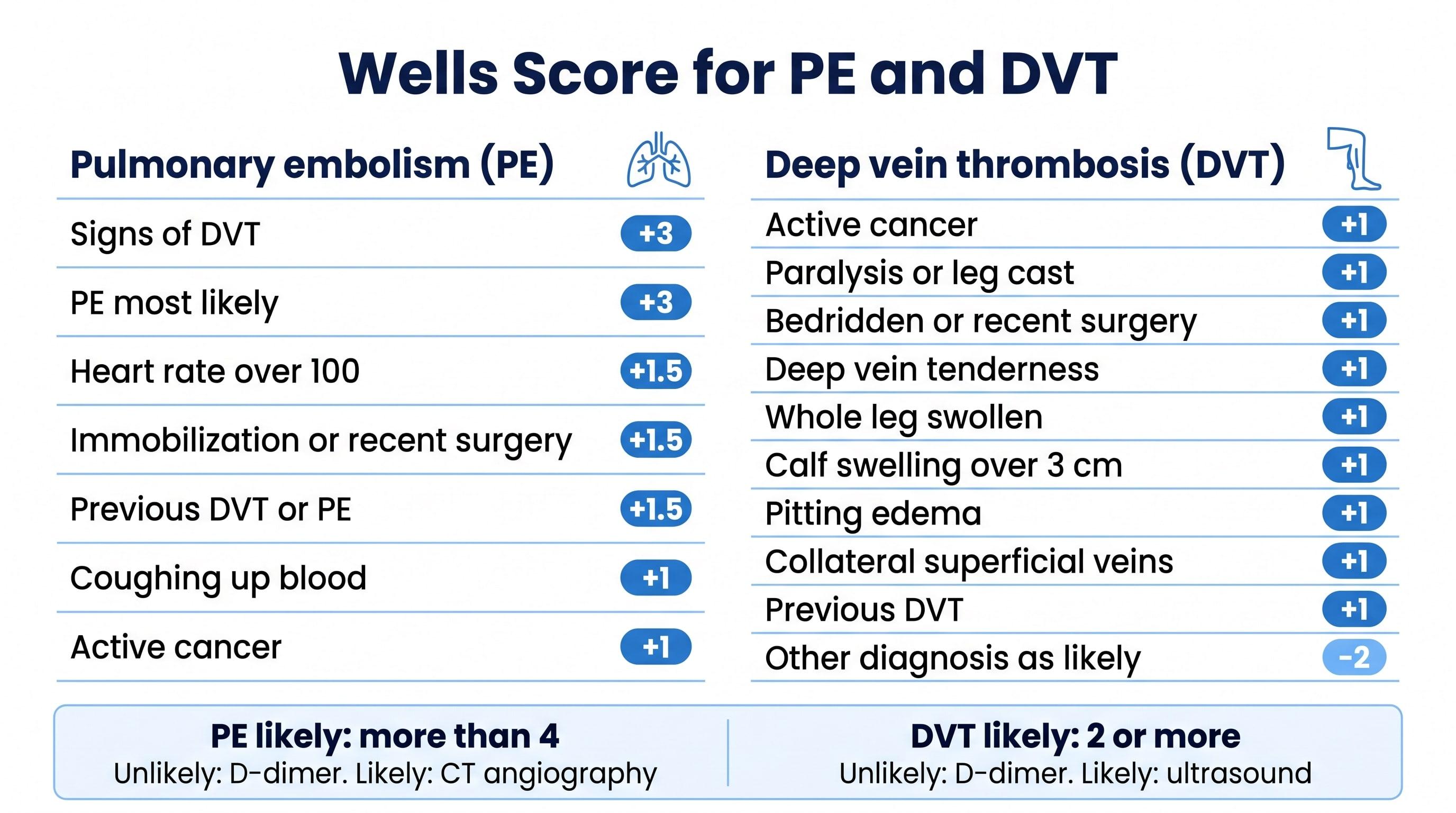
Wells Score Calculator (PE and DVT)
Check the Wells criteria for pulmonary embolism or deep vein thrombosis to get the score, the risk group, and the next test.
Try it free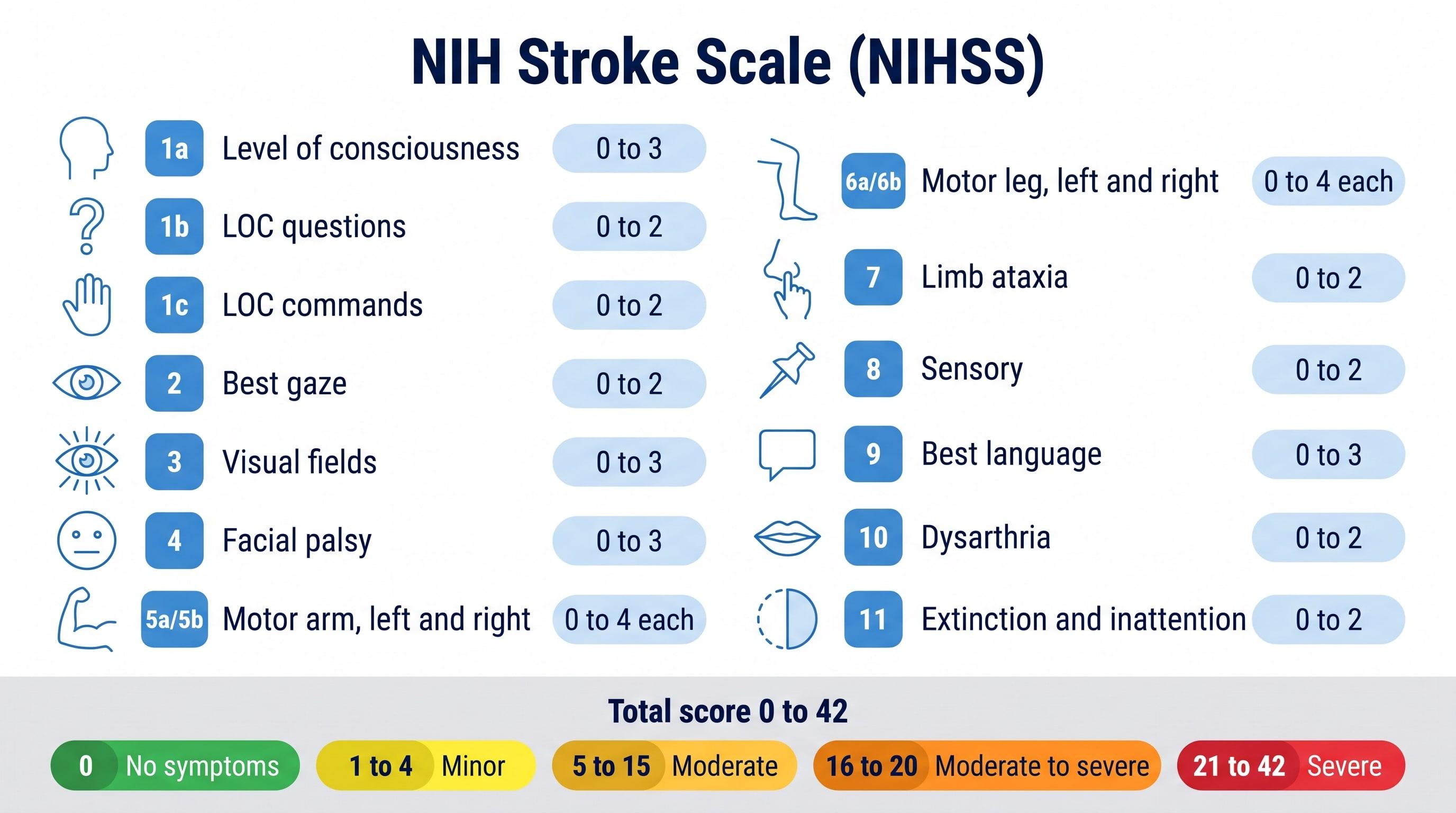
NIHSS Calculator (NIH Stroke Scale)
Score all 15 NIH Stroke Scale items to get the NIHSS total from 0 to 42 and the stroke severity range.
Try it free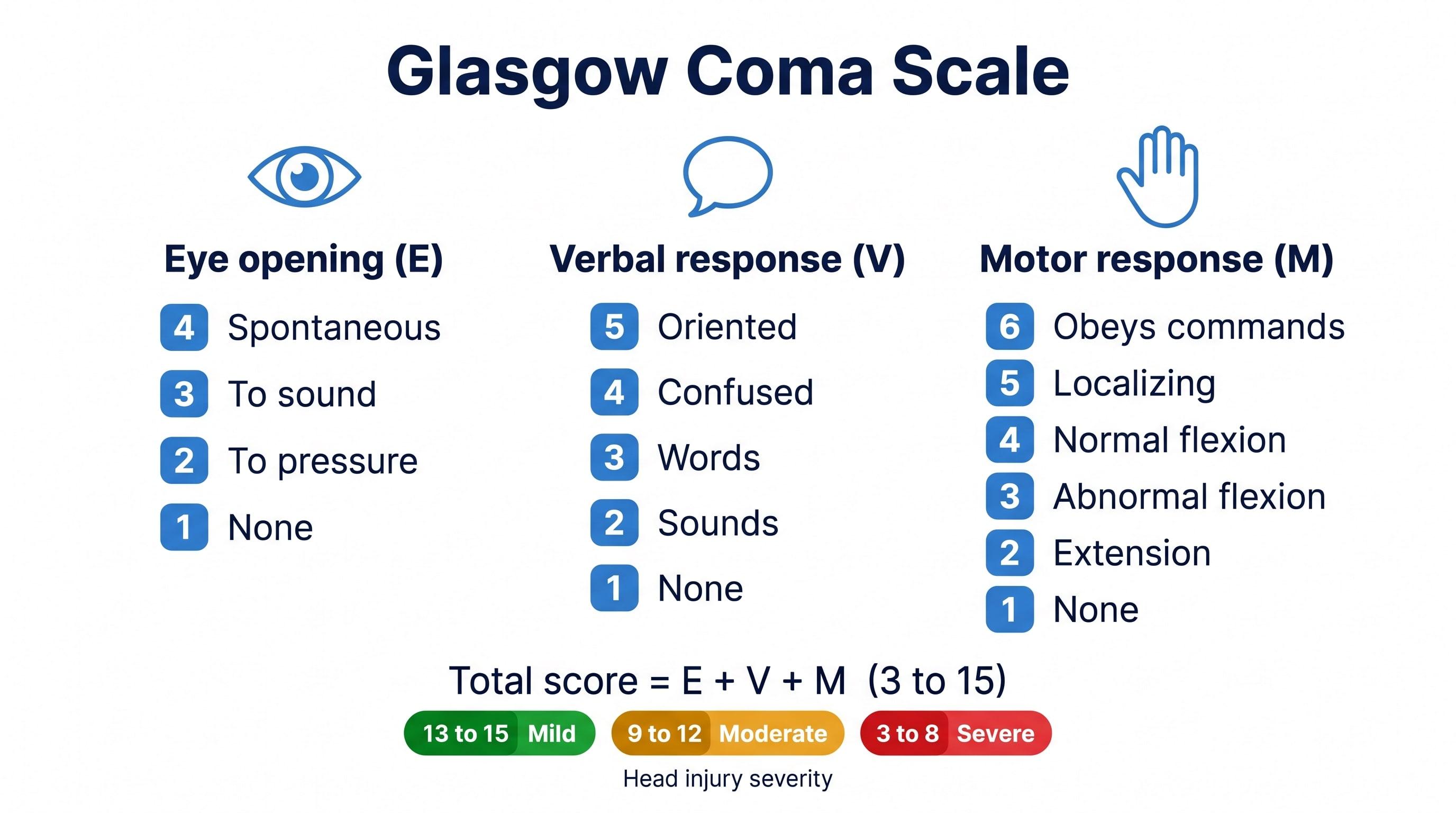
Glasgow Coma Scale Calculator
Score eye, verbal, and motor responses to get the GCS total, E V M code, severity range, and GCS-P.
Try it free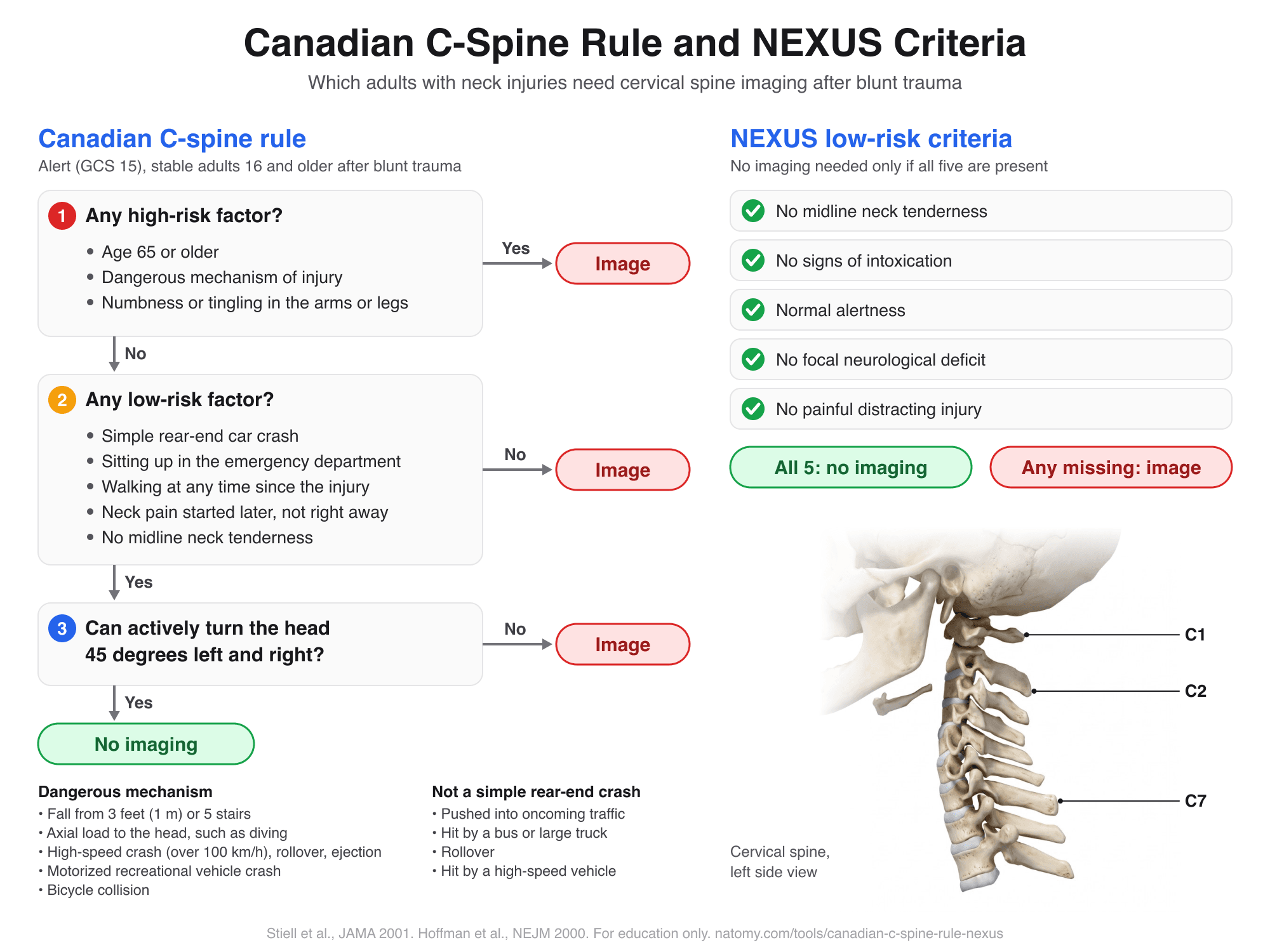
Canadian C-Spine Rule and NEXUS
Run the Canadian C-spine rule or the NEXUS criteria step by step to see which adults need neck imaging after trauma.
Try it free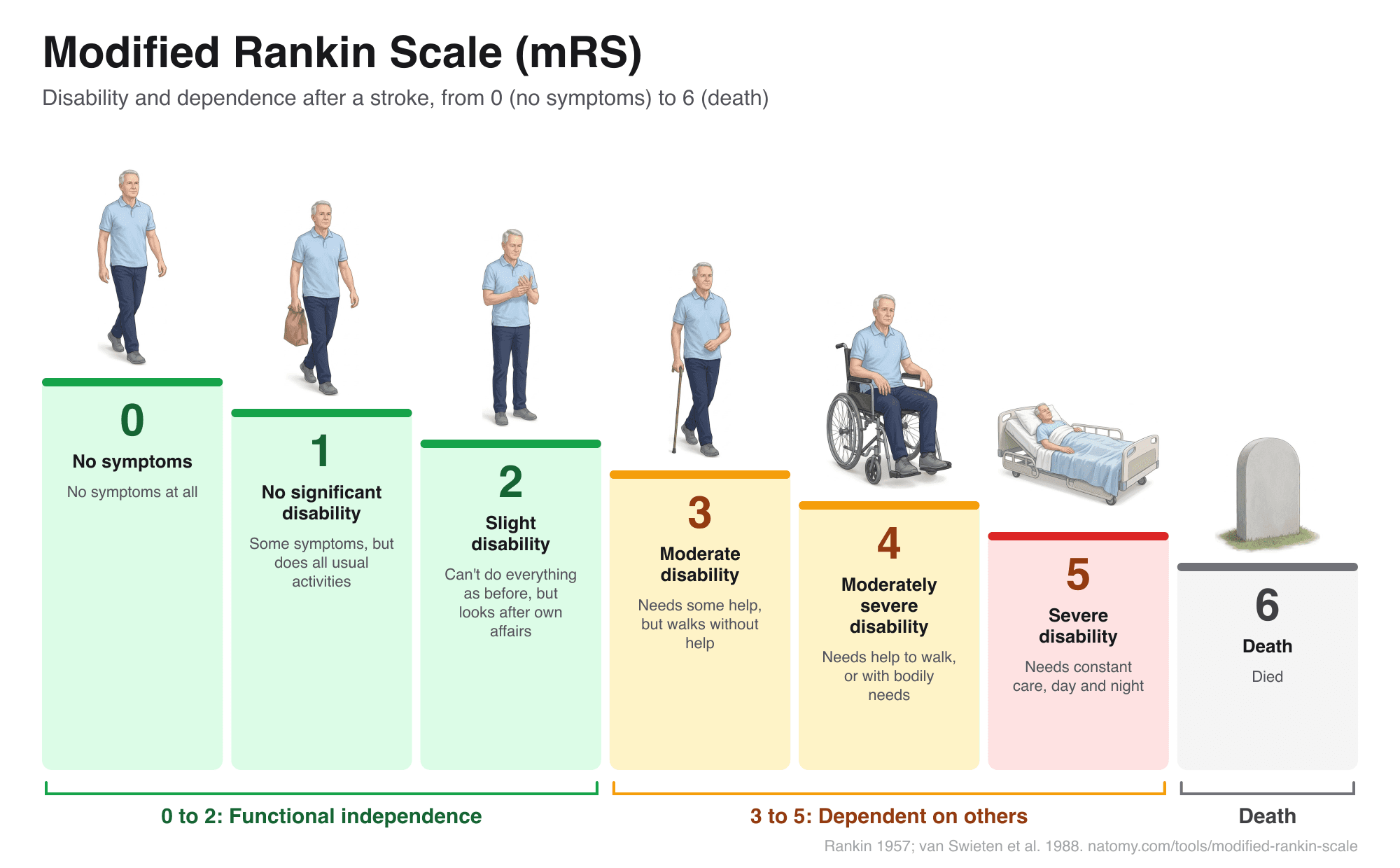
Modified Rankin Scale (mRS)
Illustrated mRS chart from 0 to 6 with a question-based score finder, what each grade means after a stroke, and a copyable note.
Try it free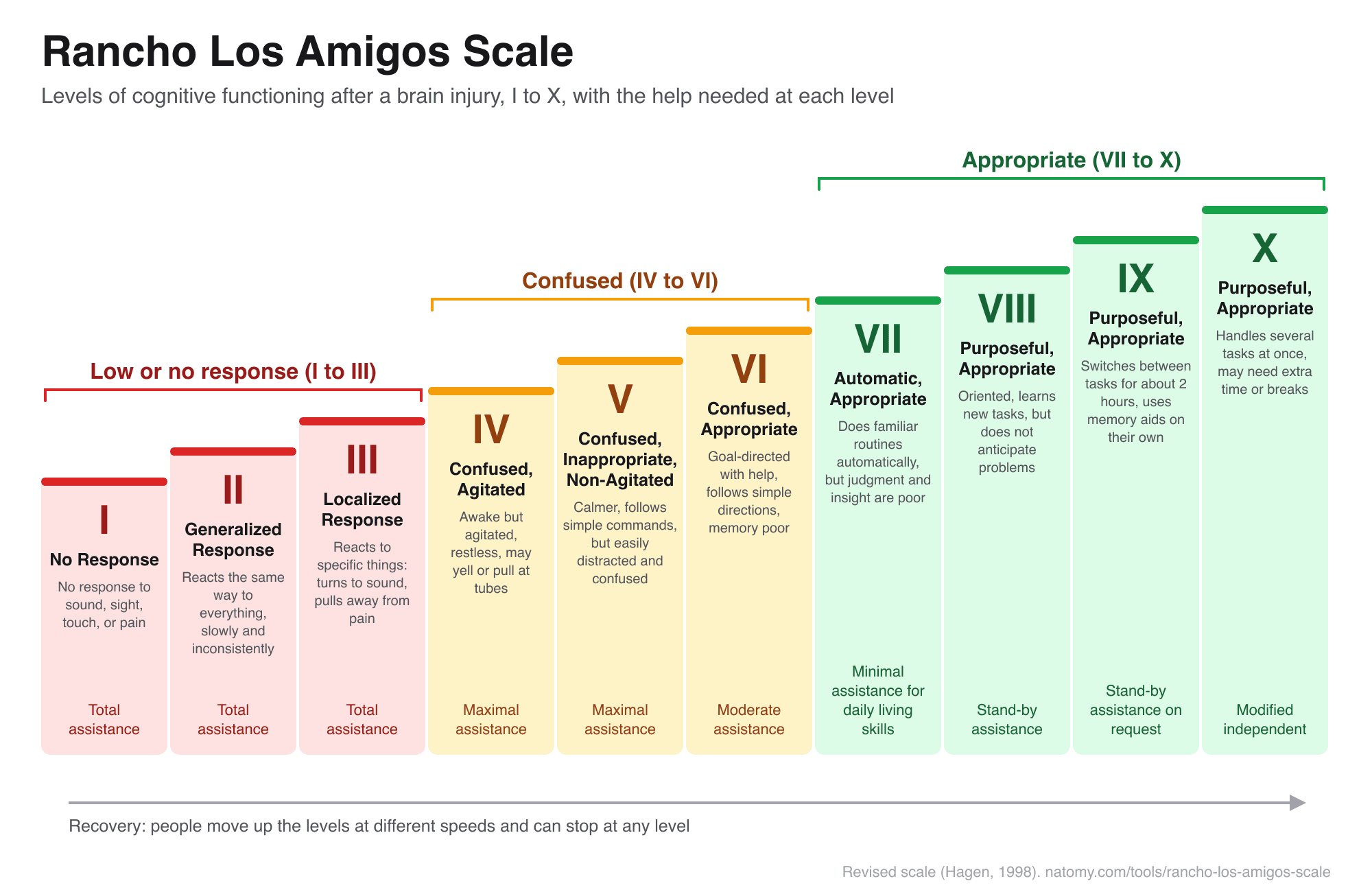
Rancho Los Amigos Scale
The 10 levels of cognitive functioning after a brain injury, with a level finder, what to expect, and how to help.
Try it free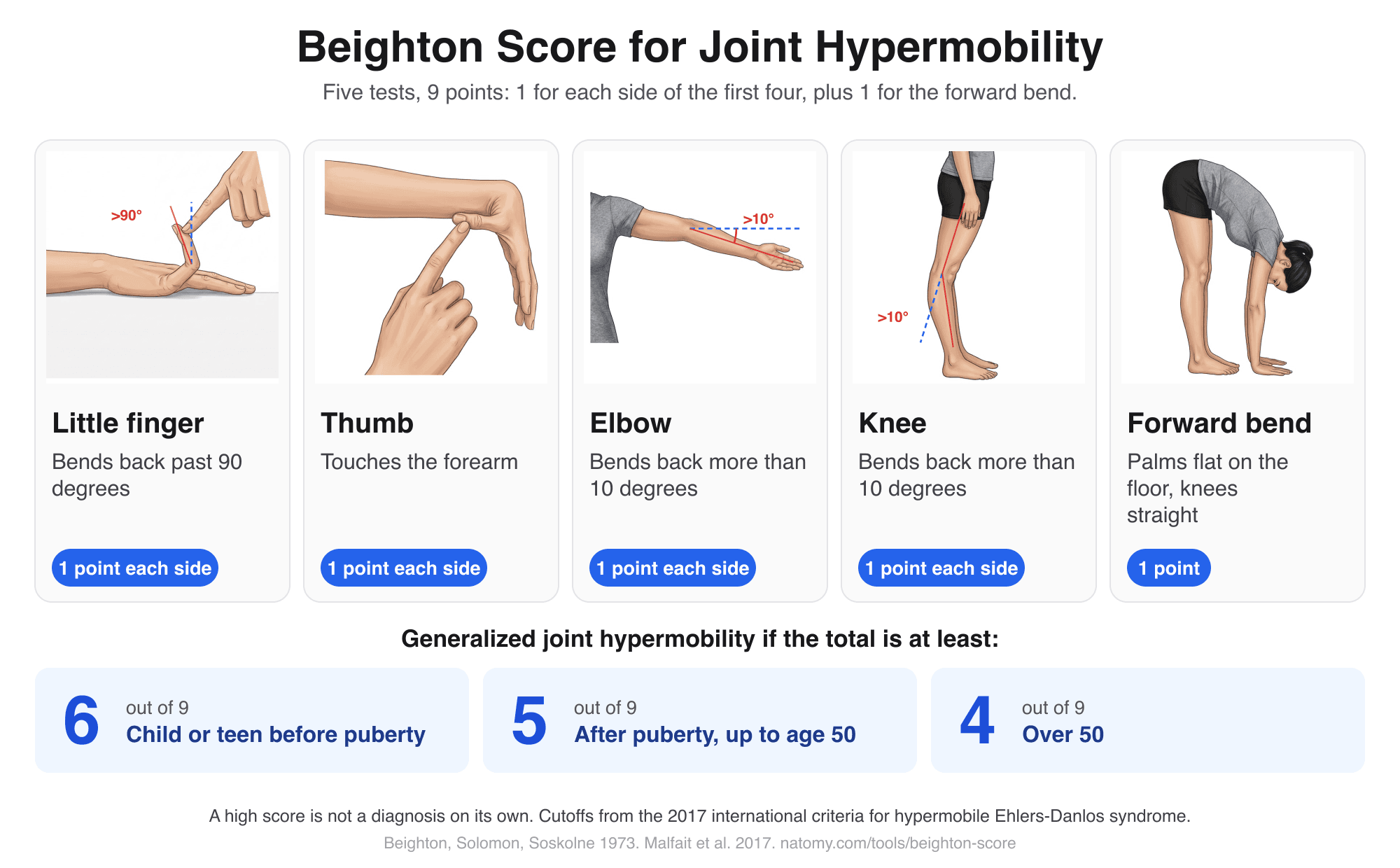
Beighton Score Calculator
Illustrated hypermobility test: score the 5 Beighton movements out of 9, compare with the age cutoff, and copy a note.
Try it free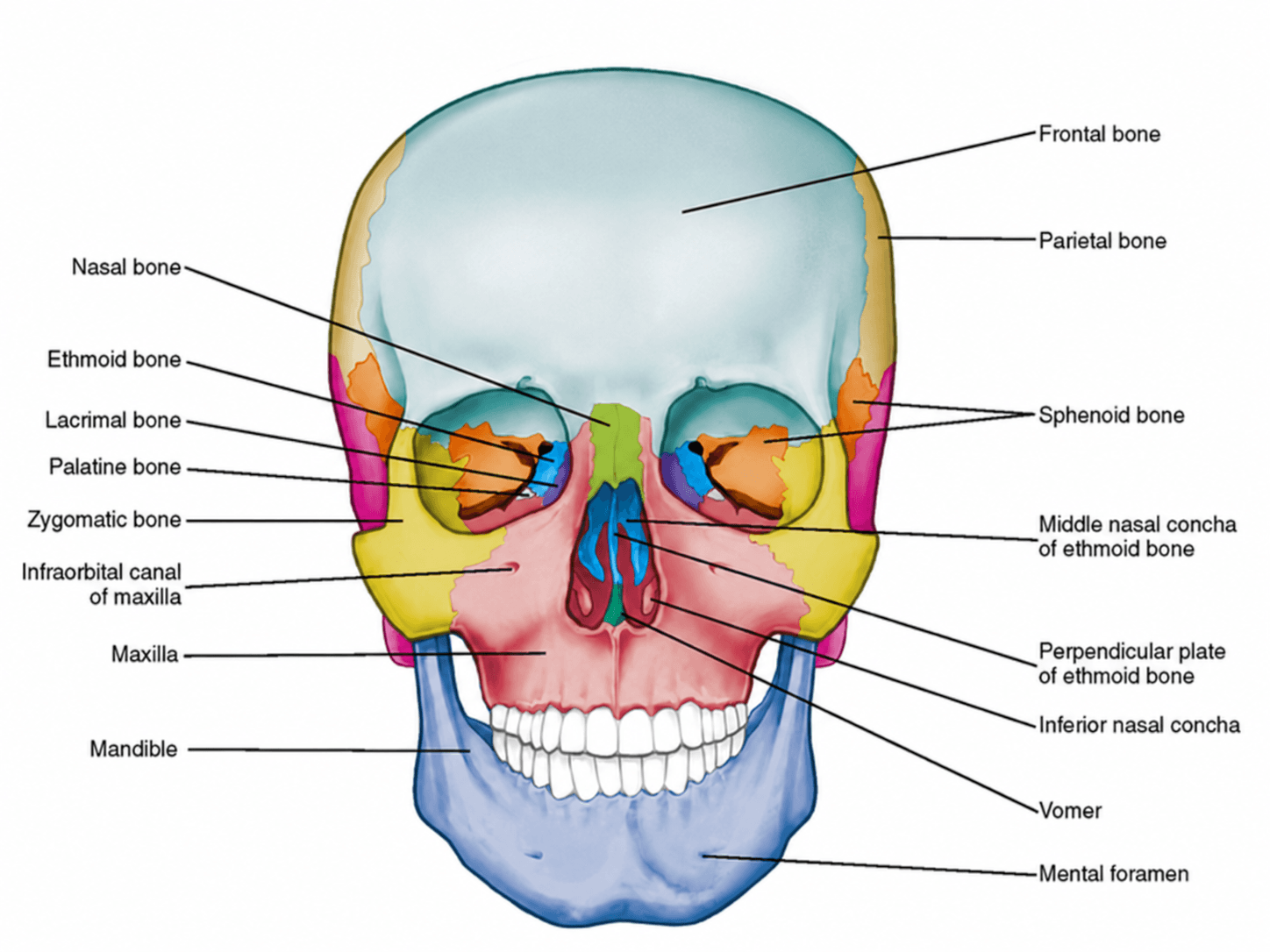
Anterior View of Skull Labeled
Free labeled and unlabeled anterior view of the skull, downloadable as PNG.
Try it free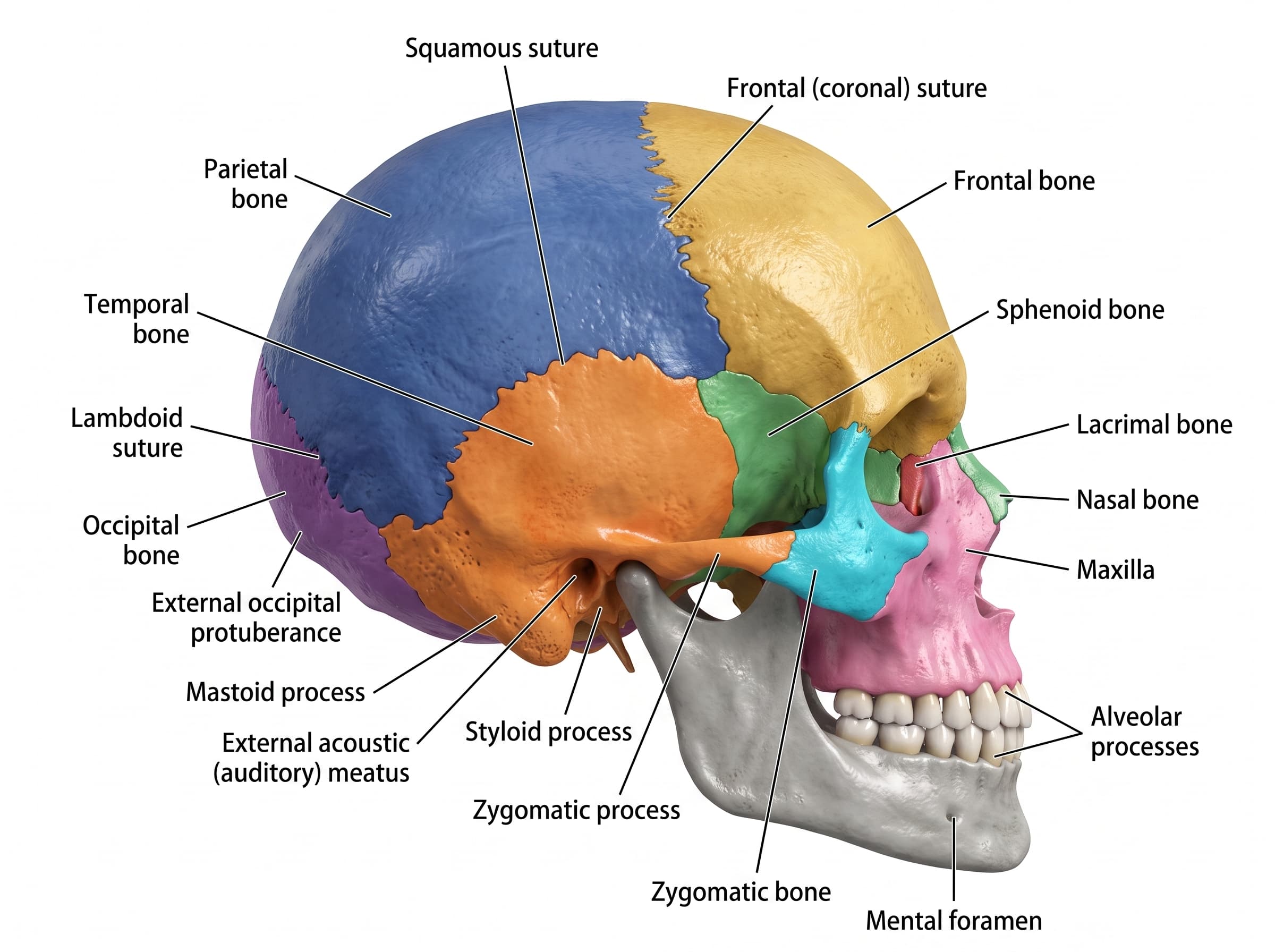
Lateral View of Skull Labeled
Free labeled and unlabeled lateral view of the skull, downloadable as PNG.
Try it free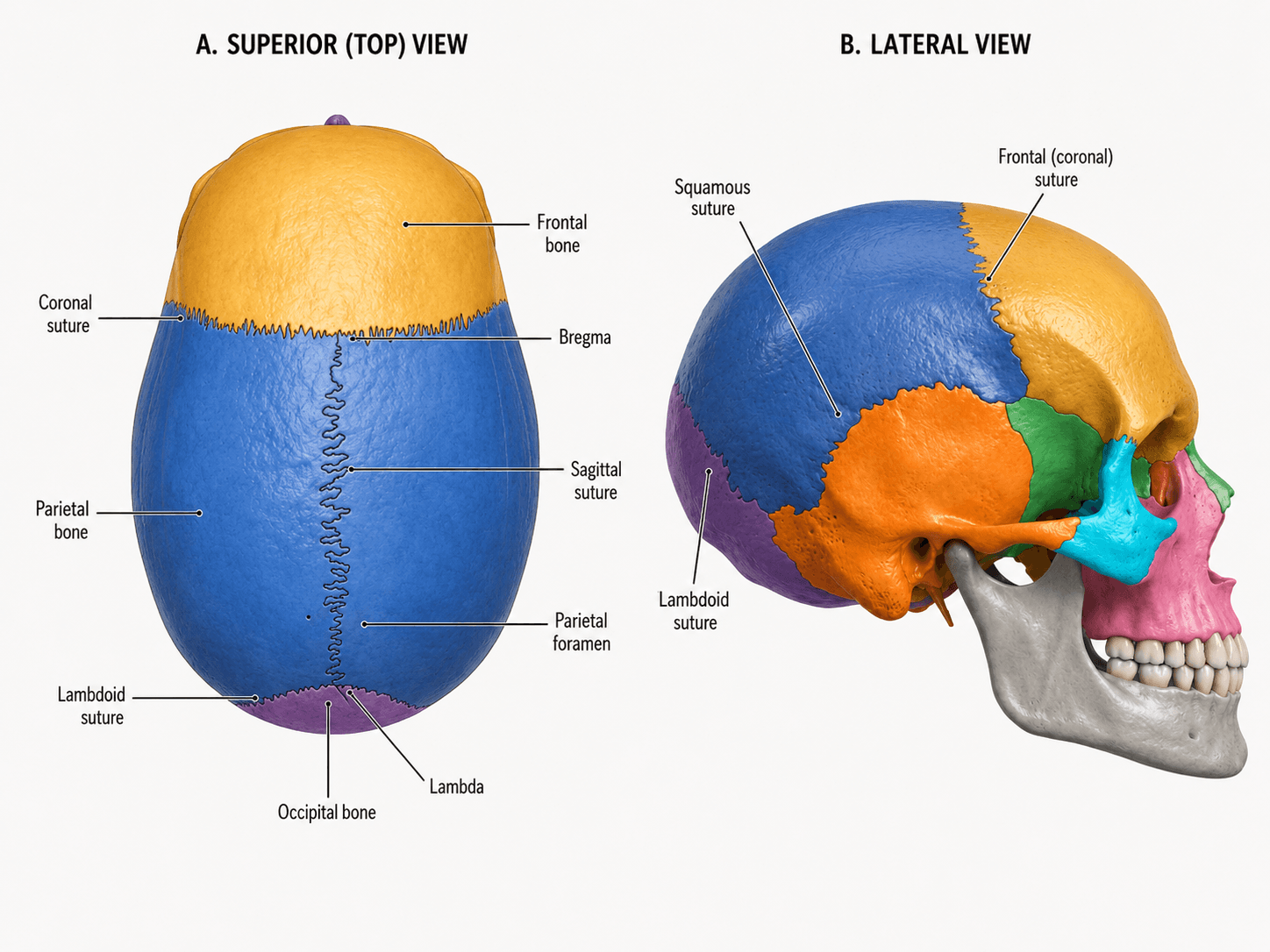
Skull Sutures Labeled
Free labeled and unlabeled skull sutures diagram, superior and lateral views, downloadable as PNG.
Try it free