Free Tools
Rule of Nines Burn Chart and Calculator
Click every area of the body with a partial or full thickness burn to get the total body surface area (TBSA) burned, using the rule of nines for adults or young children. Add a weight to see the Parkland formula fluid estimate for the first 24 hours.
Click every area with a partial or full thickness burn. Do not count superficial (first degree) burns.
The rule of nines in 60 seconds
How the rule of nines works
The rule of nines, described by Pulaski and Tennison and popularized by Wallace in the 1950s, divides the adult body into areas of about 9% or multiples of 9%. It is the fastest way to estimate burn size in the field and in the emergency department, and the estimate decides whether a patient needs formal fluid resuscitation (usually above 20% TBSA in adults and 10 to 15% in children) and a burn center.
| Area | Adult | Infant or young child |
|---|---|---|
| Head and neck | 9% | 18% |
| Each arm | 9% | 9% |
| Front of the trunk | 18% | 18% |
| Back of the trunk | 18% | 18% |
| Each leg | 18% | 14% |
| Genitals and perineum | 1% | included above |
Rule of nines burn charts for adults and children
Front and back views with the percentage for each area, for adults and for infants and young children. Free to download and print.
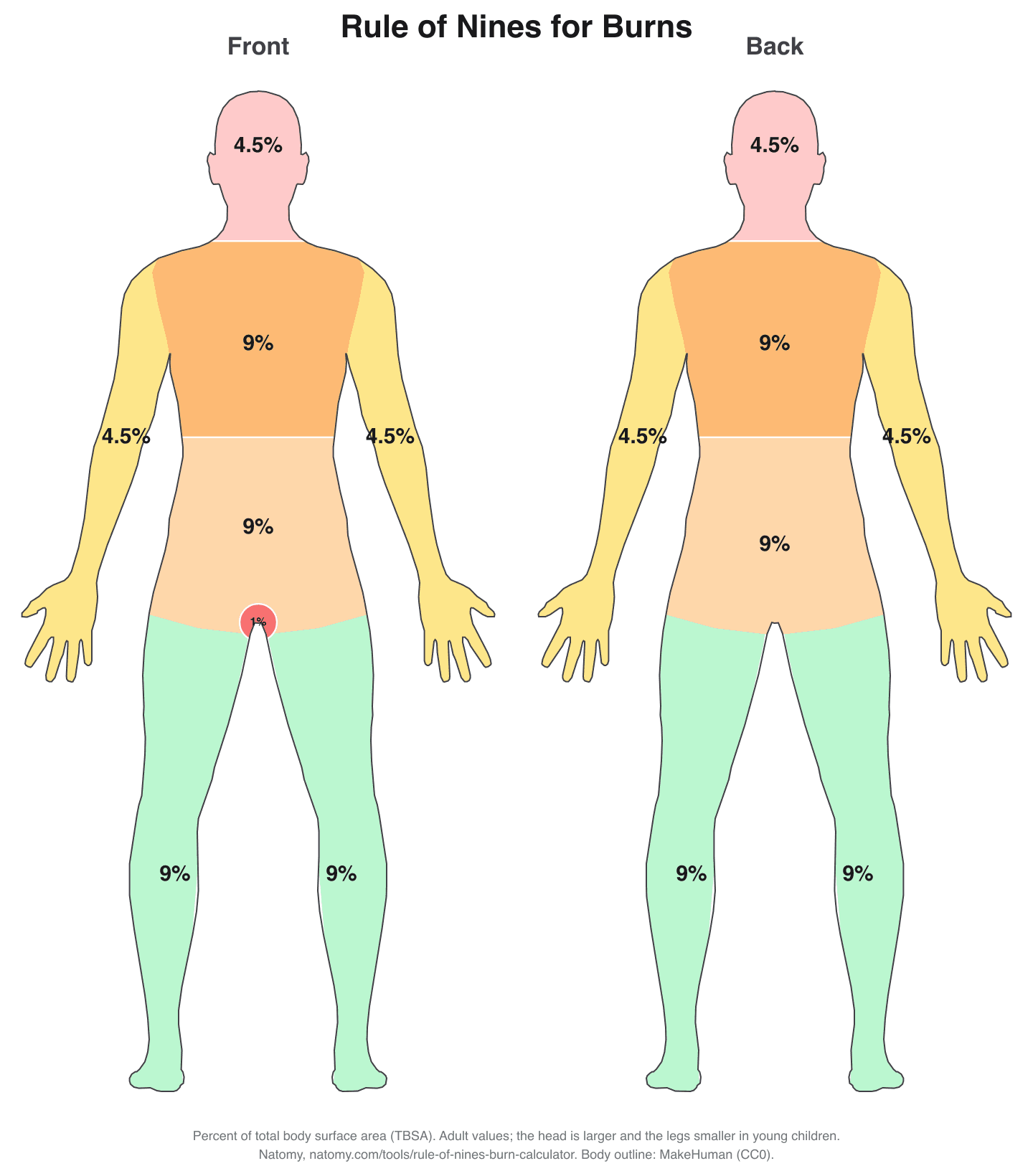 Download adult chart (PNG)
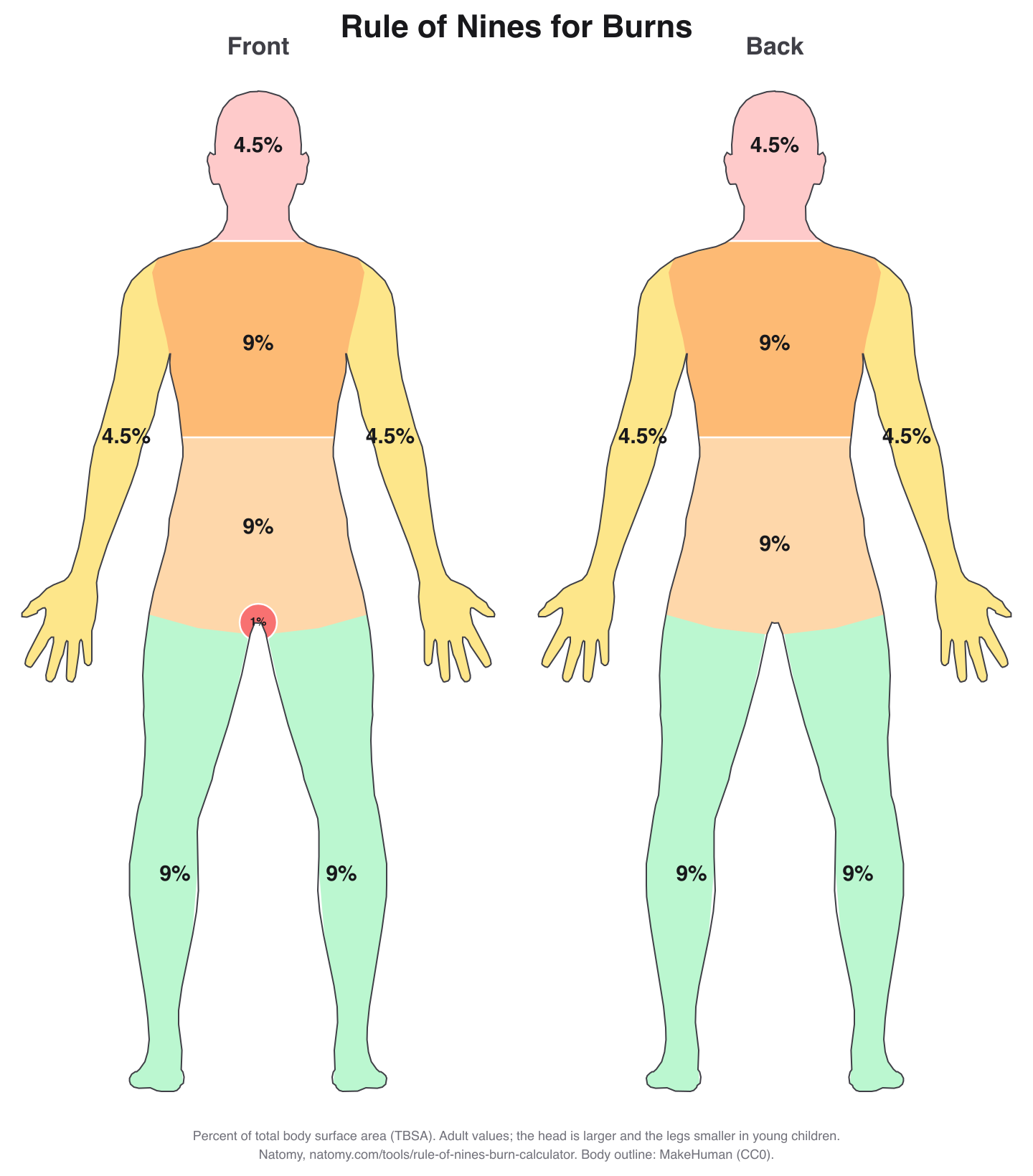
 Download infant or young child chart (PNG)
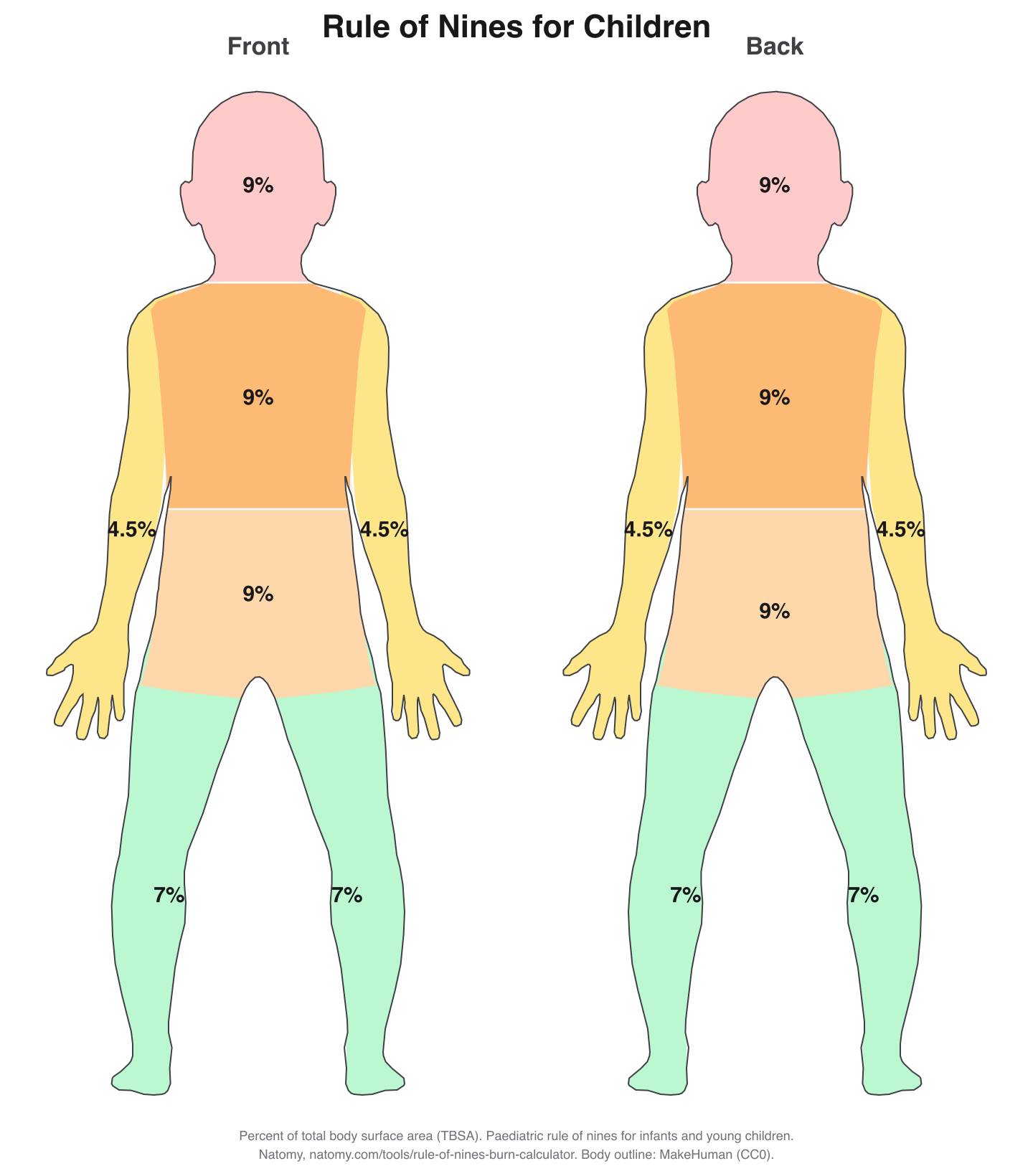
Rule of nines for children
Infants and young children have a much larger head and shorter legs relative to the rest of the body, so the paediatric rule of nines gives the head 18% (9% front and 9% back) and each leg 14% (7% front and 7% back). The arms and trunk keep their adult values. As children grow, the head shrinks and the legs grow toward adult proportions, so for older children use the Lund and Browder chart below.
Lund and Browder chart
The Lund and Browder chart (1944) adjusts the head, thigh, and lower leg for age, so it is more accurate than the rule of nines, especially in children. The values below are for one side (front or back) of each area.
| Area | 0 to 1 | 1 to 4 | 5 to 9 | 10 to 14 | 15 | Adult |
|---|---|---|---|---|---|---|
| Head (front or back) | 9.5% | 8.5% | 6.5% | 5.5% | 4.5% | 3.5% |
| Thigh (front or back, each) | 2.75% | 3.25% | 4% | 4.25% | 4.5% | 4.75% |
| Lower leg (front or back, each) | 2.5% | 2.5% | 2.75% | 3% | 3.25% | 3.5% |
Areas that do not change with age
| Area | Percent |
|---|---|
| Neck (front or back) | 1% |
| Front of trunk | 13% |
| Back of trunk | 13% |
| Each buttock | 2.5% |
| Genitals | 1% |
| Upper arm (front or back, each) | 2% |
| Forearm (front or back, each) | 1.5% |
| Hand (front or back, each) | 1.25% |
| Foot (front or back, each) | 1.75% |
Parkland formula
The Parkland formula, developed by Charles Baxter at Parkland Memorial Hospital in Dallas, estimates fluid for the first 24 hours after a major burn:
Fluid (mL) = 4 x weight (kg) x %TBSA
Give half in the first 8 hours from the time of the burn and the other half over the next 16 hours. A 70 kg adult with 30% TBSA burns needs about 8,400 mL in 24 hours: 4,200 mL in the first 8 hours (about 525 mL per hour) and then about 263 mL per hour. Many burn centers now start lower, around 2 mL x kg x %TBSA, and all adjust the rate to a urine output of about 0.5 mL per kg per hour in adults and 1 mL per kg per hour in children, who also need maintenance fluid.
Burn depth
| Depth | How it looks | In TBSA |
|---|---|---|
| Superficial (first degree) | Red, dry, painful, no blisters, like a sunburn | Not counted in TBSA |
| Superficial partial thickness (second degree) | Blisters, moist, very painful, blanches with pressure | Counted |
| Deep partial thickness (second degree) | Blotchy red or white, less painful, slow to blanch | Counted |
| Full thickness (third degree) | White, leathery, or charred, often painless | Counted |
Burn charts in injury cases
For physicians, the chart is a quick, shareable record of burn size. For personal injury attorneys, the TBSA and depth in the records are the backbone of a burn case: they explain the surgery, grafting, and scarring that follow. Natomy turns burn photos and records into clear medical illustrations of burn depth, grafts, and scarring for patient education and medical-legal exhibits; see the Natomy atlas.
Try Natomy TodayFAQ
What is the rule of nines for burns?+
The rule of nines is a quick way to estimate how much of the body's surface is burned. In adults, the head and neck and each arm are about 9% each, the front and back of the trunk are 18% each, each leg is 18%, and the genitals and perineum are 1%, for a total of 100%. Add up the areas with partial or full thickness burns to get the percentage of total body surface area (TBSA).
How is the rule of nines different for children?+
Young children have a larger head and smaller legs relative to the body, so the paediatric rule of nines gives the head 18% and each leg 14%. Between infancy and adolescence the proportions change gradually, which is why the Lund and Browder chart, with values for each age, is more accurate in children.
What is the Parkland formula?+
The Parkland formula estimates the fluid a burned adult needs in the first 24 hours: 4 mL x body weight in kg x %TBSA burned, usually as lactated Ringer's solution. Half is given in the first 8 hours from the time of the burn (not from arrival at hospital), and the rest over the next 16 hours. For example, a 70 kg adult with 30% TBSA burns needs about 8,400 mL: 4,200 mL in the first 8 hours, then about 263 mL per hour.
Which burns count toward TBSA?+
Only partial thickness (second degree) and full thickness (third degree) burns are counted. Superficial (first degree) burns, which are red without blisters, are left out because they do not cause the fluid shifts that drive resuscitation.
What is the palm method?+
For small or scattered burns, the patient's own palm including the fingers covers about 1% of their body surface. Count how many palms the burns would cover and add that percentage.
When does a burn need a burn center?+
Referral criteria commonly include partial thickness burns over 10% TBSA, any full thickness burn, burns of the face, hands, feet, genitals, perineum, or major joints, electrical and chemical burns, inhalation injury, and burns in patients with serious other injuries or illnesses. Local guidelines vary.
Is the rule of nines accurate?+
It is a fast estimate, and studies show clinicians often overestimate burn size with it, especially for small burns, which can lead to too much fluid. The Lund and Browder chart is more precise, and many burn centers now use digital mapping. Recheck the estimate once the burns are cleaned and blisters are assessed.
Why do lawyers use burn charts?+
In burn injury cases, the TBSA and depth recorded in the medical records describe how severe the injury was, and they drive the treatment, the length of stay, and the scarring. Attorneys use the burn chart to understand the records and to show a jury where and how extensive the burns were.
Sources: Wallace AB. The exposure treatment of burns. Lancet 1951. Lund CC, Browder NC. The estimation of areas of burns. Surg Gynecol Obstet 1944. Baxter CR, Shires T. Physiological response to crystalloid resuscitation of severe burns. Ann N Y Acad Sci 1968. Body outline from the MakeHuman base mesh (CC0). For education only; not a substitute for clinical assessment or local burn guidelines.
Related free tools
Free Online DICOM Viewer (3D)
Open a CT or MRI DICOM folder in your browser and view it in 3D, with AI anatomy labeling. Nothing is uploaded.
Try it free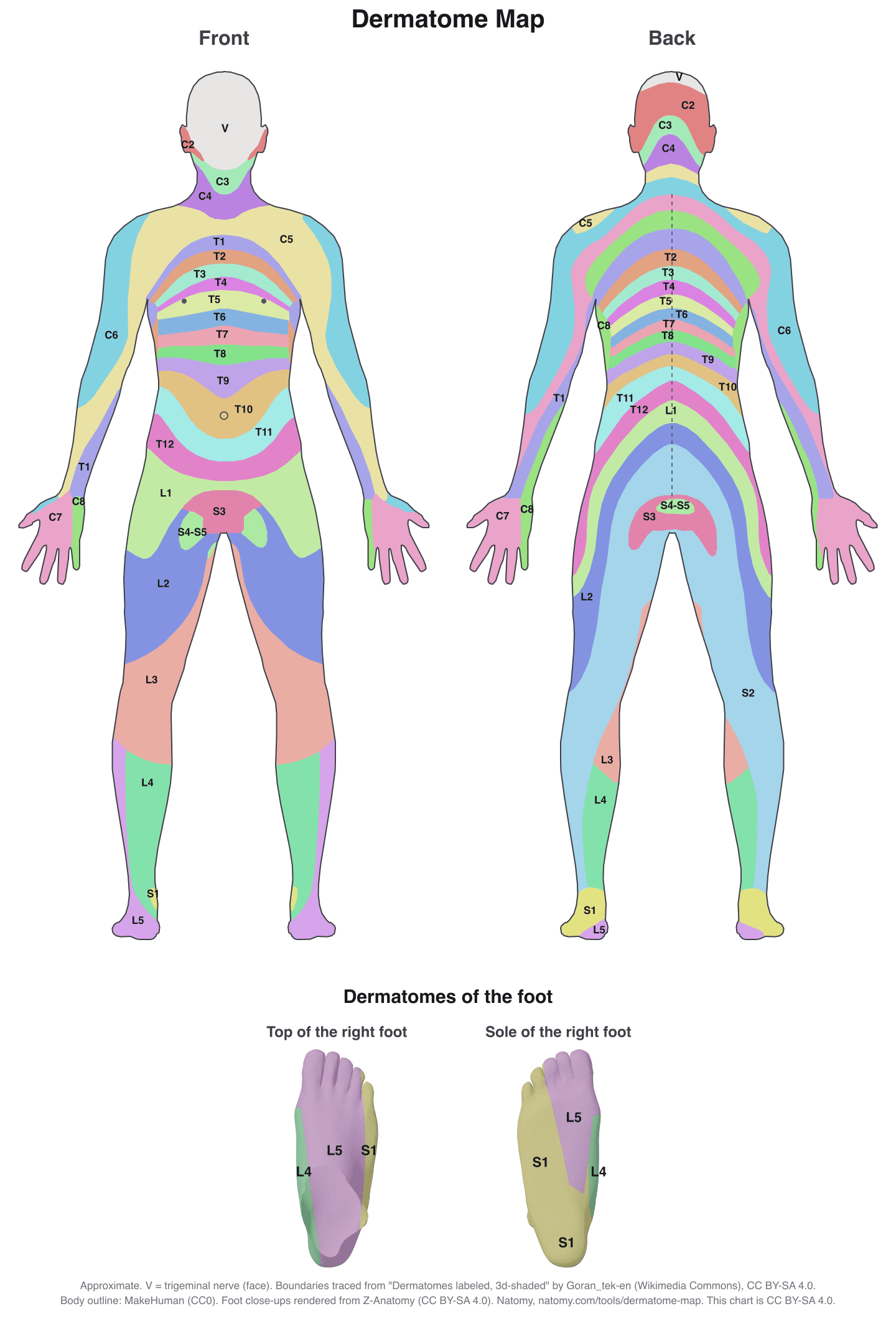
Interactive Dermatome Map
Tap the body to see each nerve root's skin area, test point, myotome, reflex, and disc level. Free printable chart.
Try it free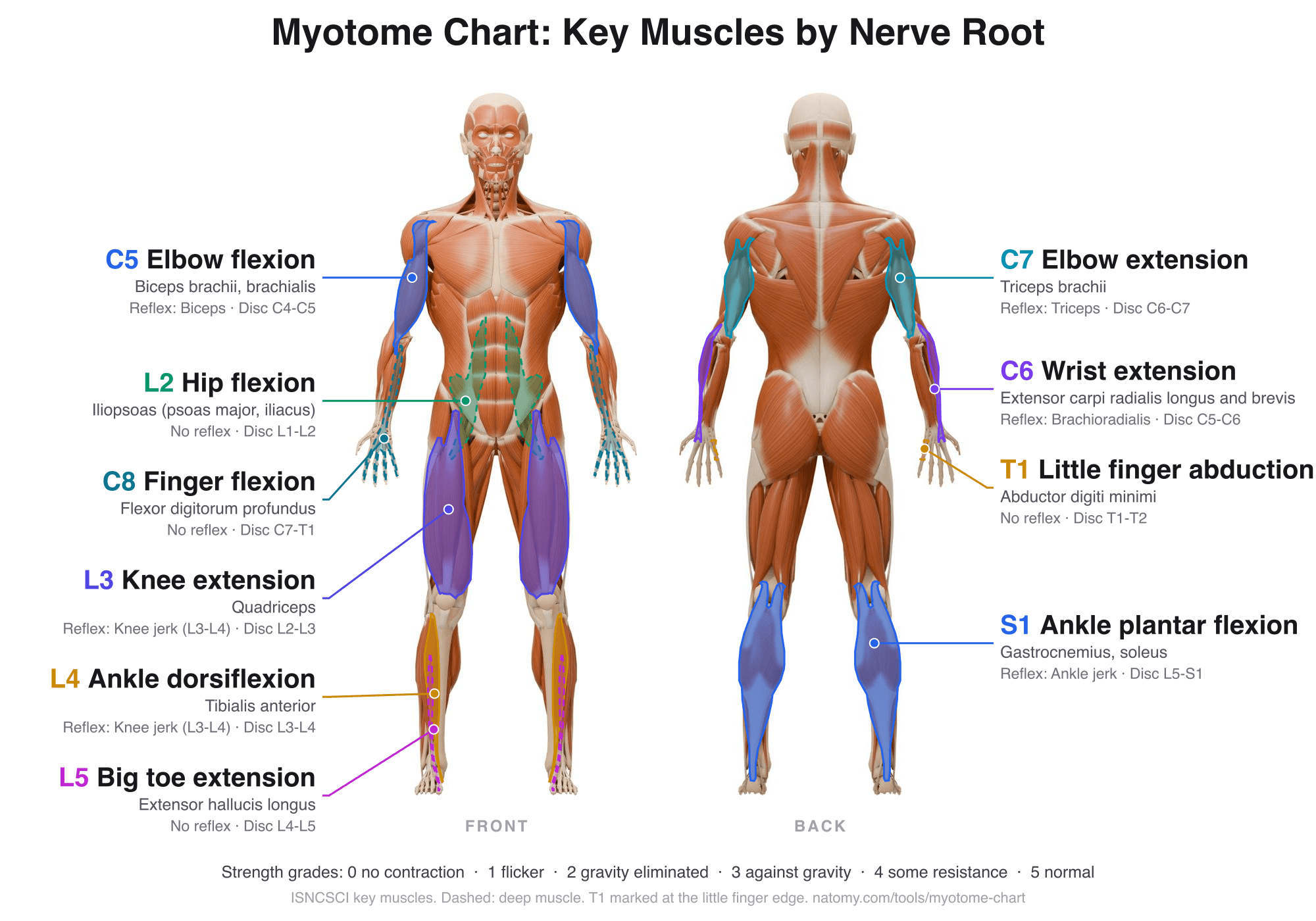
Myotome Chart and Motor Score
Tap a nerve root to see its key muscle, test position, and reflex. Grade strength 0 to 5 for the ISNCSCI motor score.
Try it free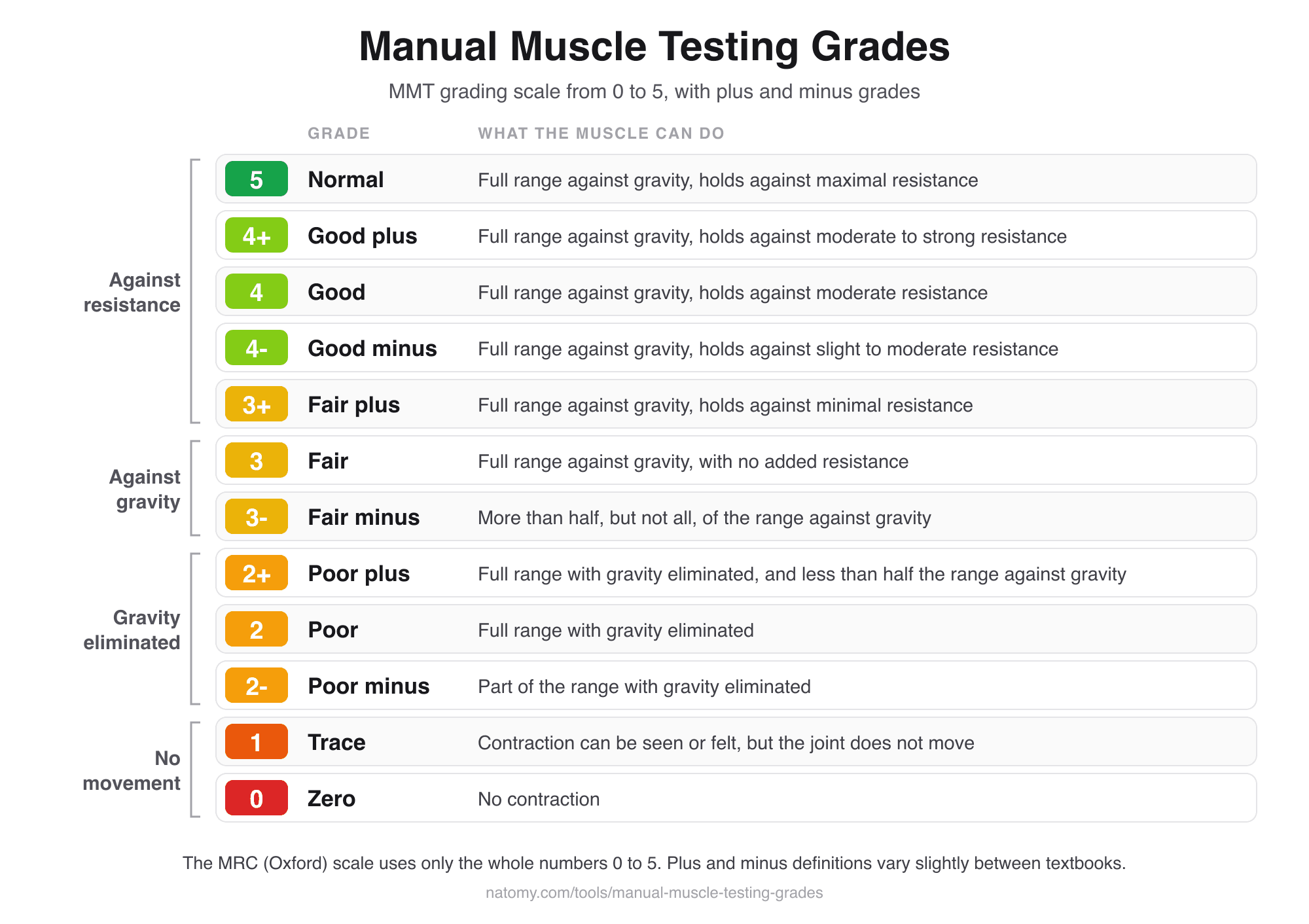
Manual Muscle Testing Grades
MMT grading scale chart from 0 to 5 with plus and minus grades, and a grade finder that writes the note for you.
Try it free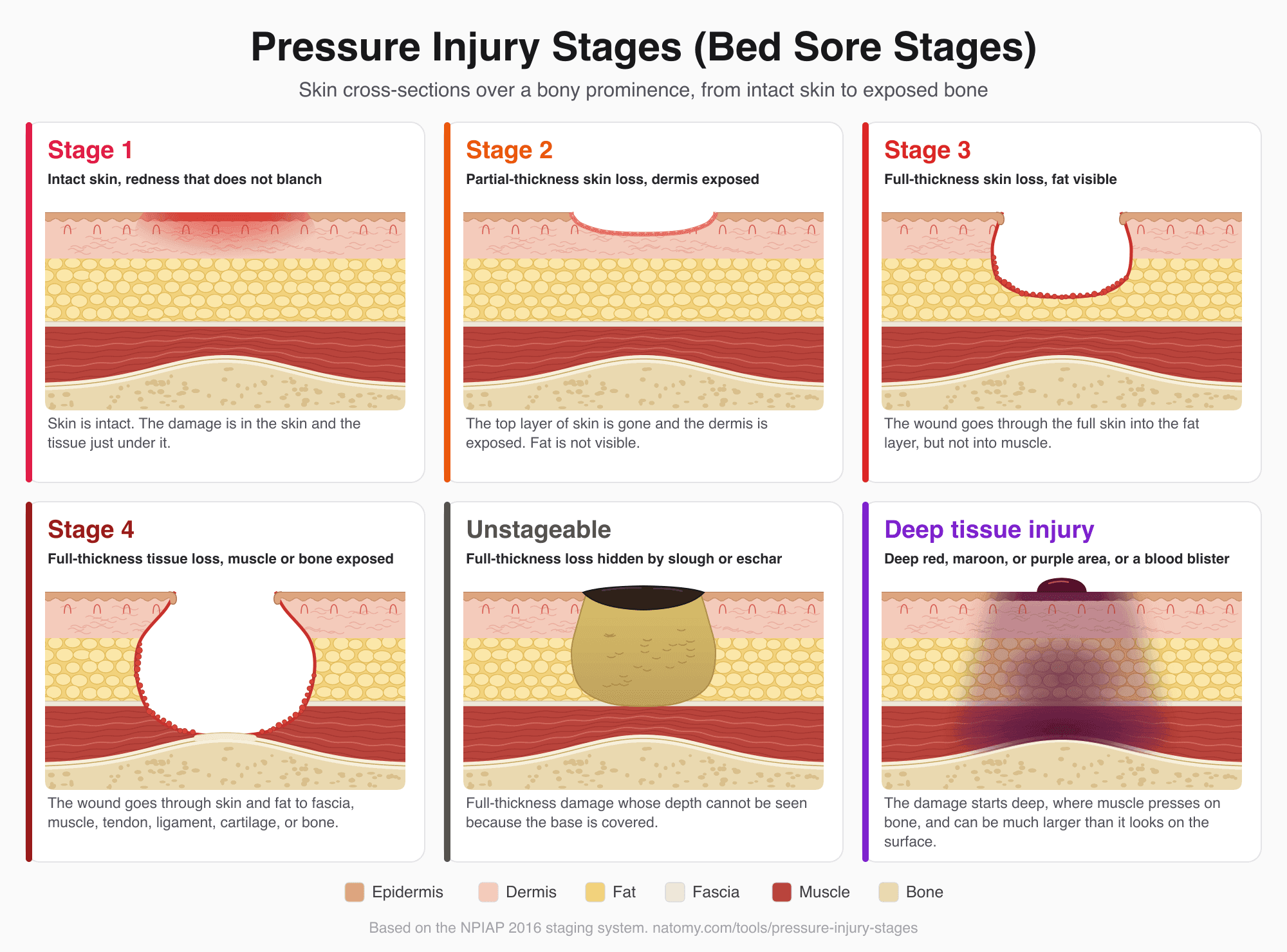
Pressure Injury (Bed Sore) Stages
Illustrated pressure ulcer stages chart, Stage 1 to 4, unstageable, and deep tissue injury, with a stage finder and wound note.
Try it free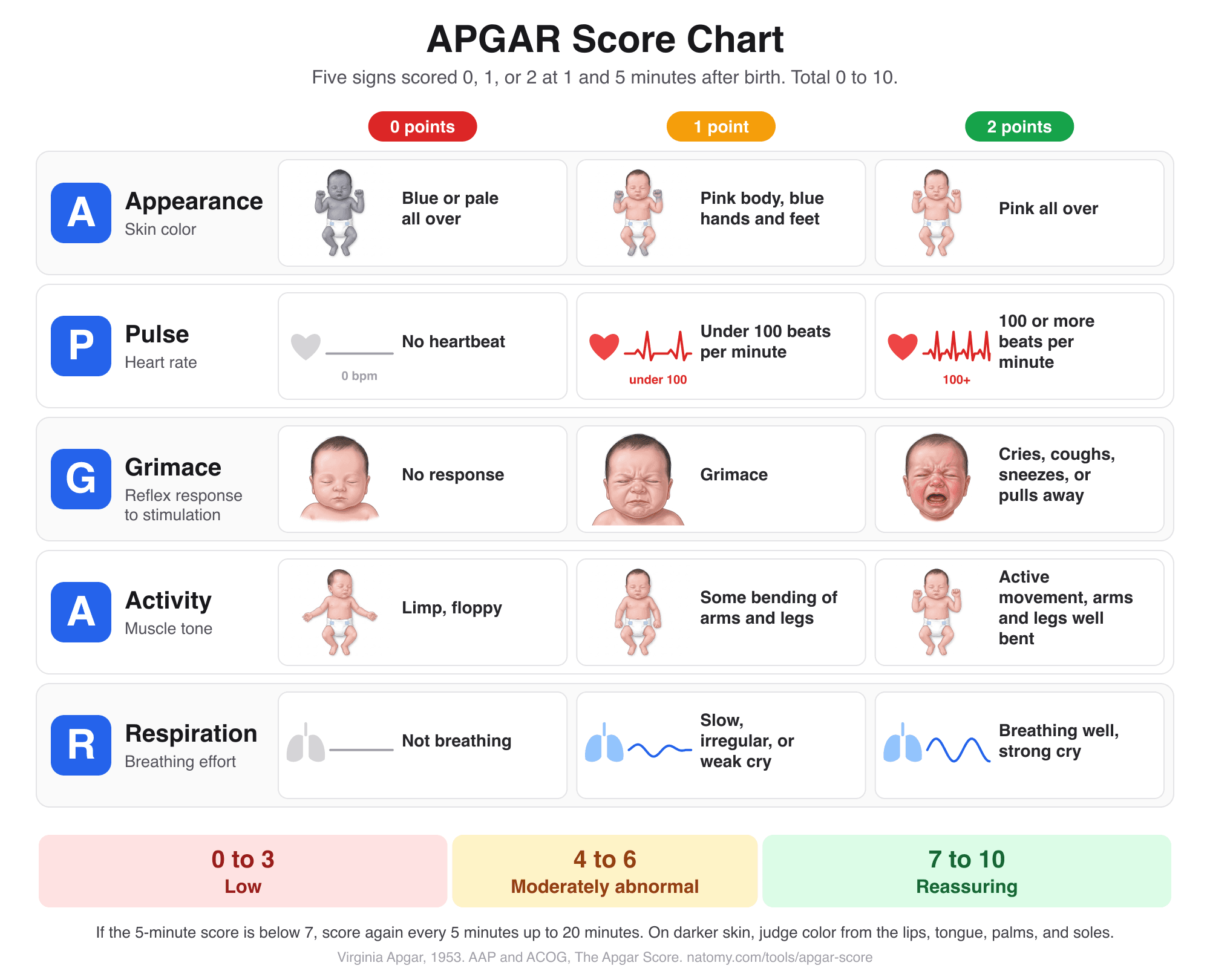
APGAR Score Chart and Calculator
Score the 5 newborn signs at 1, 5, and 10 minutes with an illustrated chart, what normal and low scores mean, and a note for the record.
Try it free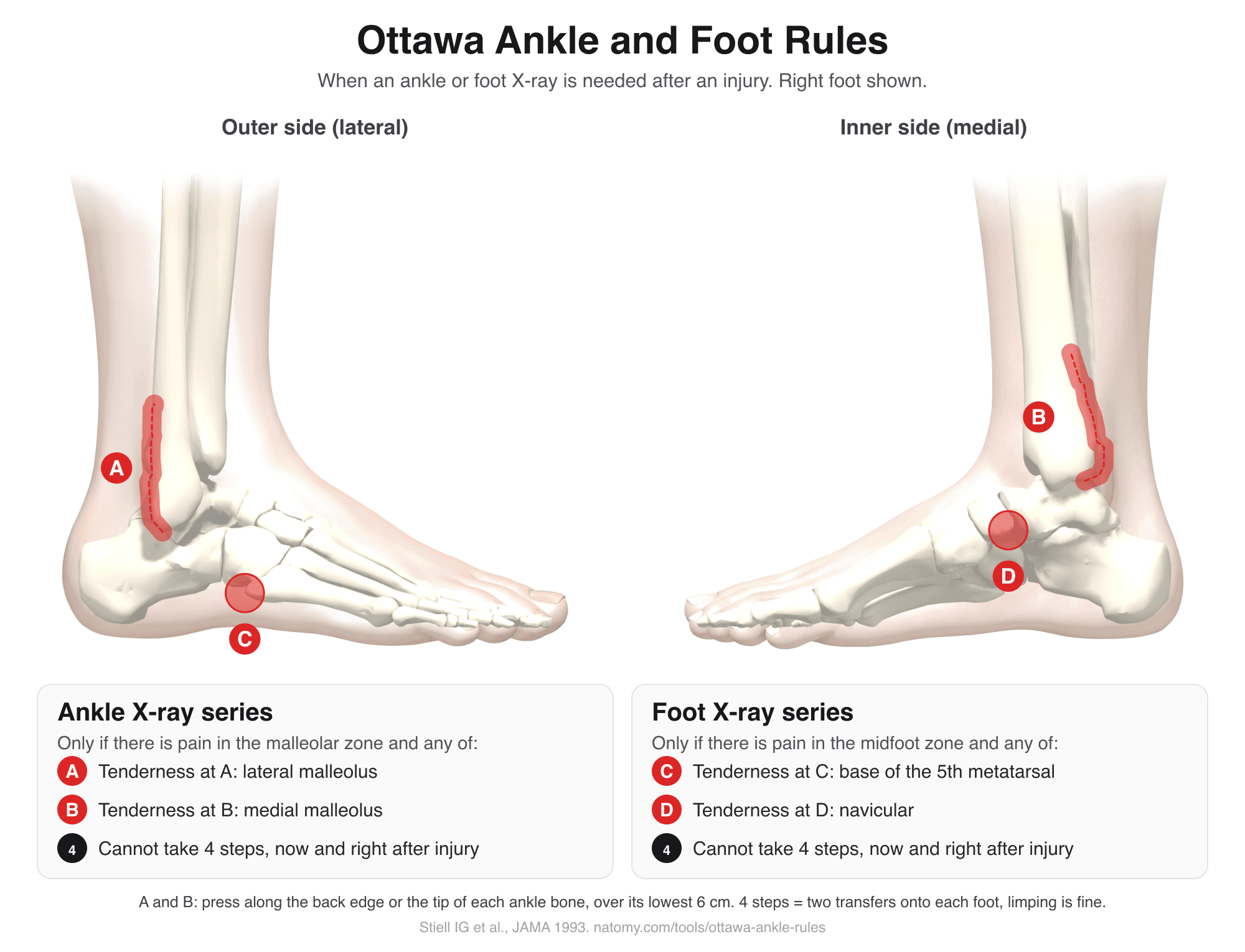
Ottawa Ankle Rules
Tap the tender spots on an illustrated ankle and foot to see if the Ottawa rules call for an X-ray. Includes the Ottawa knee rule.
Try it free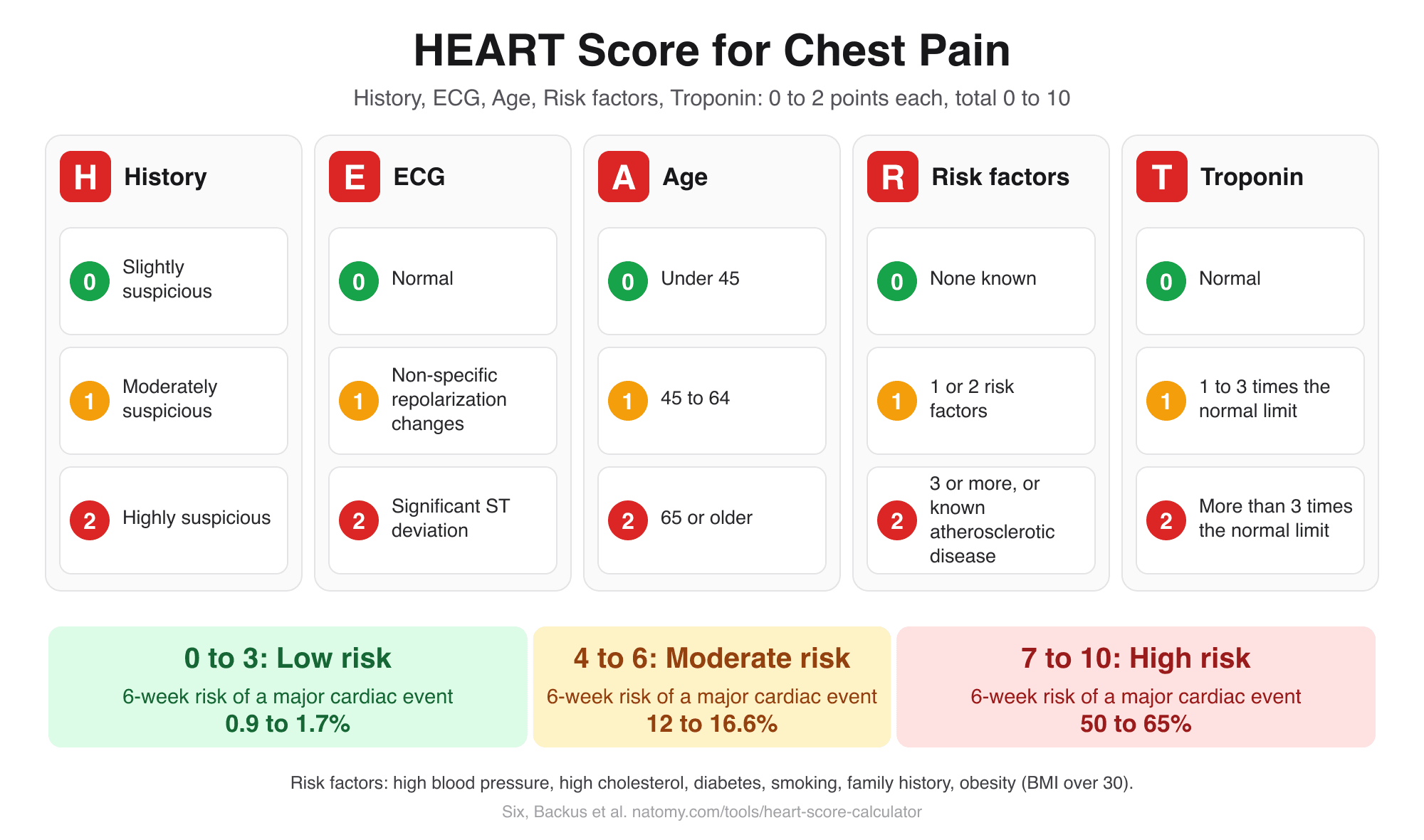
HEART Score Calculator
Score history, ECG, age, risk factors, and troponin for chest pain to get the HEART score, risk group, and 6-week MACE risk.
Try it free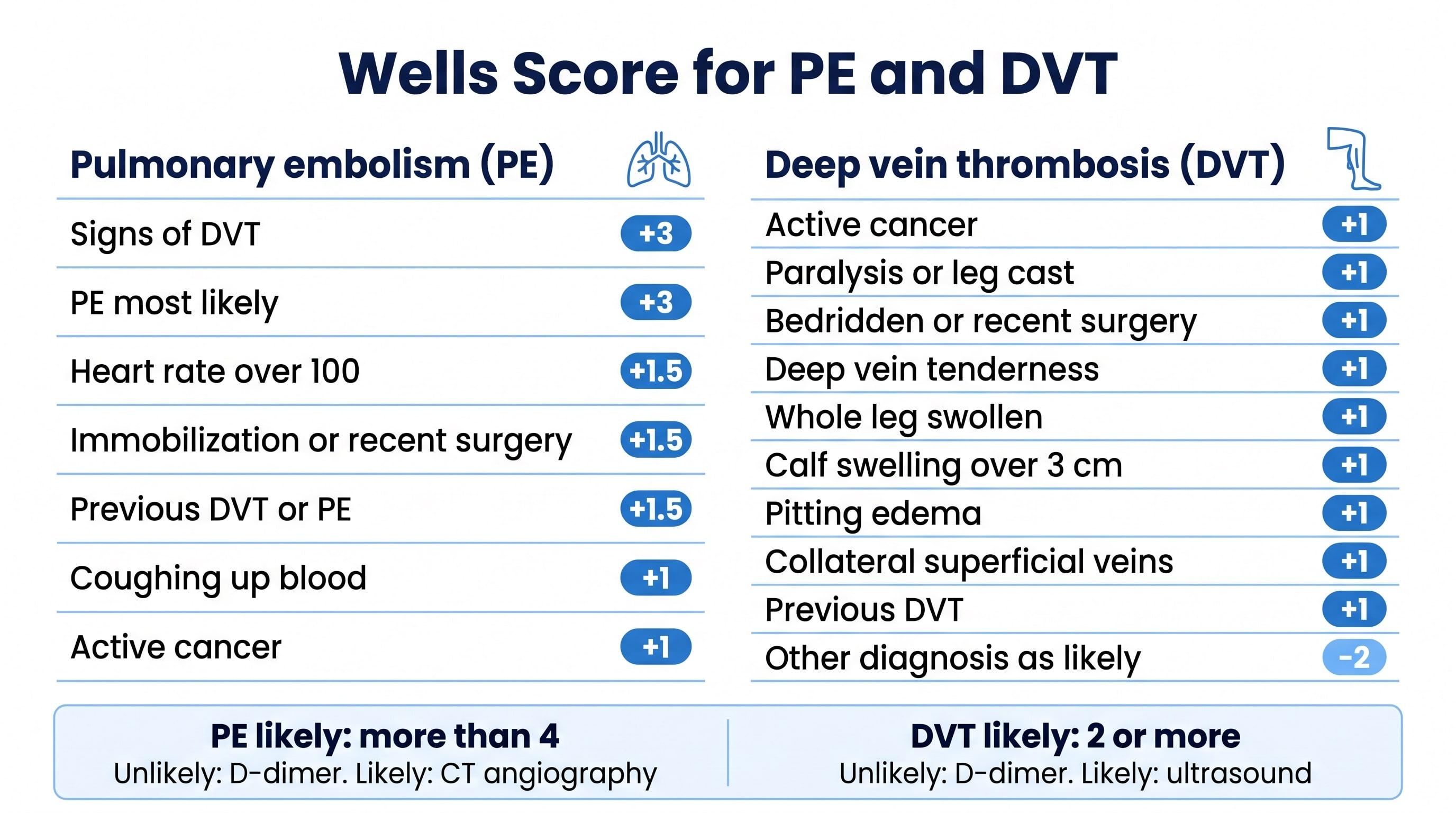
Wells Score Calculator (PE and DVT)
Check the Wells criteria for pulmonary embolism or deep vein thrombosis to get the score, the risk group, and the next test.
Try it free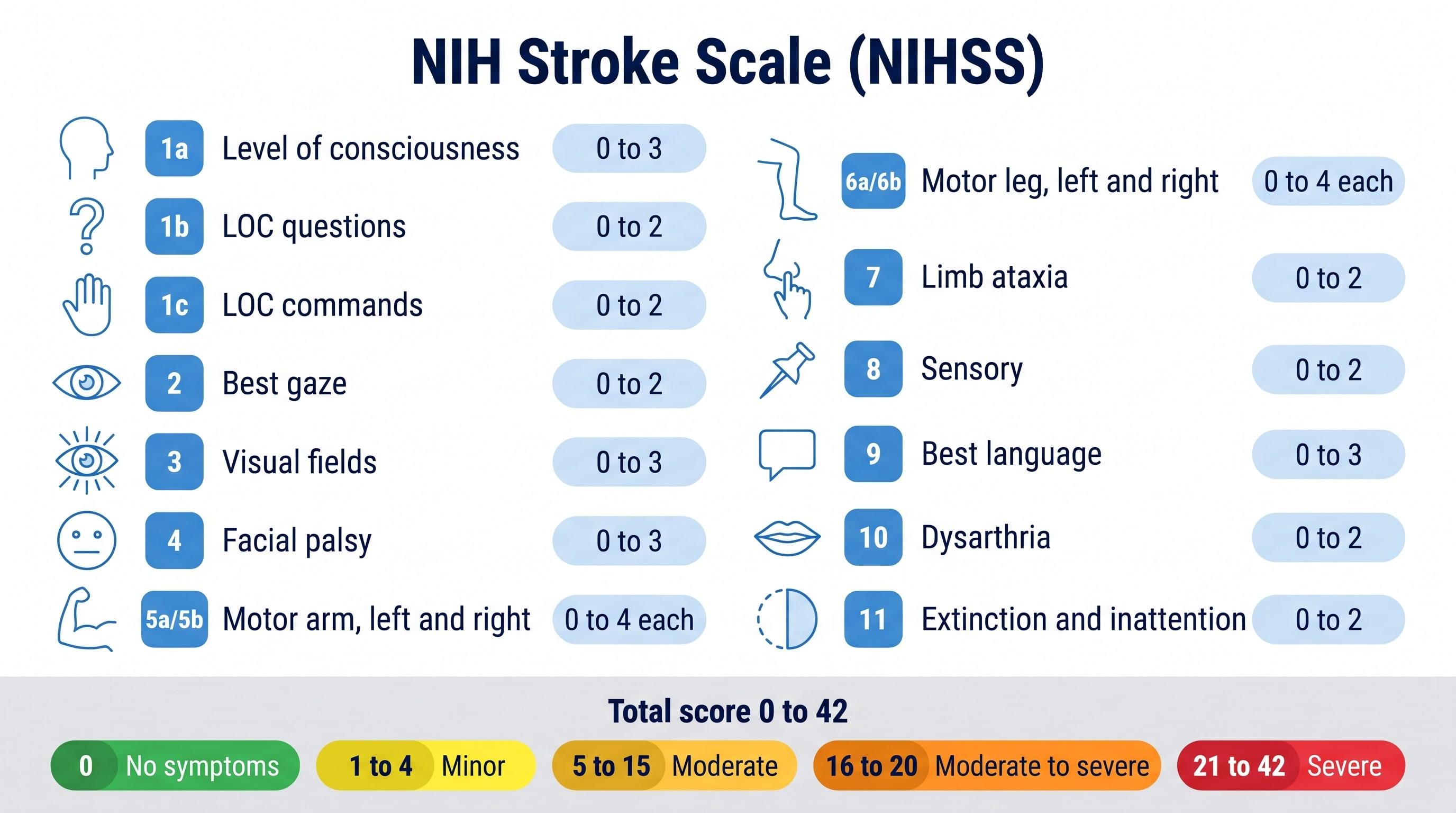
NIHSS Calculator (NIH Stroke Scale)
Score all 15 NIH Stroke Scale items to get the NIHSS total from 0 to 42 and the stroke severity range.
Try it free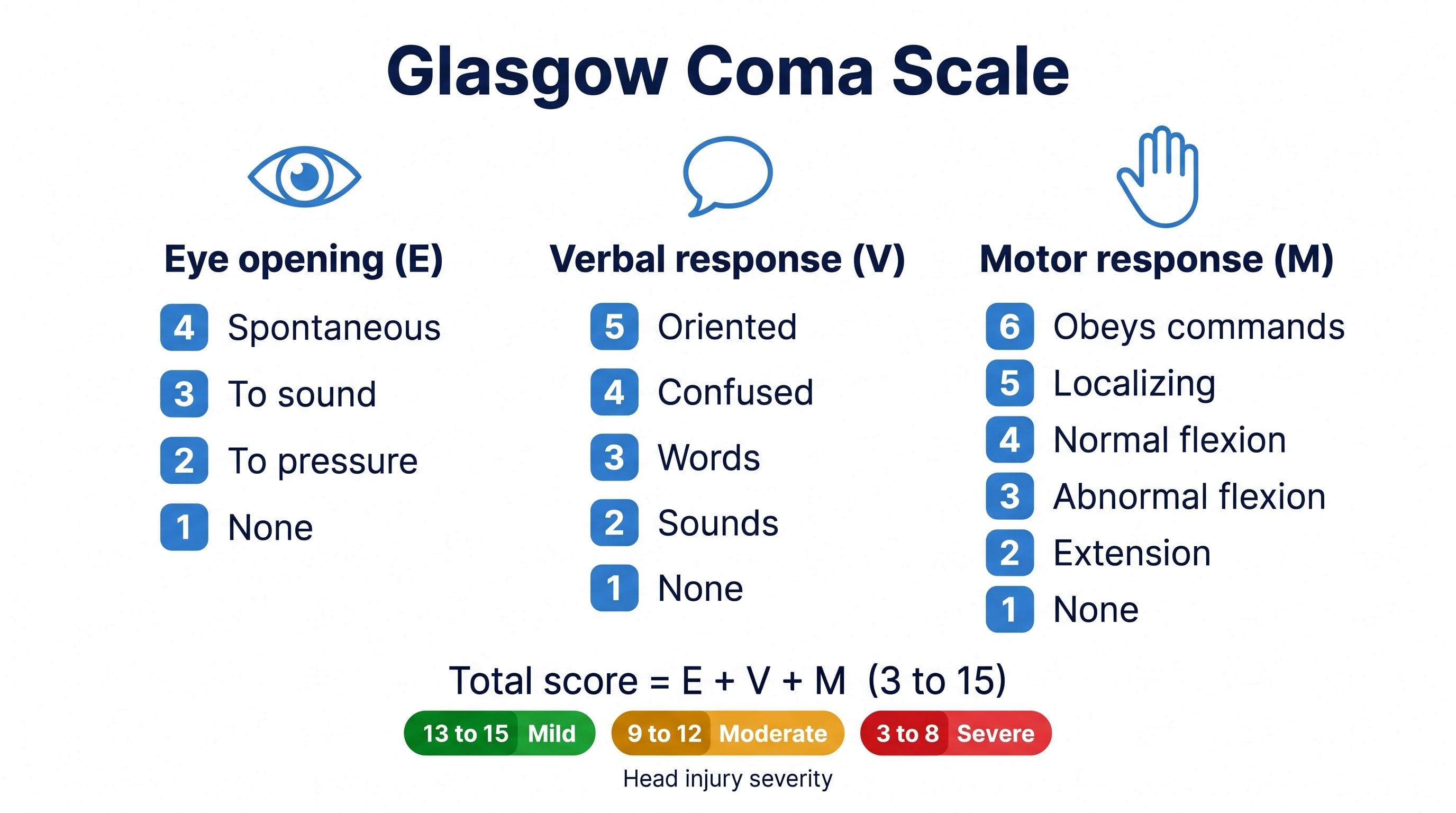
Glasgow Coma Scale Calculator
Score eye, verbal, and motor responses to get the GCS total, E V M code, severity range, and GCS-P.
Try it free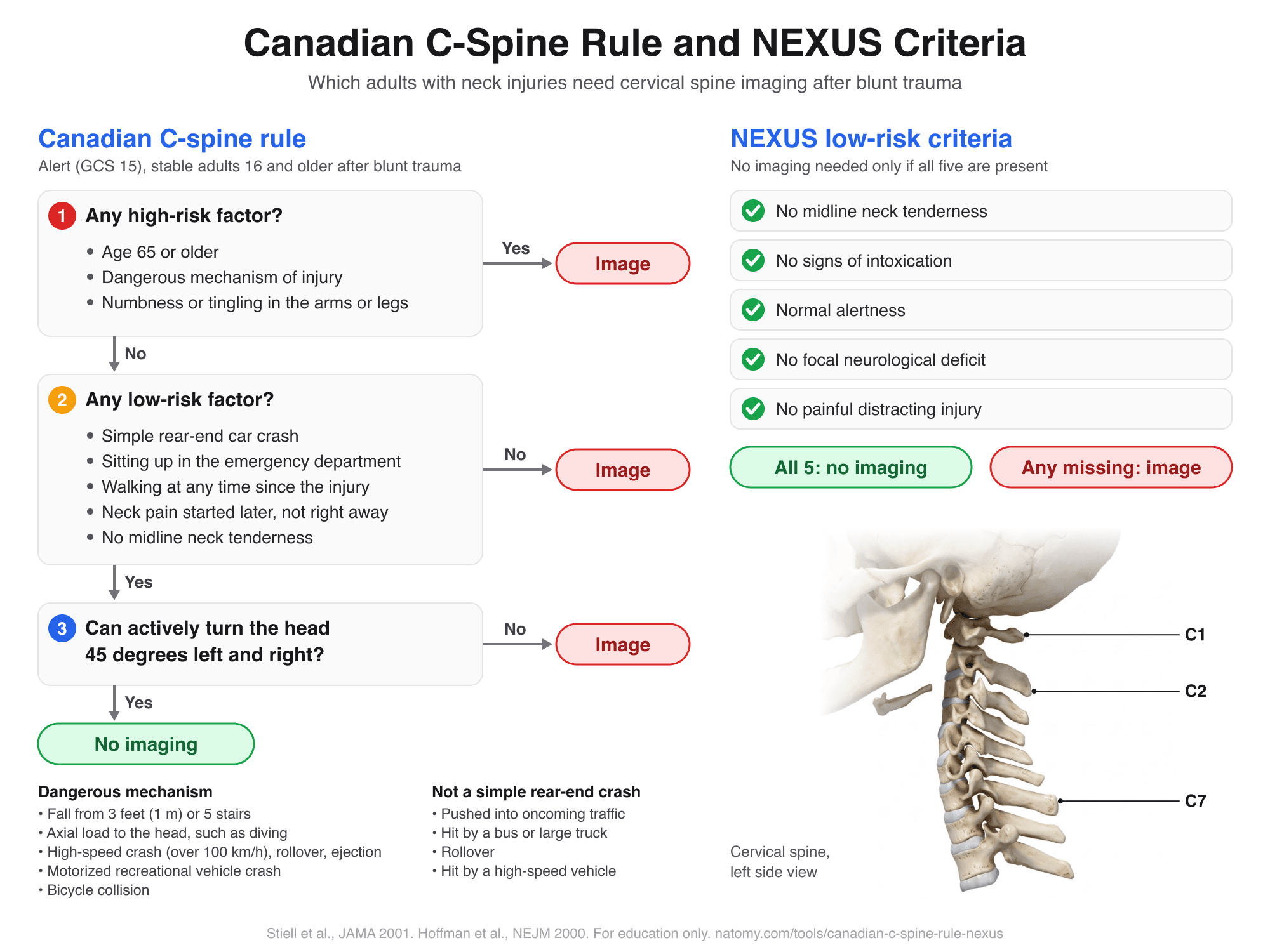
Canadian C-Spine Rule and NEXUS
Run the Canadian C-spine rule or the NEXUS criteria step by step to see which adults need neck imaging after trauma.
Try it free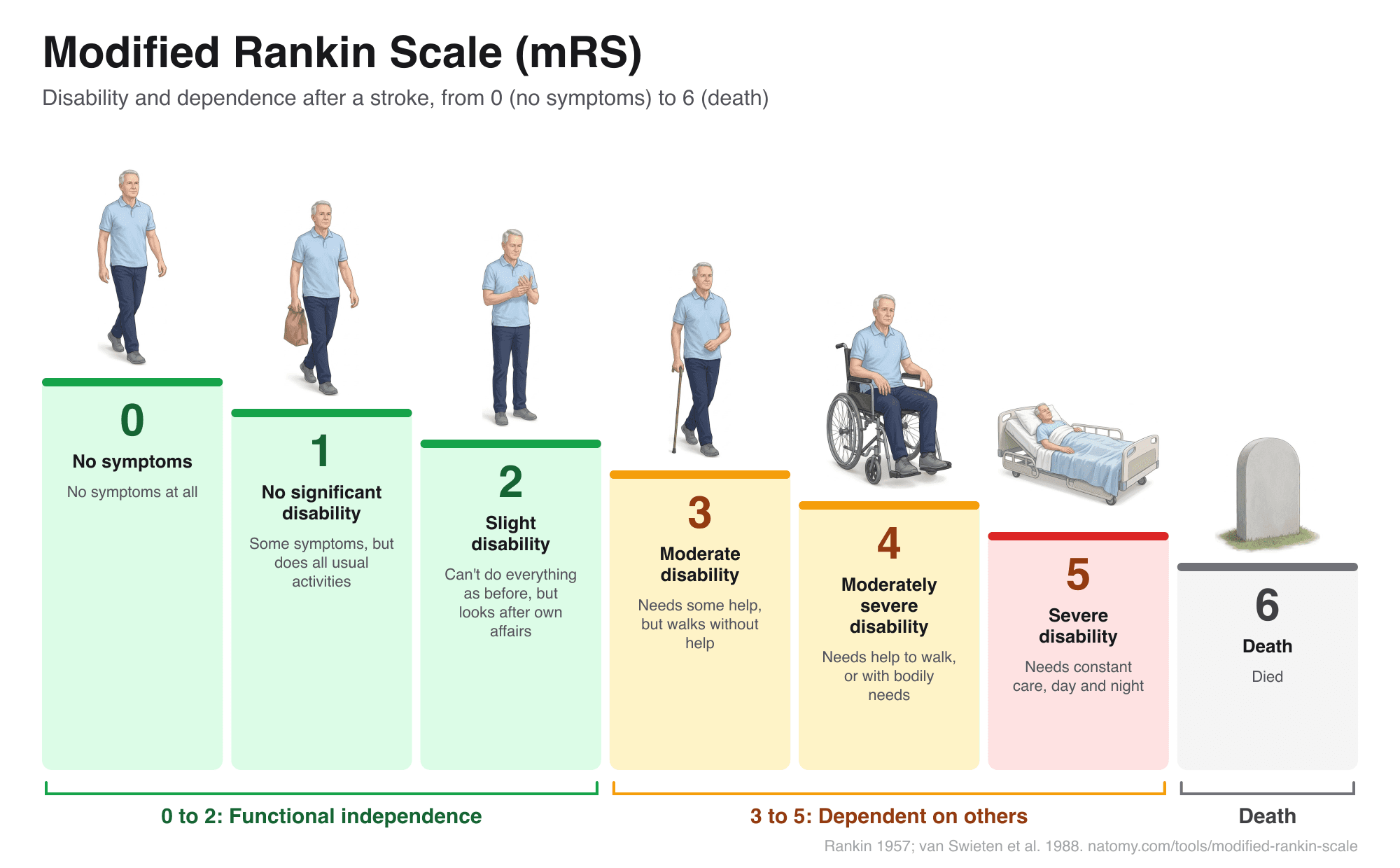
Modified Rankin Scale (mRS)
Illustrated mRS chart from 0 to 6 with a question-based score finder, what each grade means after a stroke, and a copyable note.
Try it free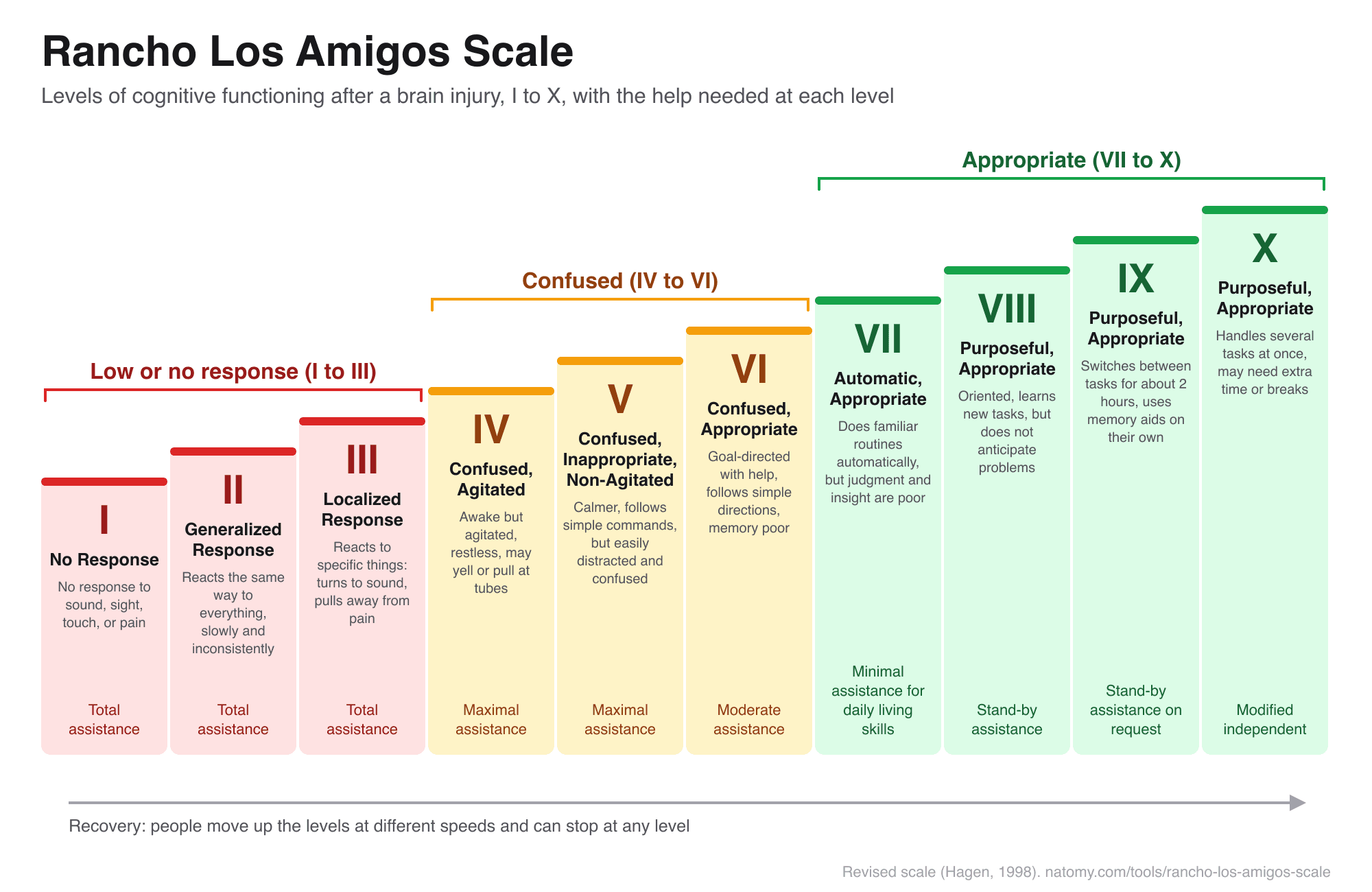
Rancho Los Amigos Scale
The 10 levels of cognitive functioning after a brain injury, with a level finder, what to expect, and how to help.
Try it free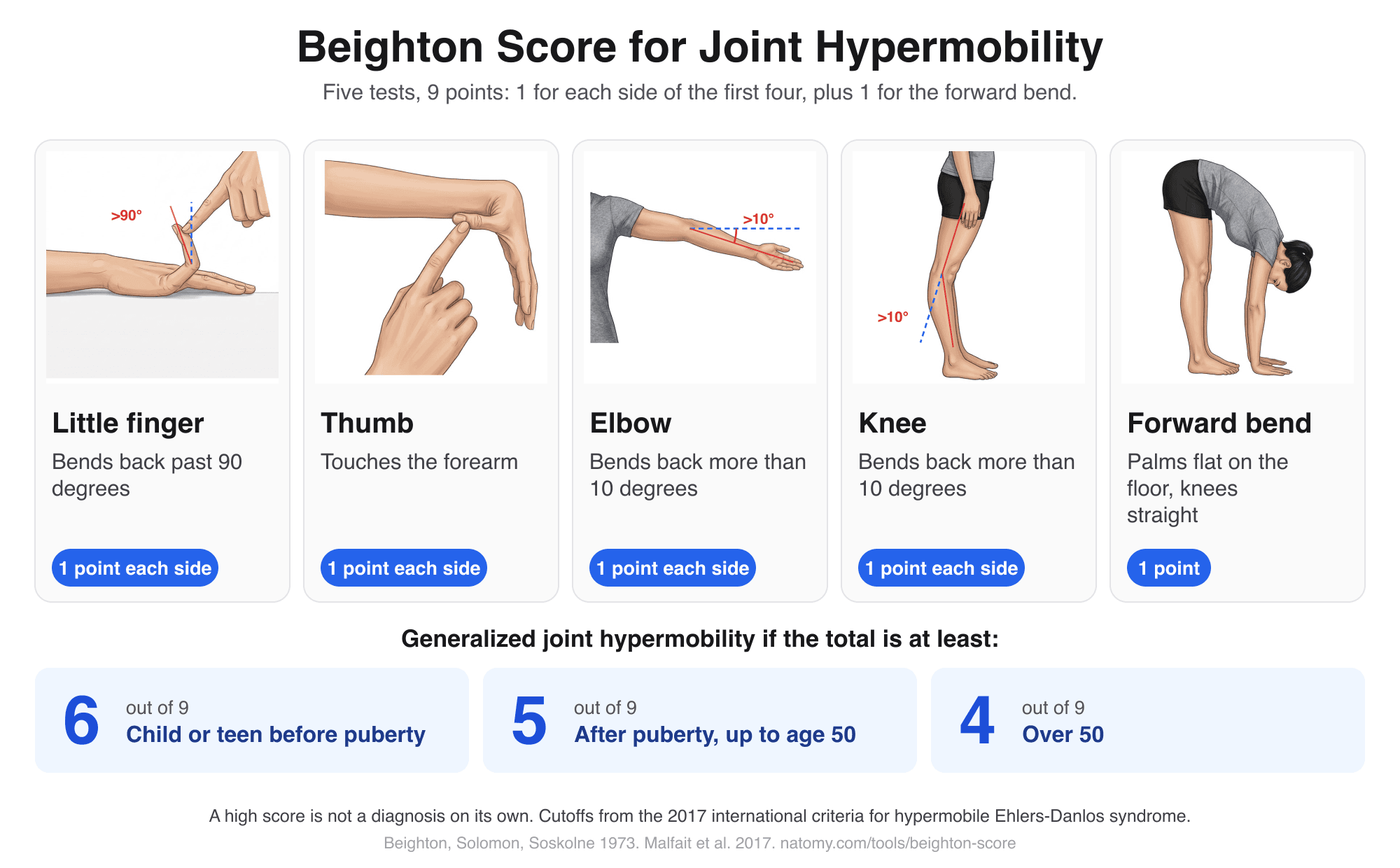
Beighton Score Calculator
Illustrated hypermobility test: score the 5 Beighton movements out of 9, compare with the age cutoff, and copy a note.
Try it free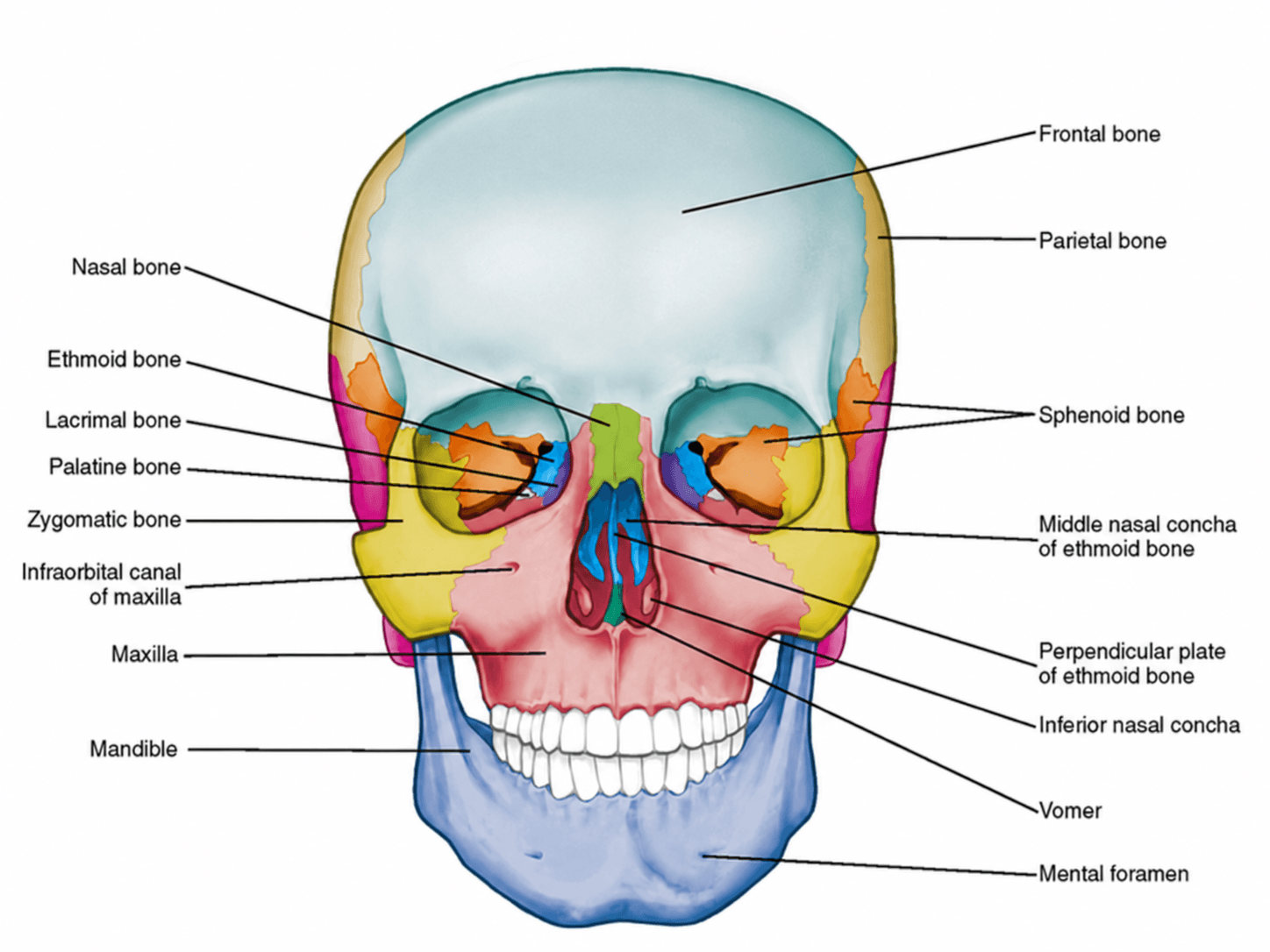
Anterior View of Skull Labeled
Free labeled and unlabeled anterior view of the skull, downloadable as PNG.
Try it free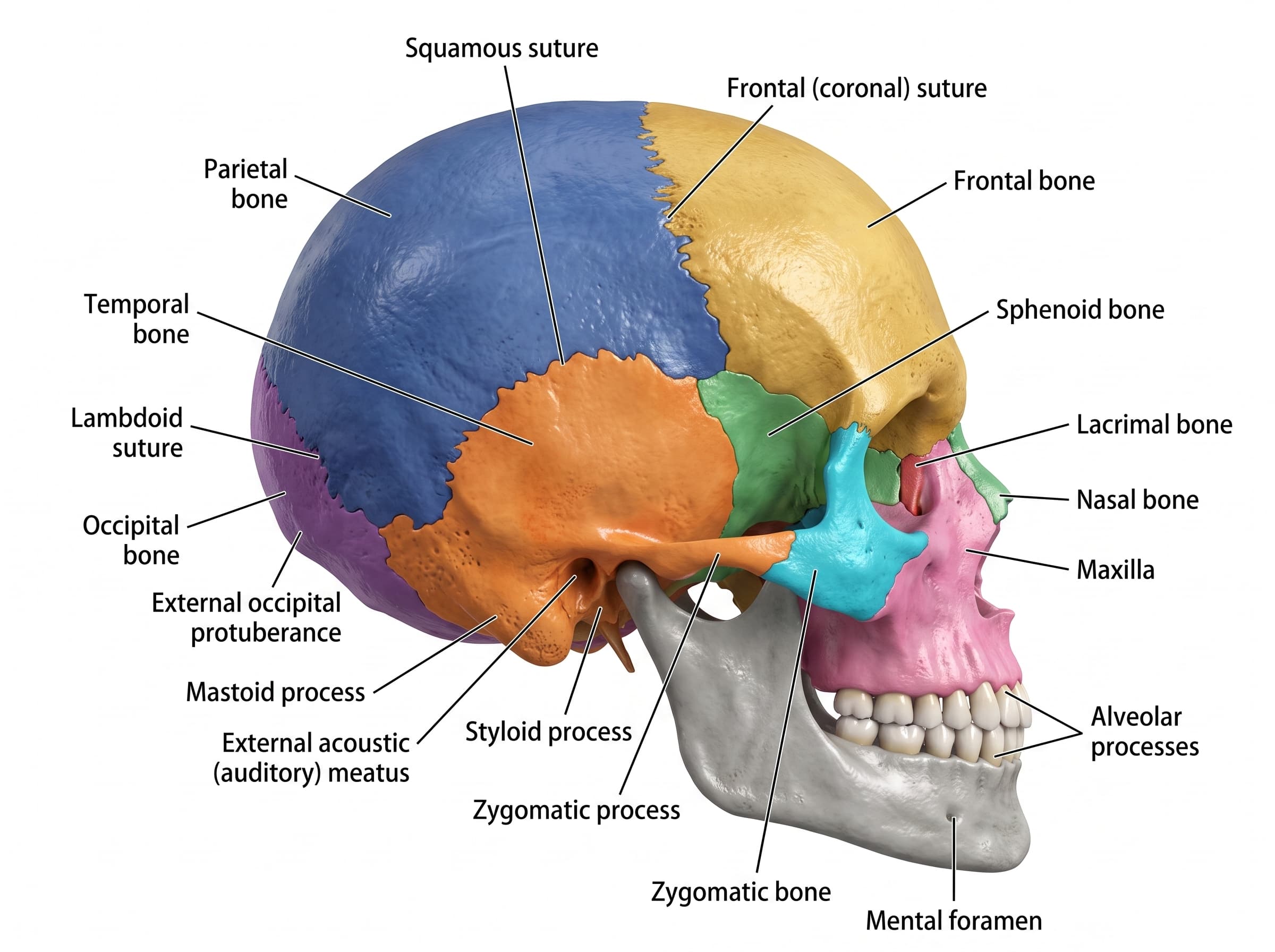
Lateral View of Skull Labeled
Free labeled and unlabeled lateral view of the skull, downloadable as PNG.
Try it free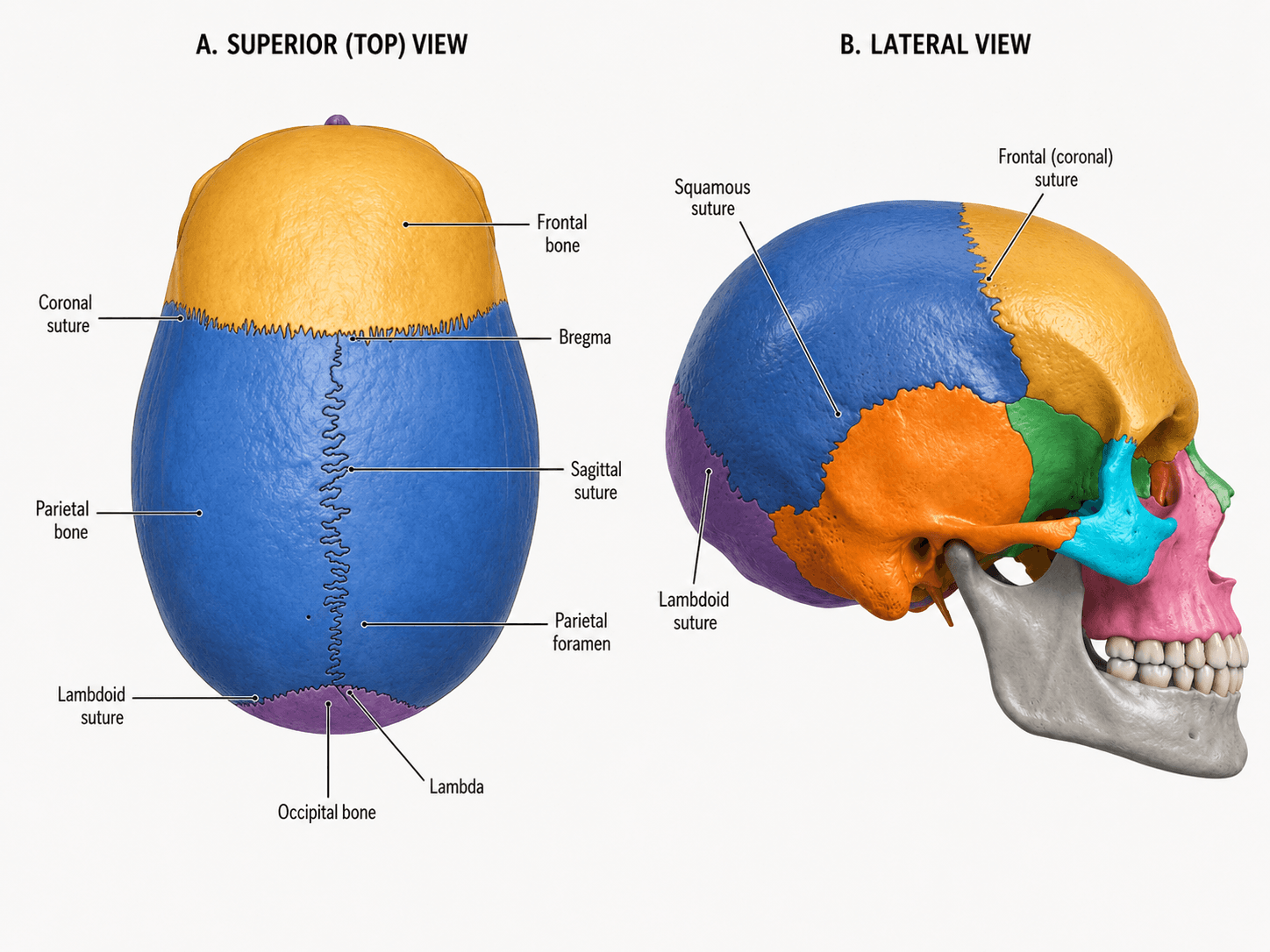
Skull Sutures Labeled
Free labeled and unlabeled skull sutures diagram, superior and lateral views, downloadable as PNG.
Try it free