Free Tools
HEART Score Calculator
For adults with chest pain and no STEMI on the ECG. Choose an option for history, ECG, age, and troponin, and check the risk factors. The score updates as you go, with the risk group, the 6-week risk of a major cardiac event, and the usual next step.
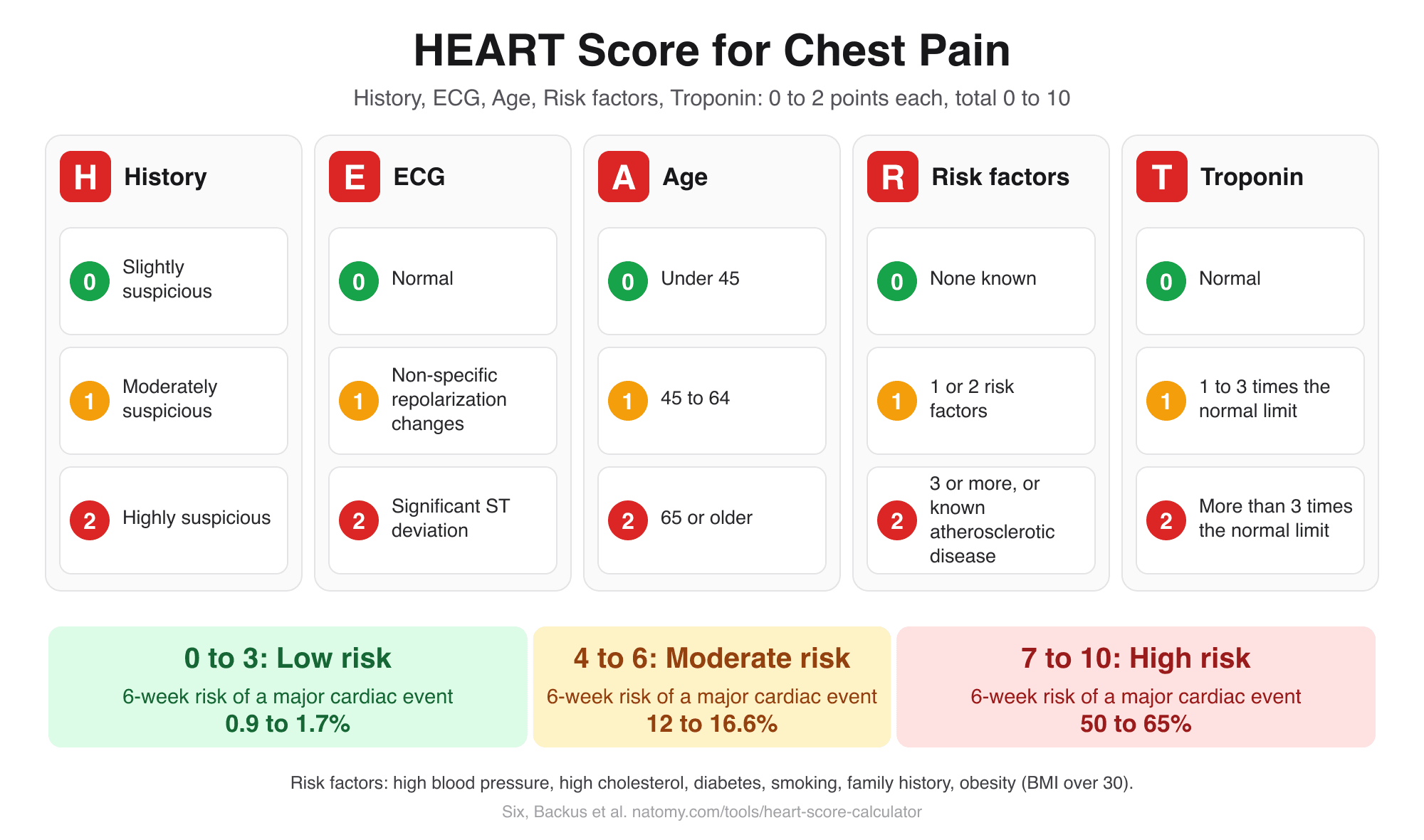
HEART score criteria
Each letter stands for one item, scored 0, 1, or 2. History is the clinician's judgment of how typical the chest pain is for heart disease; the other four are objective.
| Item | 0 points | 1 point | 2 points |
|---|---|---|---|
| History | Slightly suspicious | Moderately suspicious | Highly suspicious |
| ECG | Normal | Non-specific repolarization changes (bundle branch block, LVH, paced, digoxin) | Significant ST deviation |
| Age | Under 45 | 45 to 64 | 65 or older |
| Risk factors | None known | 1 or 2 | 3 or more, or known atherosclerotic disease |
| Troponin | At or below the normal limit | 1 to 3 times the normal limit | More than 3 times the normal limit |
HEART score interpretation
| Score | Risk | 6-week MACE | Usual next step |
|---|---|---|---|
| 0 to 3 | Low risk | 0.9 to 1.7% | Usually suitable for early discharge with outpatient follow-up, especially with negative serial troponins (the HEART pathway). |
| 4 to 6 | Moderate risk | 12 to 16.6% | Usually admitted or observed for serial troponins and further testing, such as stress testing or CT coronary angiography. |
| 7 to 10 | High risk | 50 to 65% | Points to an early invasive strategy; cardiology is usually involved early. |
MACE (major adverse cardiac events): heart attack, a stent or bypass, or death within 6 weeks. Ranges are from the original validation studies.
The HEART pathway
The HEART pathway pairs the score with serial troponins. A HEART score of 3 or less with negative troponins at presentation and about 3 hours later identifies patients who can usually be discharged for outpatient follow-up. In trials it reduced stress testing and hospital admission without missing more heart attacks.
HEART scores in chest pain cases
For emergency physicians and cardiologists, the score supports a documented, consistent decision about who goes home and who stays. For medical malpractice attorneys reviewing a missed heart attack, the key questions are whether a HEART score was recorded, whether each item matches the history, ECG, and troponin in the chart, and whether a moderate or high score was followed by observation and further testing. A blood clot in the lungs can also cause chest pain; see the Wells score for PE.
Illustrate a heart attack
Natomy turns ECGs, catheterization reports, and prompts into clear, labeled medical illustrations of blocked coronary arteries and damaged heart muscle, for patient education and medical-legal exhibits. See examples in the Natomy atlas.
Try Natomy TodayFAQ
What is the HEART score?+
The HEART score is a bedside tool for adults with chest pain in the emergency department. It adds 0 to 2 points for each of five items, History, ECG, Age, Risk factors, and Troponin, for a total from 0 to 10. The total estimates the risk of a major adverse cardiac event (MACE), such as a heart attack, a stent or bypass, or death, within 6 weeks.
What is a high HEART score?+
A score of 7 to 10 is high risk, with a 6-week risk of a major cardiac event of about 50 to 65% in the validation studies. 4 to 6 is moderate risk (about 12 to 16.6%), and 0 to 3 is low risk (about 0.9 to 1.7%).
What is the HEART pathway?+
The HEART pathway combines a HEART score of 3 or less with negative troponin tests at presentation and again about 3 hours later. Patients who meet both are considered low risk and can usually go home with outpatient follow-up instead of further testing in hospital.
Which patients should not have a HEART score?+
The HEART score is for patients with suspected acute coronary syndrome whose initial ECG does not show a STEMI. Patients with ST elevation myocardial infarction, unstable vital signs, or another clear diagnosis need treatment, not risk scoring.
What counts as a risk factor?+
High blood pressure, high cholesterol, diabetes, current smoking or quitting within 3 months, a family history of heart disease in a parent or sibling before age 65, and obesity (BMI over 30). Known atherosclerotic disease, meaning a prior heart attack, stent or bypass, stroke or TIA, or peripheral artery disease, scores the full 2 points on its own.
How does the HEART score compare with the TIMI score?+
Both estimate short-term risk in chest pain. TIMI was built for patients already diagnosed with unstable angina or non-ST elevation myocardial infarction, while the HEART score was designed for the broader group of emergency department patients with undiagnosed chest pain, and it identifies more low-risk patients who can safely go home.
Which troponin limit should I use?+
Use the upper reference limit of your laboratory's troponin assay, usually the 99th percentile. With high-sensitivity troponin, many hospitals use their own protocol alongside the HEART score.
Why do lawyers look at HEART scores?+
Missed heart attack is one of the most common emergency medicine malpractice claims. Whether a HEART score was documented, whether its items were scored correctly, and whether a patient with a moderate or high score was discharged without further testing are often central questions when reviewing the emergency department records.
Sources: Six AJ, Backus BE, Kelder JC. Chest pain in the emergency room: value of the HEART score. Netherlands Heart Journal, 2008. Backus BE et al., validation studies, 2010 and 2013. Mahler SA et al., the HEART pathway randomized trial, 2015. For education and documentation only; not a substitute for clinical judgment.
Related free tools
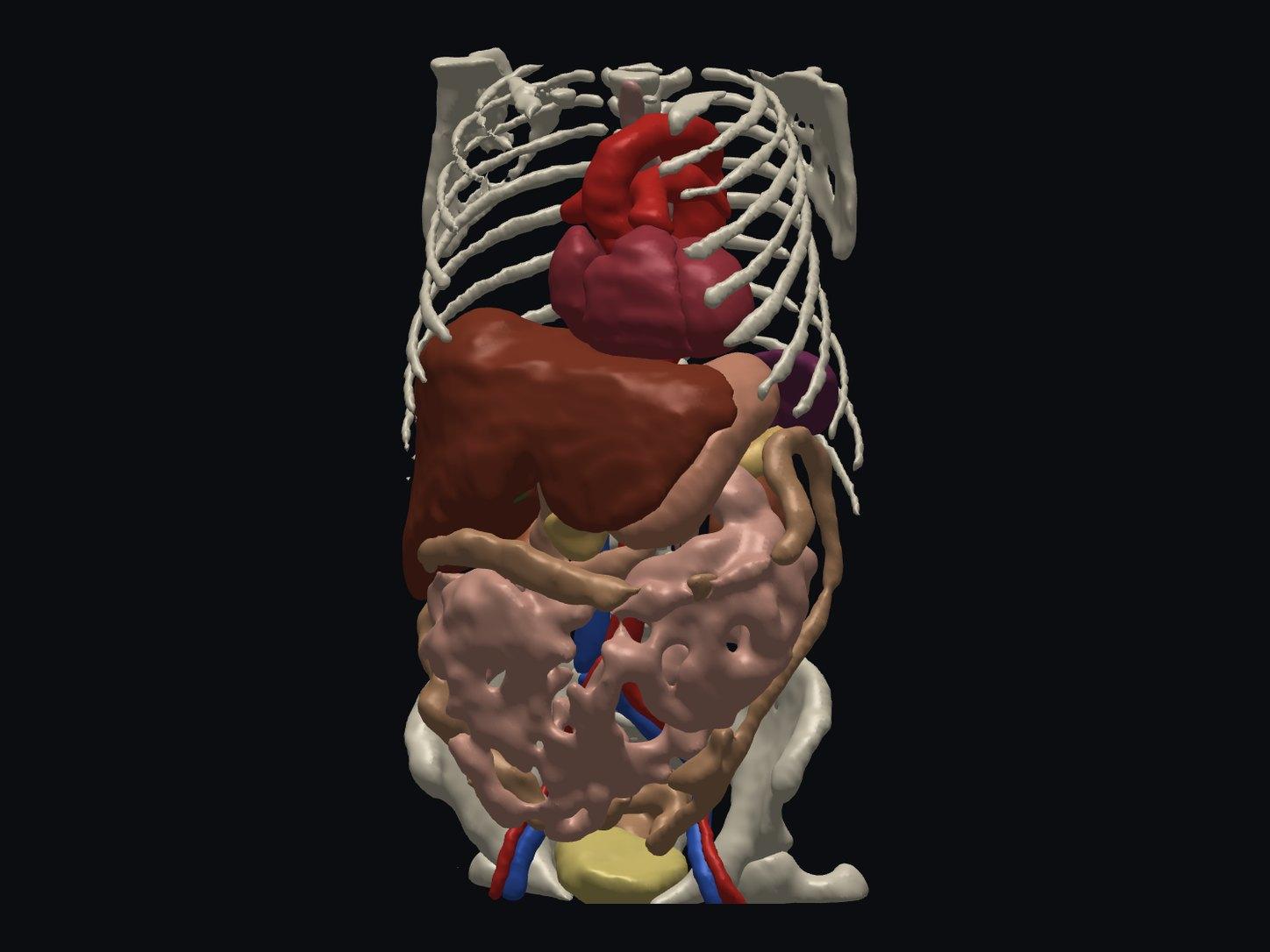
Free Online DICOM Viewer (3D)
Open a CT or MRI DICOM folder in your browser and view it in 3D, with AI anatomy labeling. Nothing is uploaded.
Try it free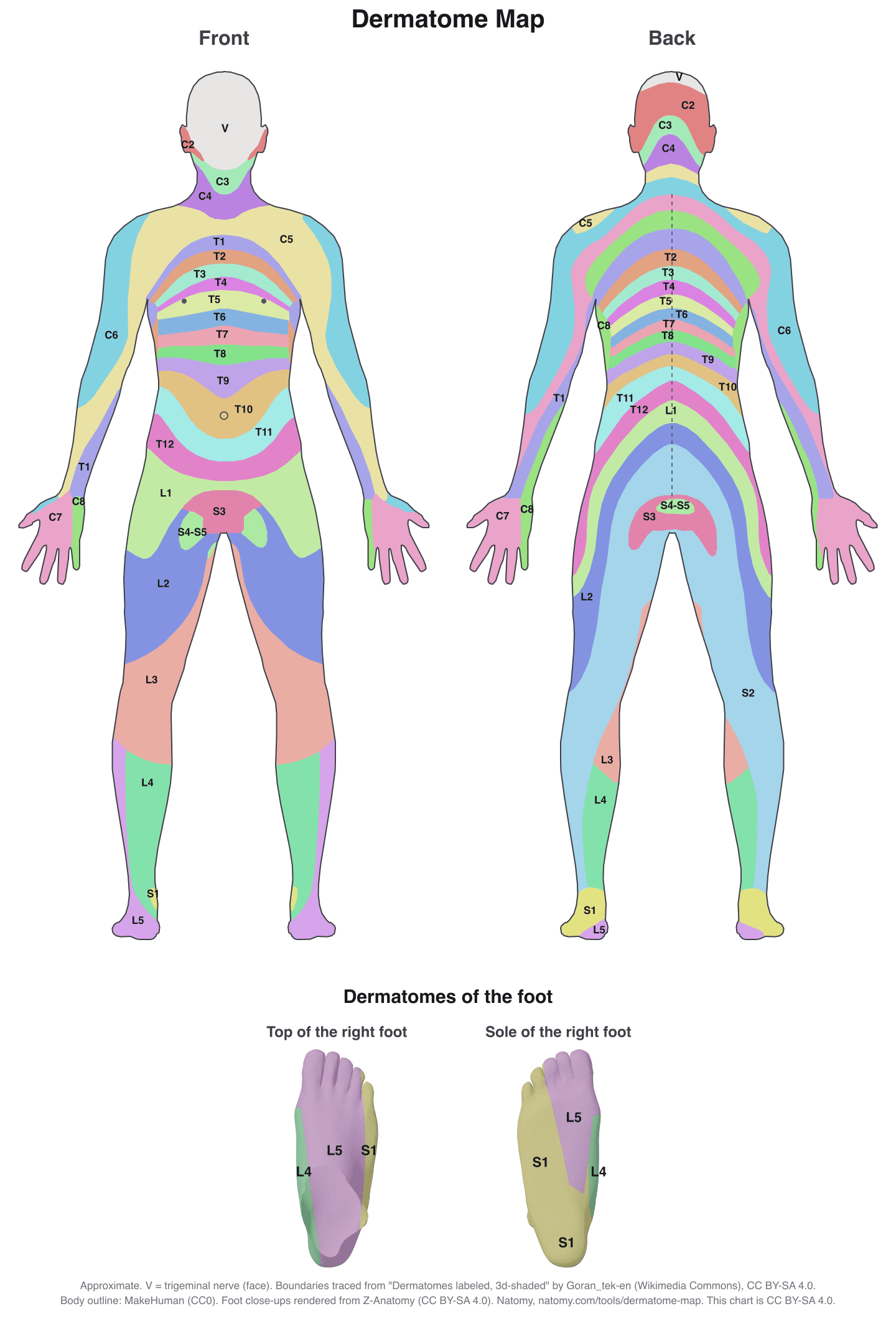
Interactive Dermatome Map
Tap the body to see each nerve root's skin area, test point, myotome, reflex, and disc level. Free printable chart.
Try it free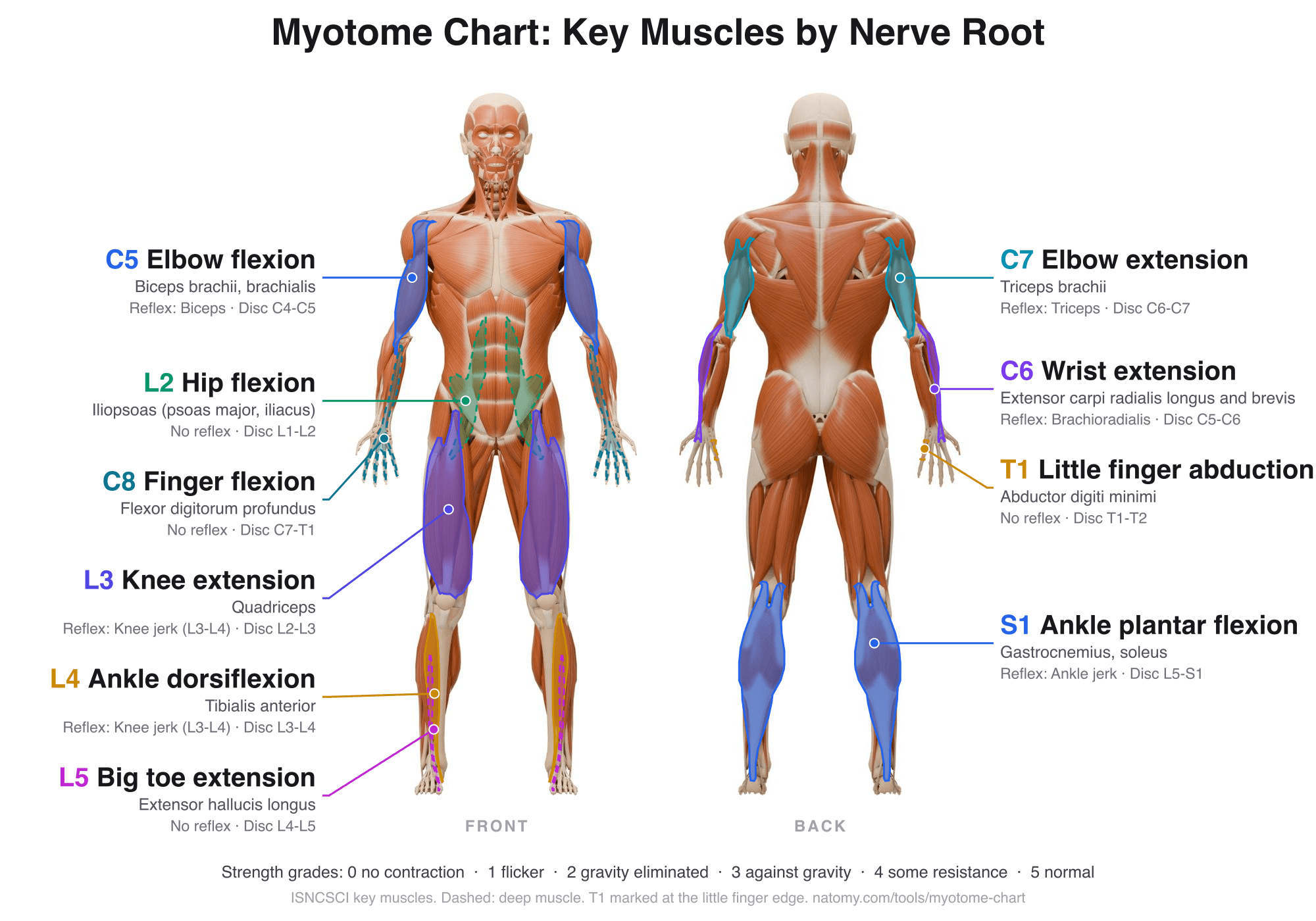
Myotome Chart and Motor Score
Tap a nerve root to see its key muscle, test position, and reflex. Grade strength 0 to 5 for the ISNCSCI motor score.
Try it free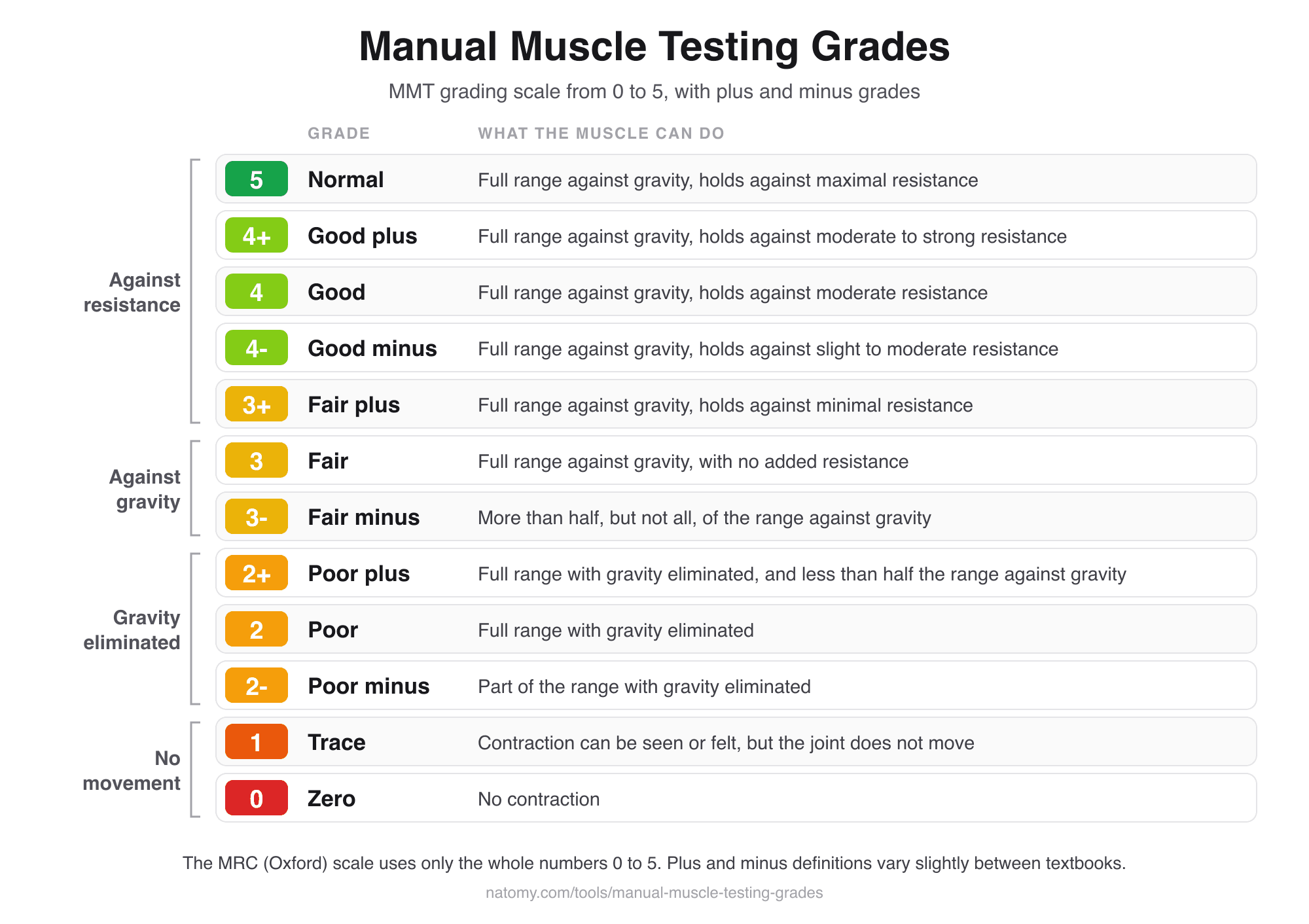
Manual Muscle Testing Grades
MMT grading scale chart from 0 to 5 with plus and minus grades, and a grade finder that writes the note for you.
Try it free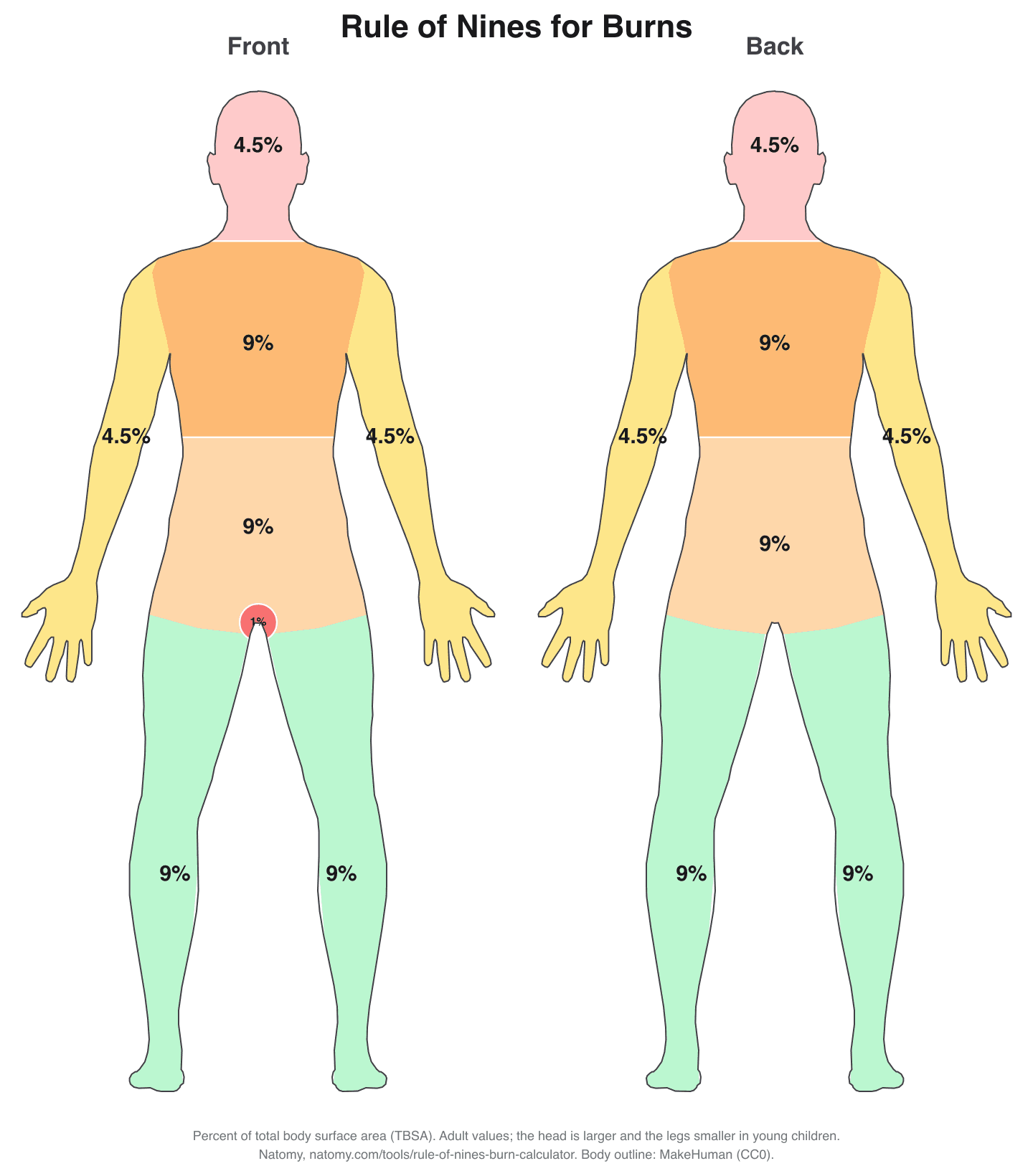
Rule of Nines Burn Calculator
Click the burned areas to get the total body surface area (TBSA), with the Parkland formula and a printable burn chart.
Try it free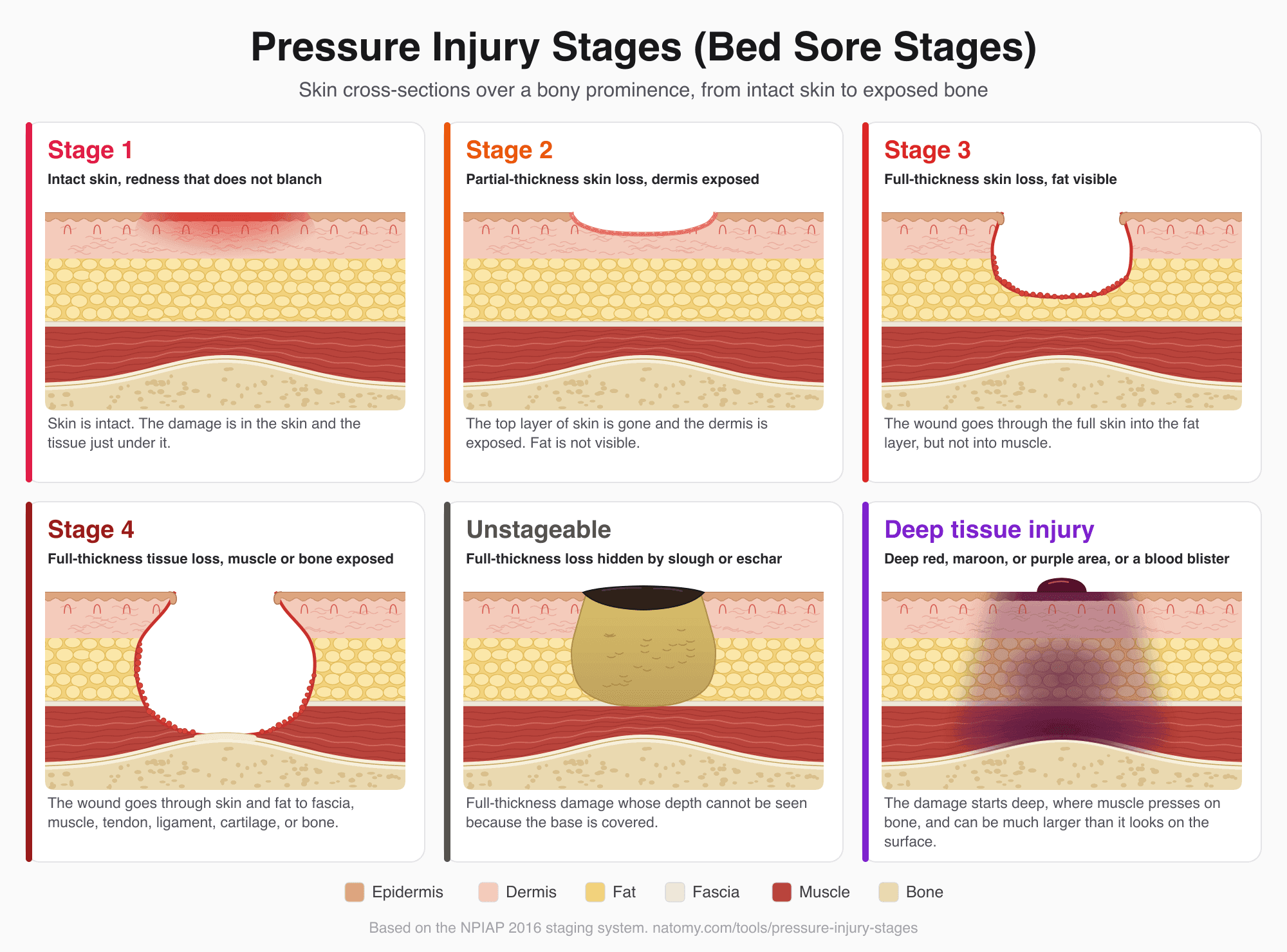
Pressure Injury (Bed Sore) Stages
Illustrated pressure ulcer stages chart, Stage 1 to 4, unstageable, and deep tissue injury, with a stage finder and wound note.
Try it free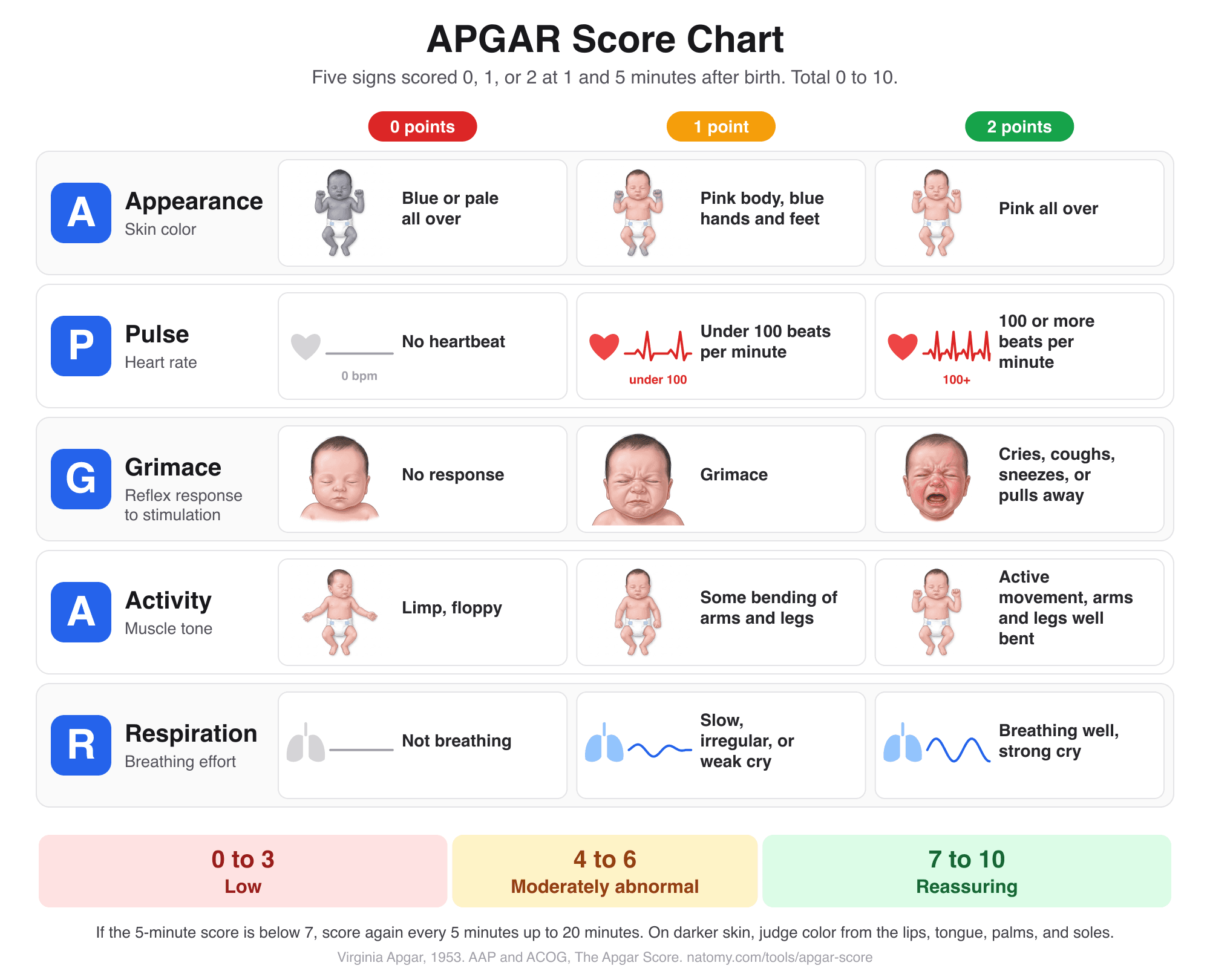
APGAR Score Chart and Calculator
Score the 5 newborn signs at 1, 5, and 10 minutes with an illustrated chart, what normal and low scores mean, and a note for the record.
Try it free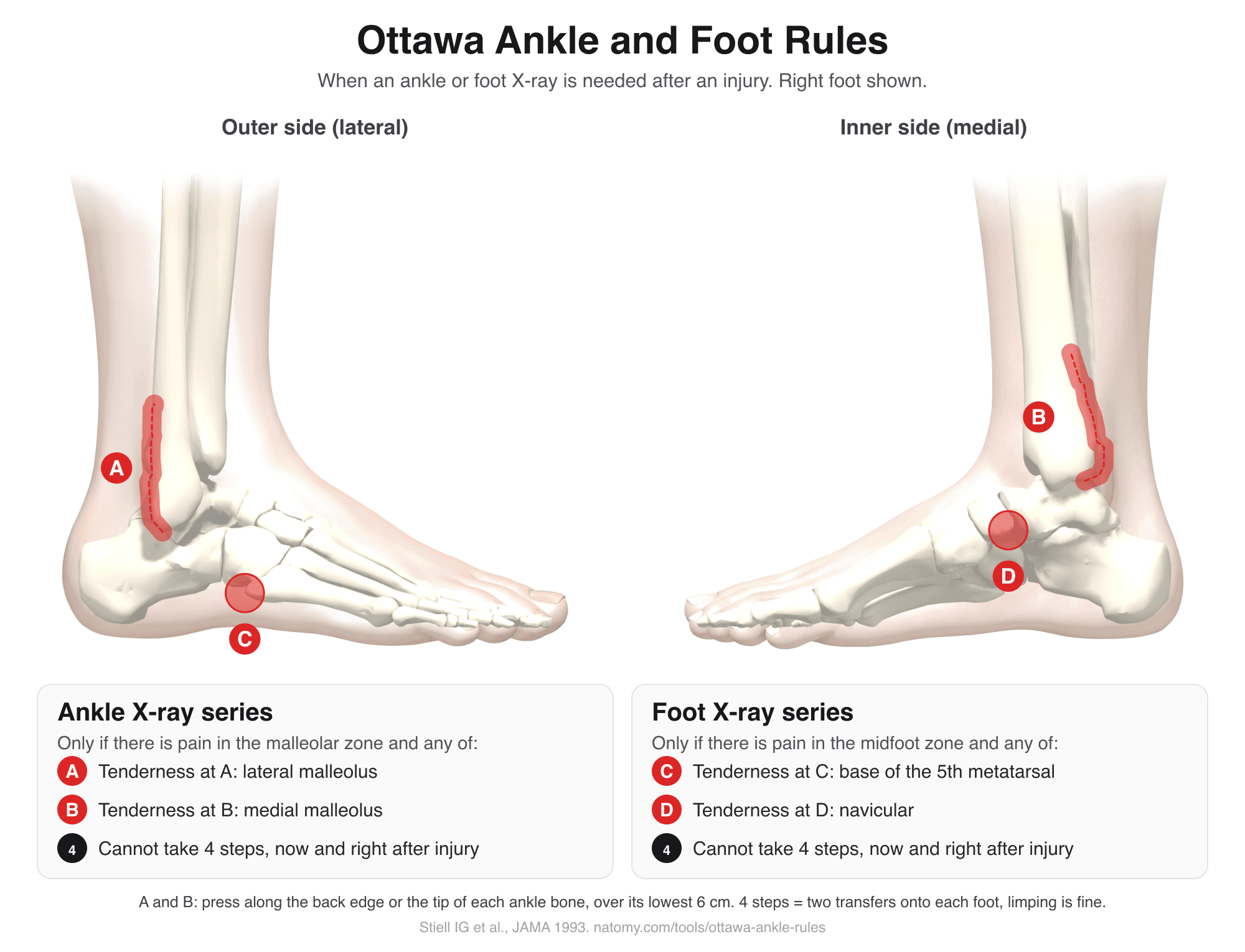
Ottawa Ankle Rules
Tap the tender spots on an illustrated ankle and foot to see if the Ottawa rules call for an X-ray. Includes the Ottawa knee rule.
Try it free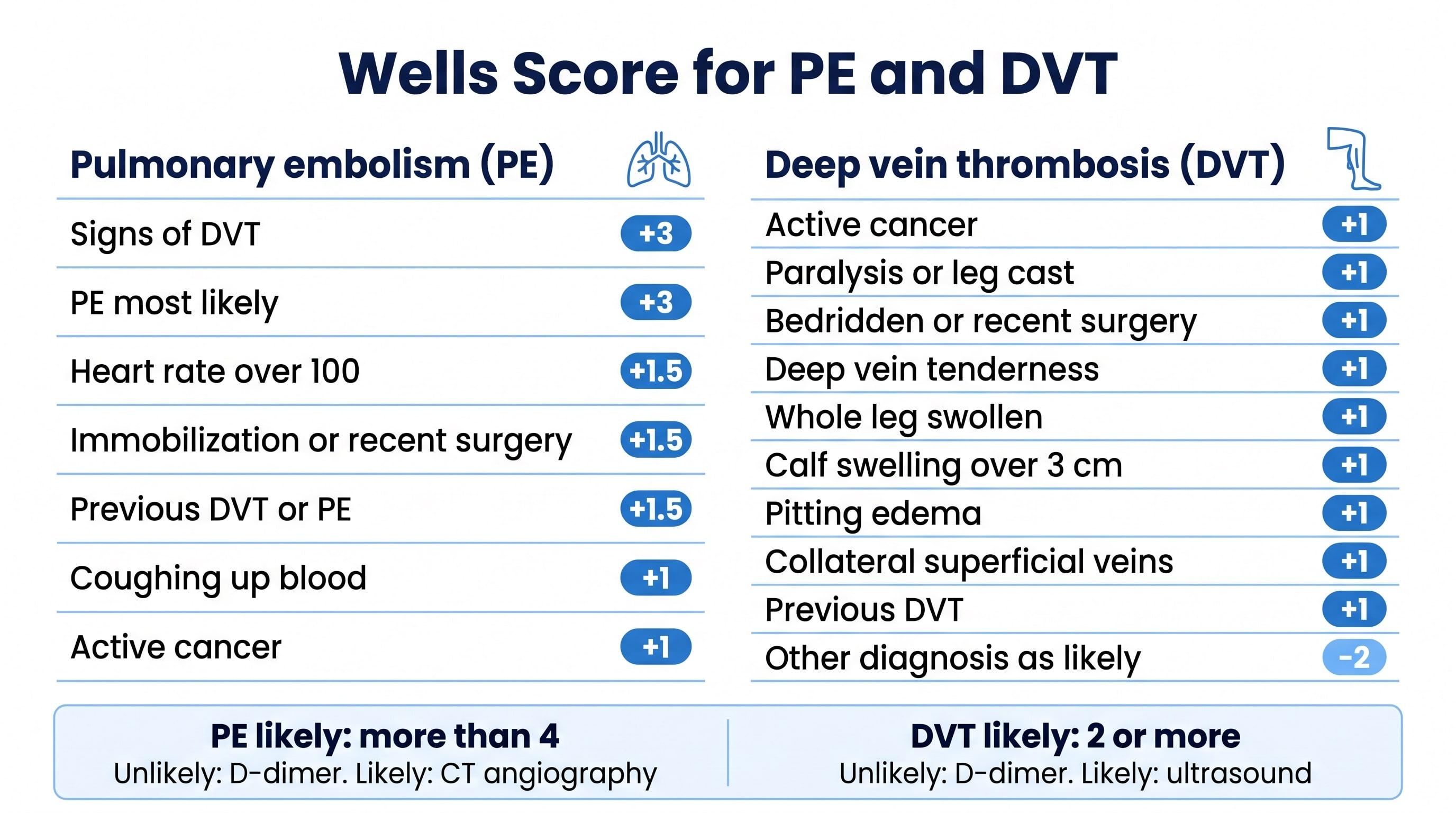
Wells Score Calculator (PE and DVT)
Check the Wells criteria for pulmonary embolism or deep vein thrombosis to get the score, the risk group, and the next test.
Try it free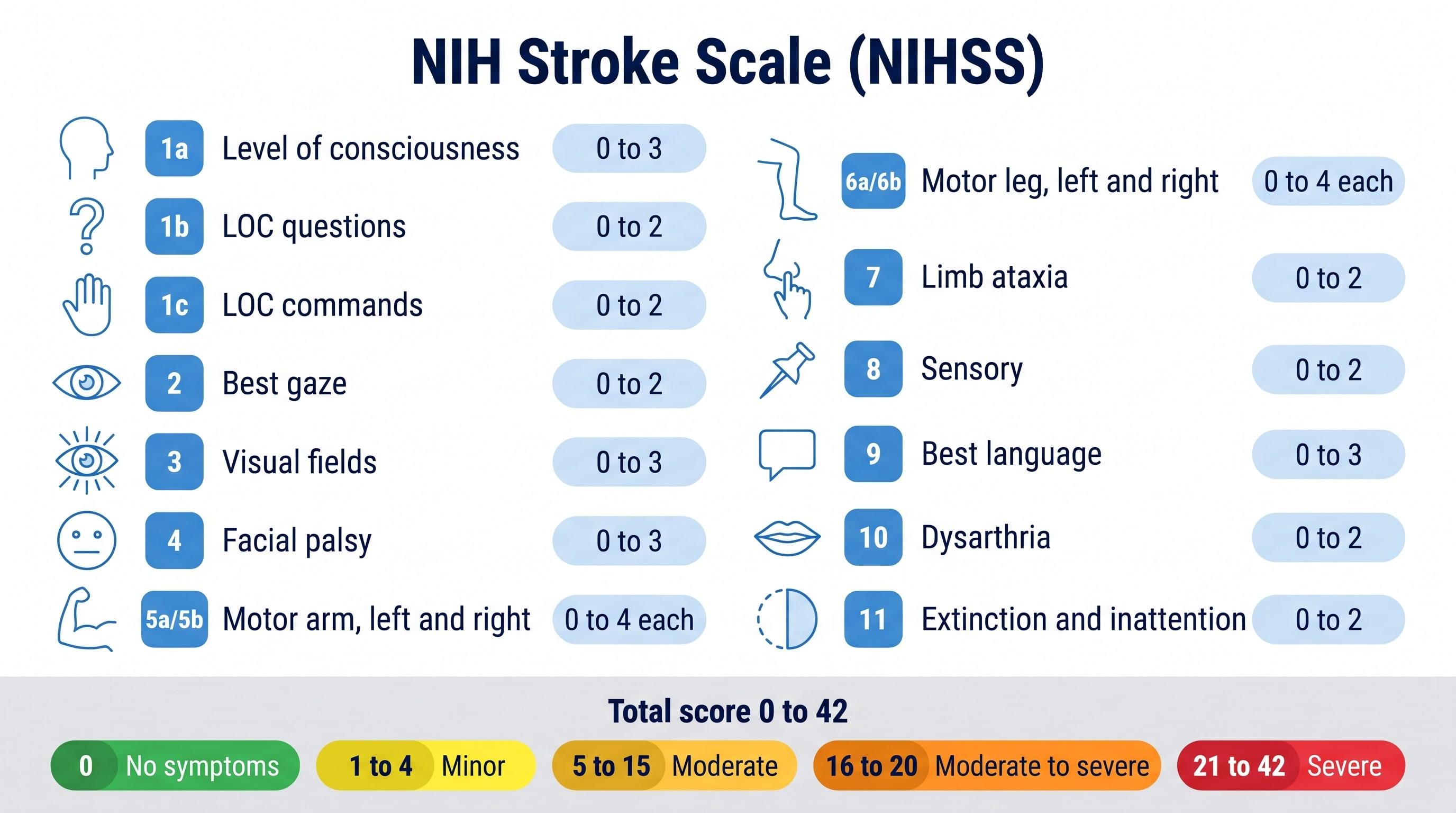
NIHSS Calculator (NIH Stroke Scale)
Score all 15 NIH Stroke Scale items to get the NIHSS total from 0 to 42 and the stroke severity range.
Try it free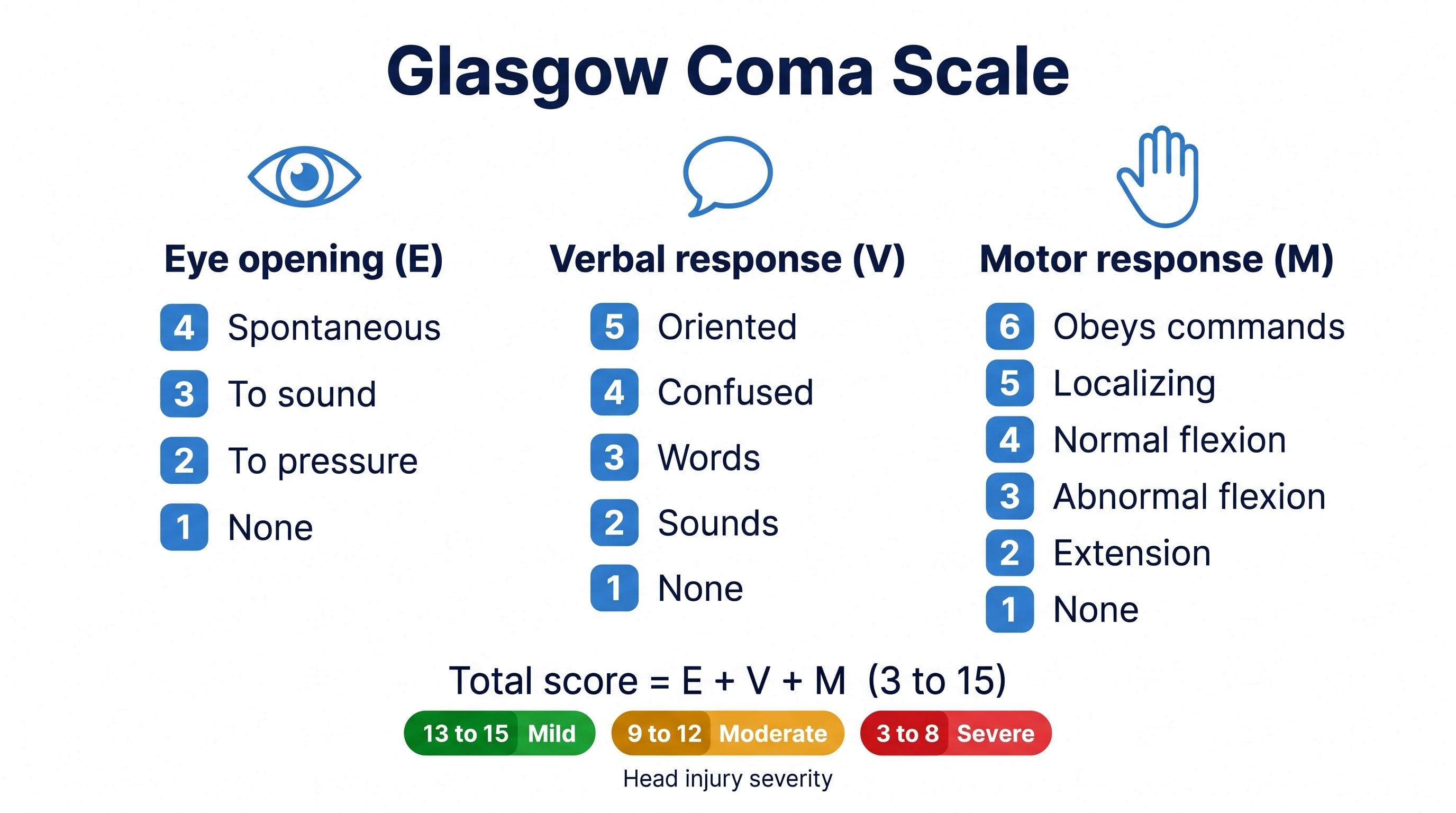
Glasgow Coma Scale Calculator
Score eye, verbal, and motor responses to get the GCS total, E V M code, severity range, and GCS-P.
Try it free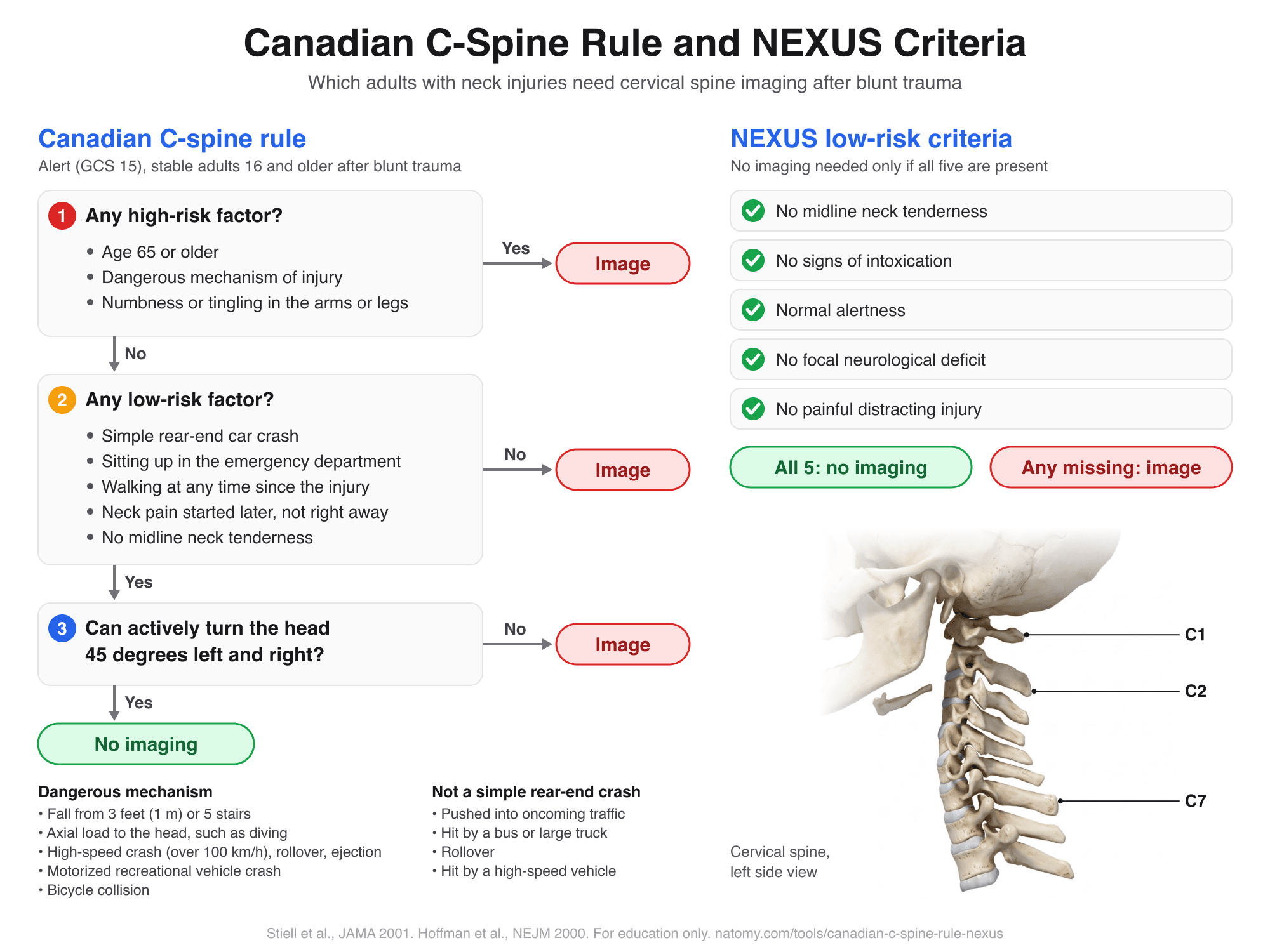
Canadian C-Spine Rule and NEXUS
Run the Canadian C-spine rule or the NEXUS criteria step by step to see which adults need neck imaging after trauma.
Try it free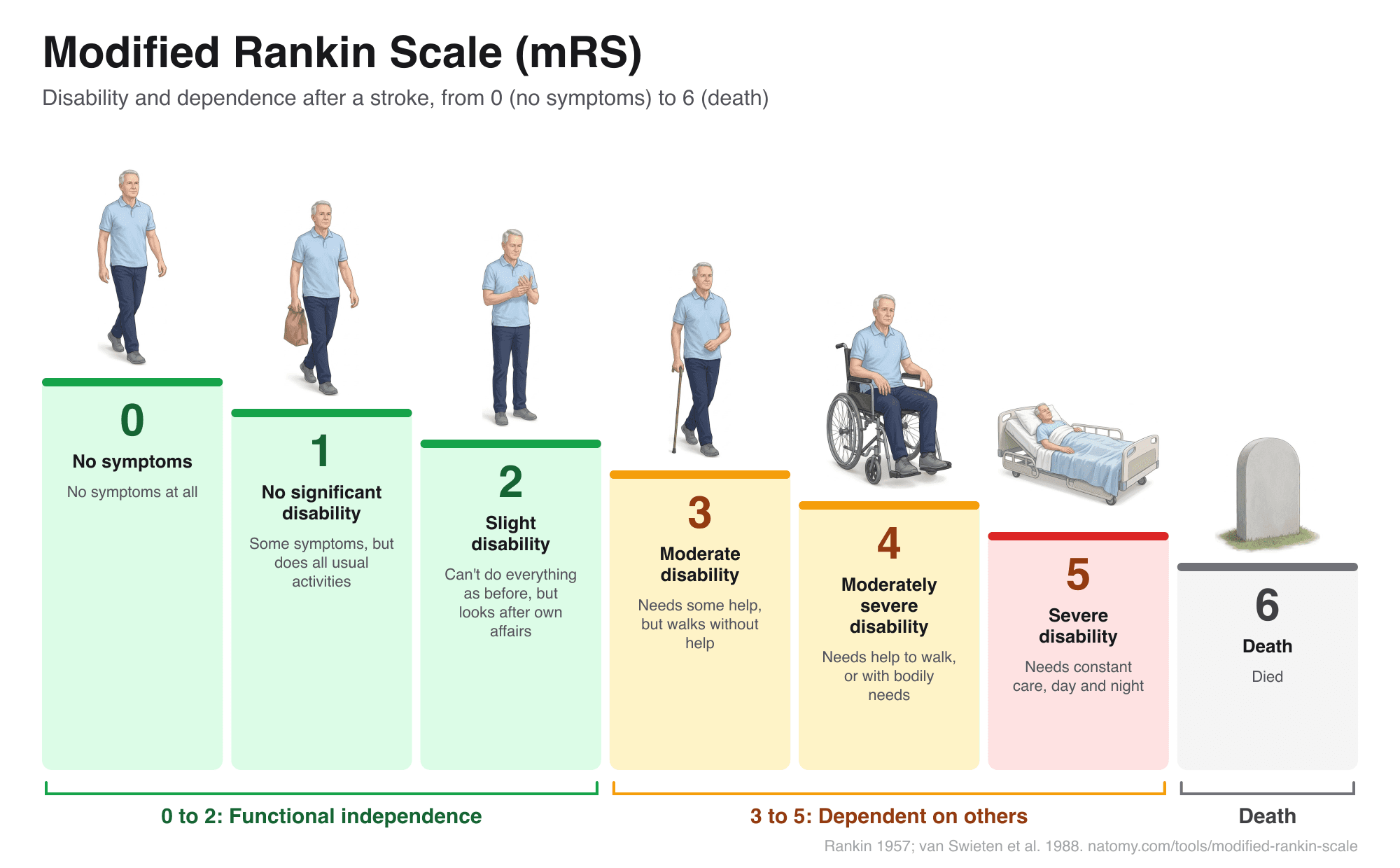
Modified Rankin Scale (mRS)
Illustrated mRS chart from 0 to 6 with a question-based score finder, what each grade means after a stroke, and a copyable note.
Try it free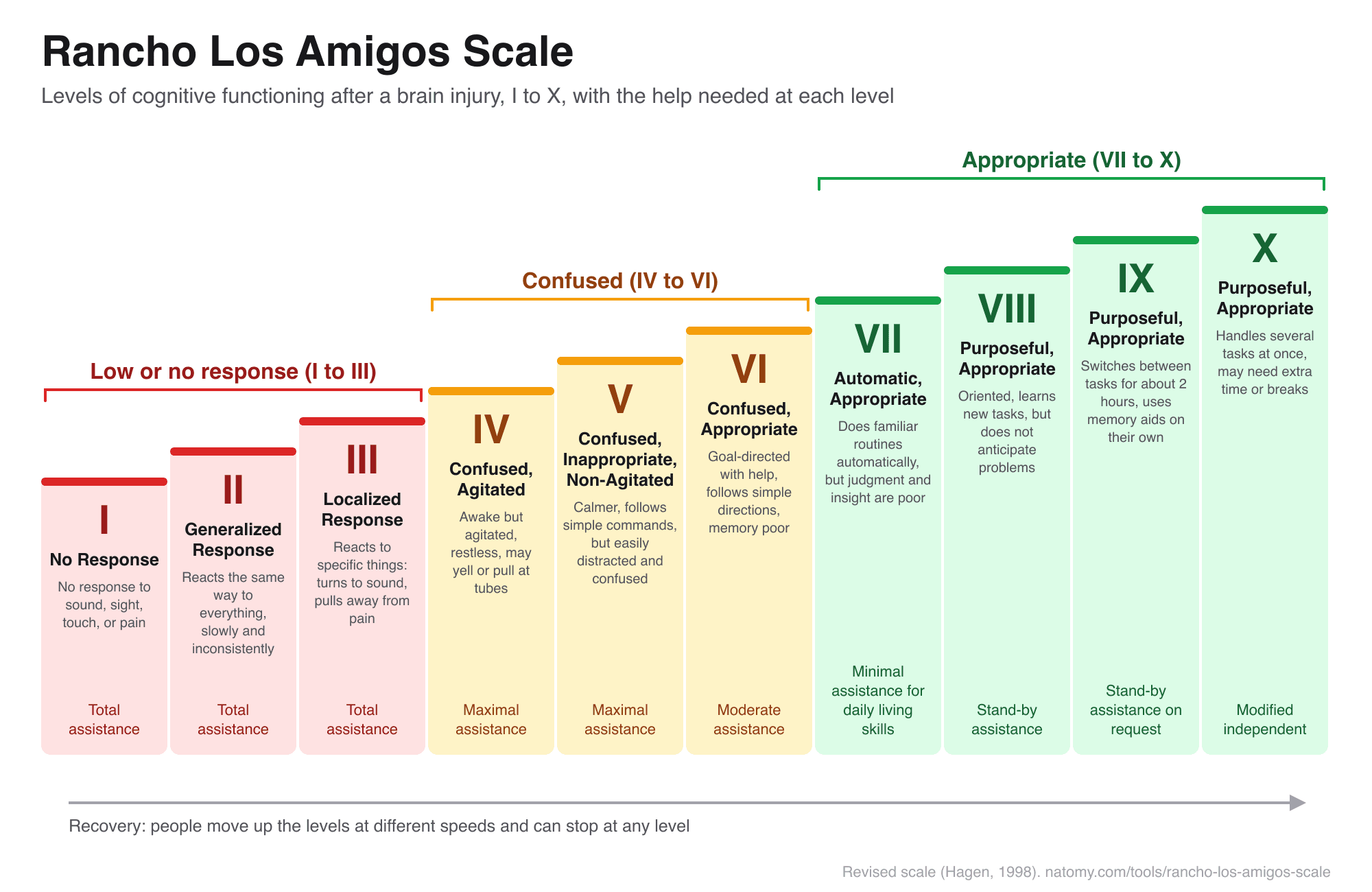
Rancho Los Amigos Scale
The 10 levels of cognitive functioning after a brain injury, with a level finder, what to expect, and how to help.
Try it free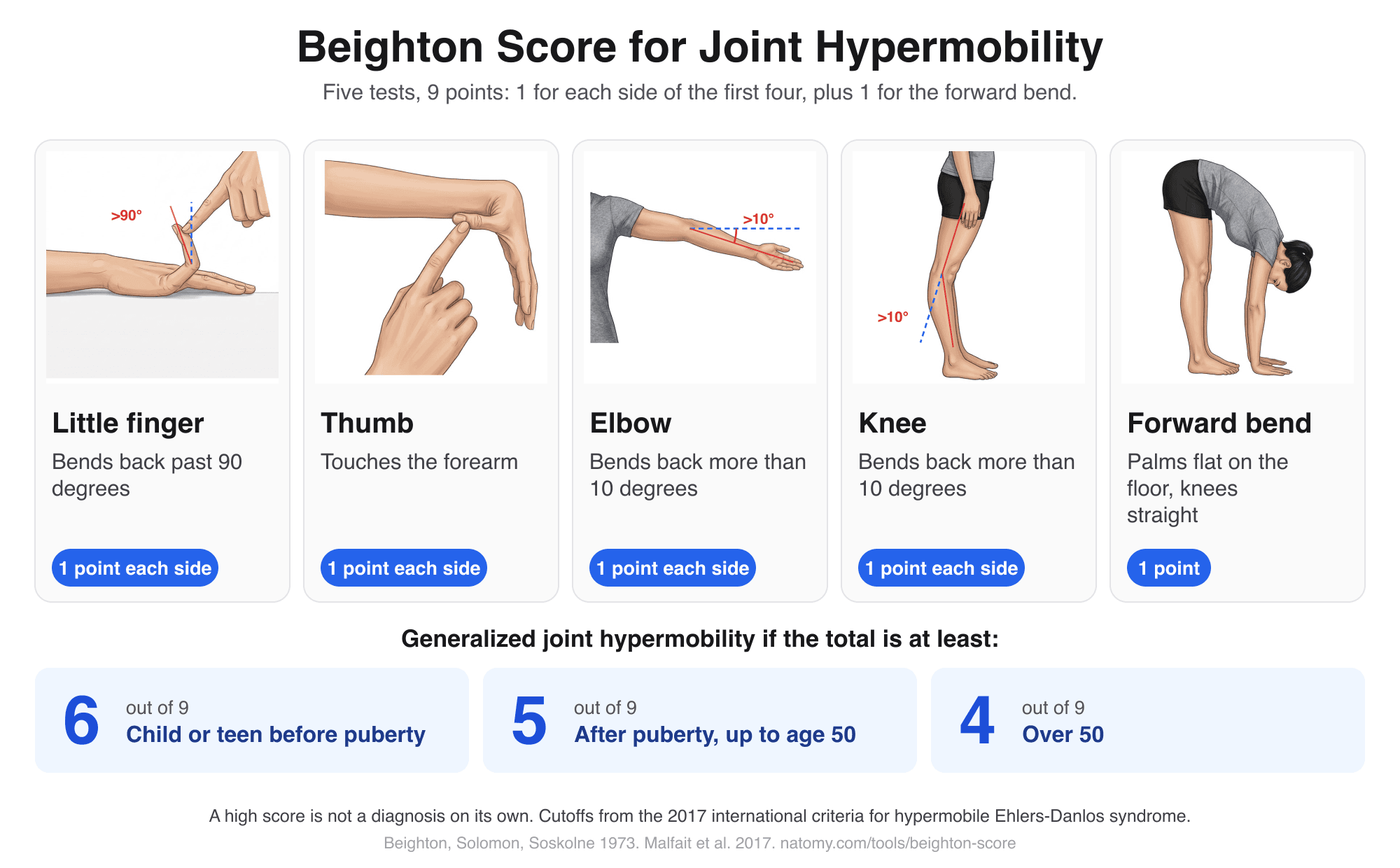
Beighton Score Calculator
Illustrated hypermobility test: score the 5 Beighton movements out of 9, compare with the age cutoff, and copy a note.
Try it free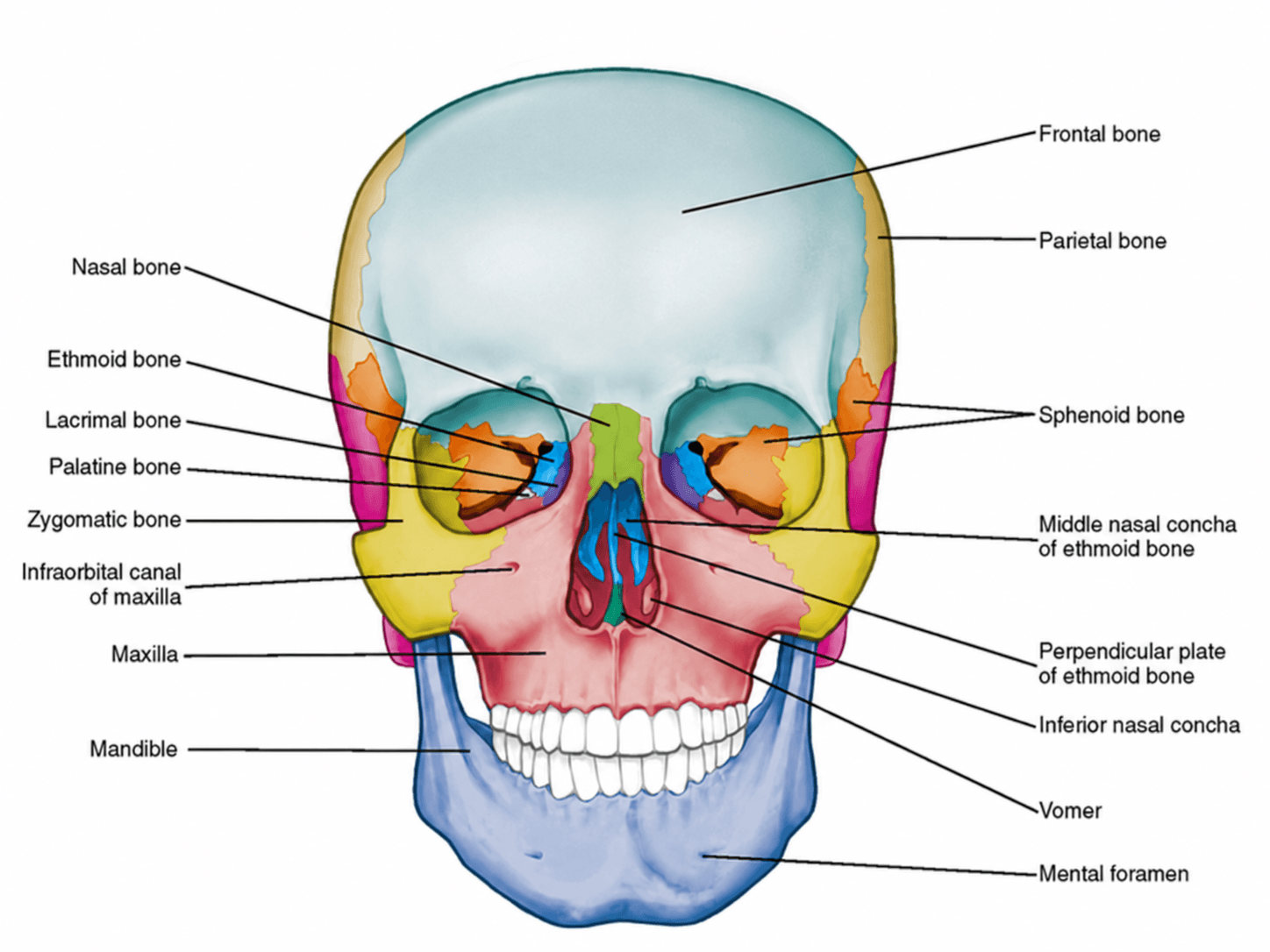
Anterior View of Skull Labeled
Free labeled and unlabeled anterior view of the skull, downloadable as PNG.
Try it free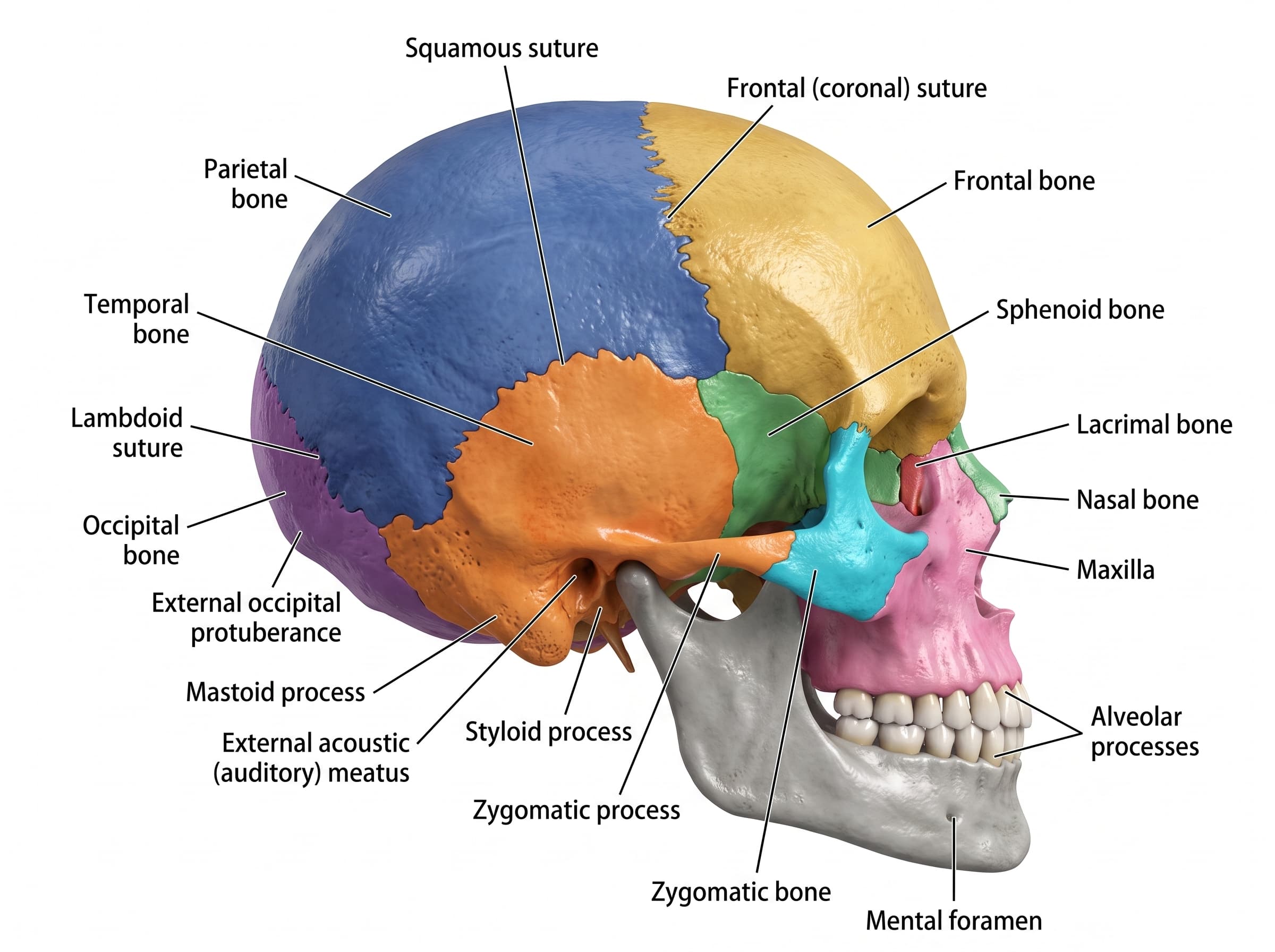
Lateral View of Skull Labeled
Free labeled and unlabeled lateral view of the skull, downloadable as PNG.
Try it free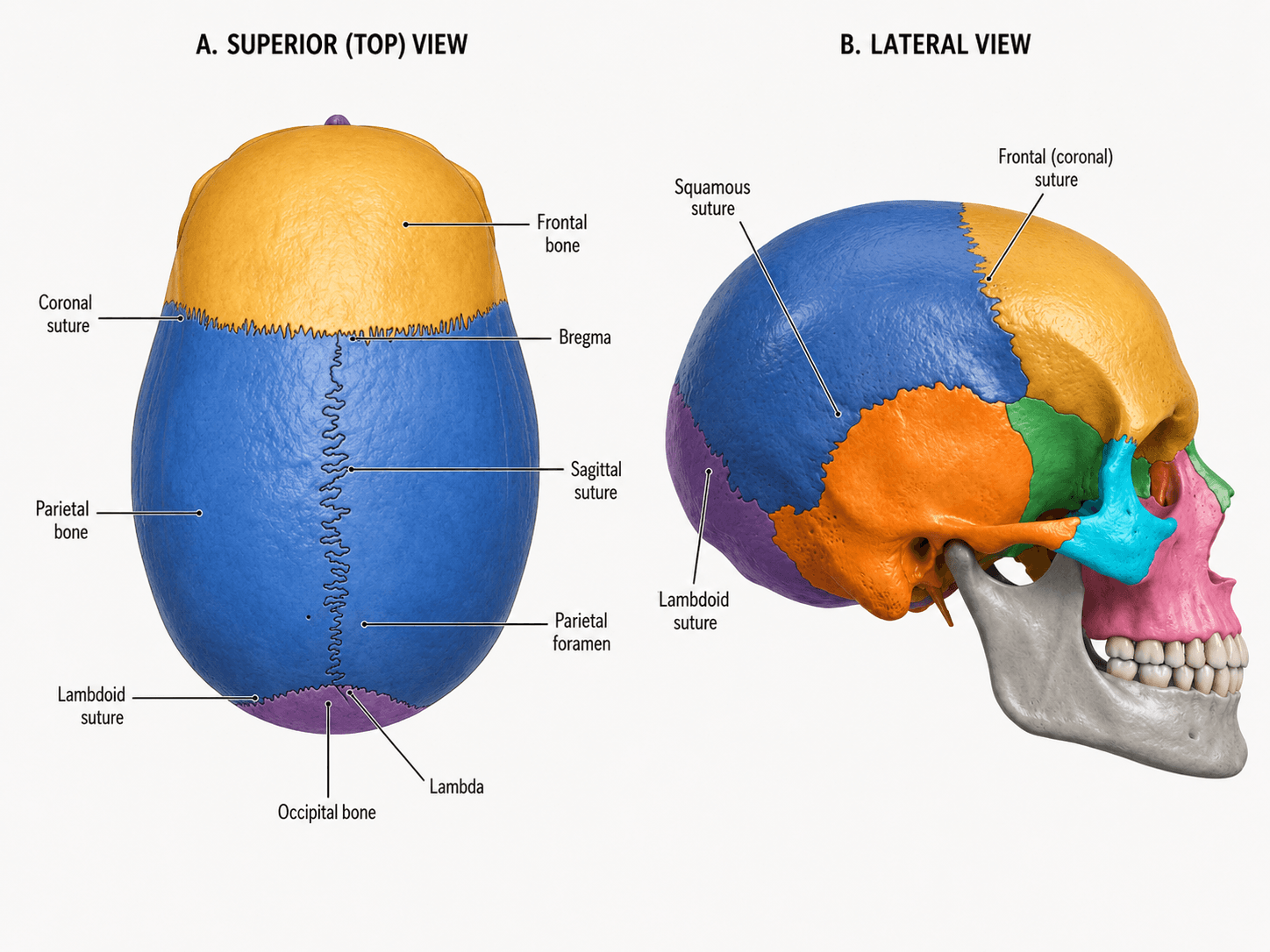
Skull Sutures Labeled
Free labeled and unlabeled skull sutures diagram, superior and lateral views, downloadable as PNG.
Try it free