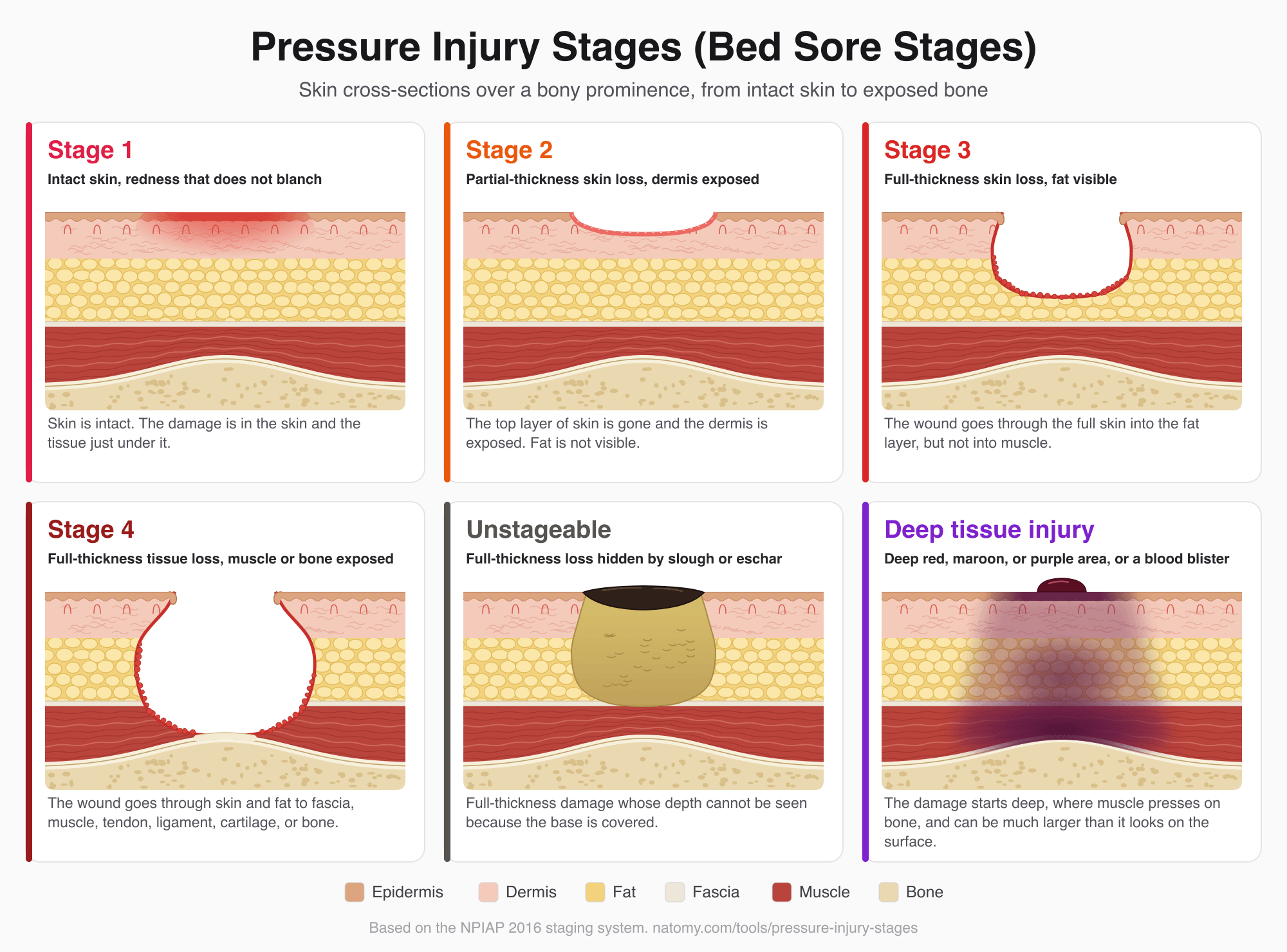
Stage 1 pressure injury
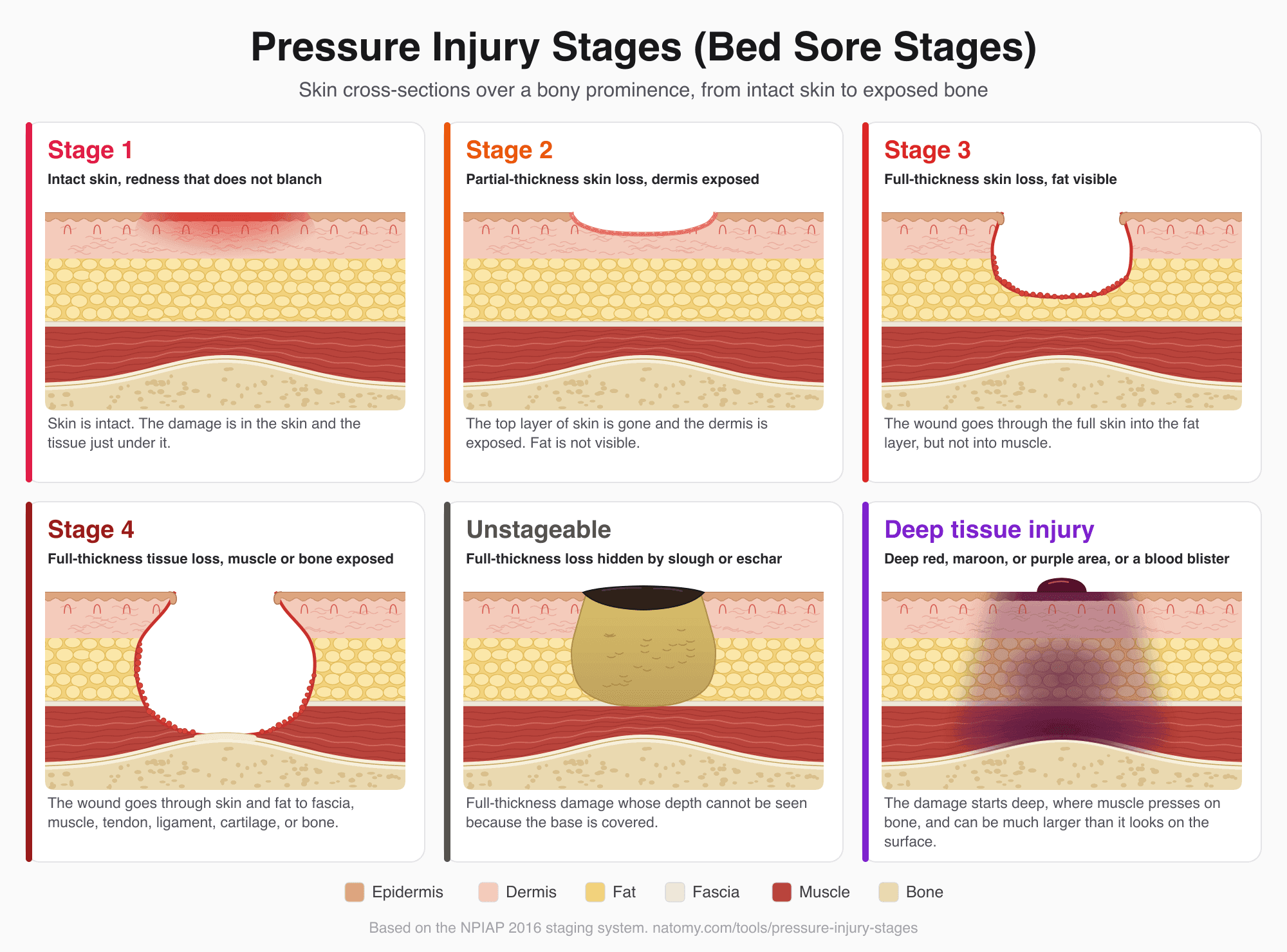
Intact skin, redness that does not blanch
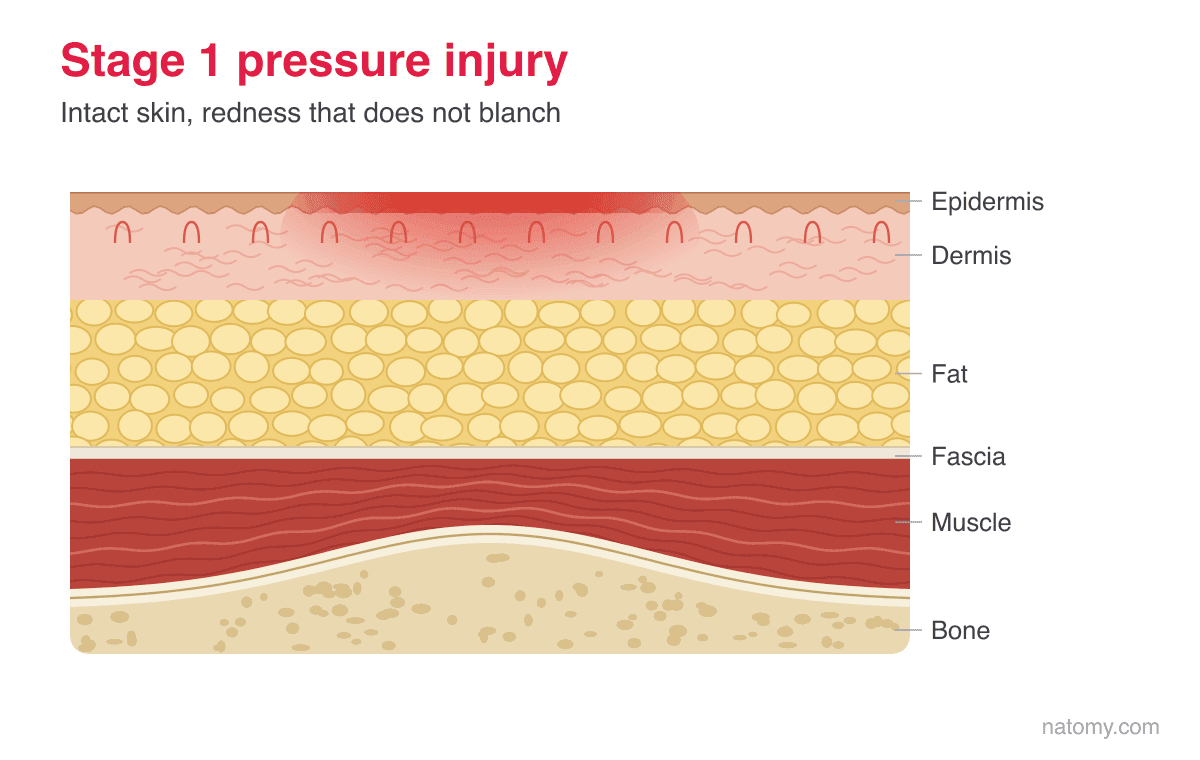
Skin is intact. The damage is in the skin and the tissue just under it. A patch of intact skin that stays red when you press on it and let go. On darker skin it may look purple, blue, or just darker than the skin around it, so compare warmth, firmness, swelling, and pain with nearby skin.
Redness that turns white when pressed (blanches) is not a pressure injury yet, but it is a warning sign. Purple or maroon color points to a deep tissue injury instead.
Stage 2 pressure injury
Partial-thickness skin loss, dermis exposed
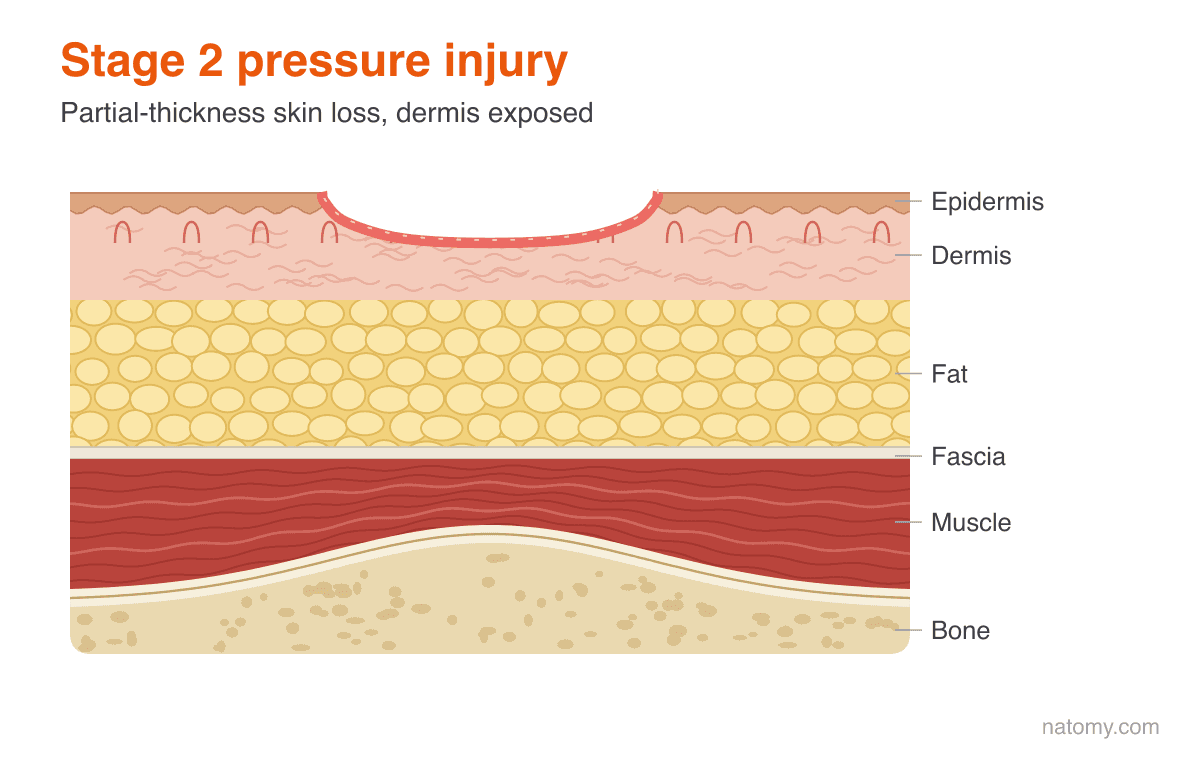
The top layer of skin is gone and the dermis is exposed. Fat is not visible. A shallow open wound with a pink or red, moist base, or an intact or broken blister filled with clear fluid. There is no slough, eschar, or granulation tissue.
Do not use Stage 2 for moisture damage (incontinence dermatitis, skin fold rash), skin tears, burns, or abrasions.
Stage 3 pressure injury
Full-thickness skin loss, fat visible
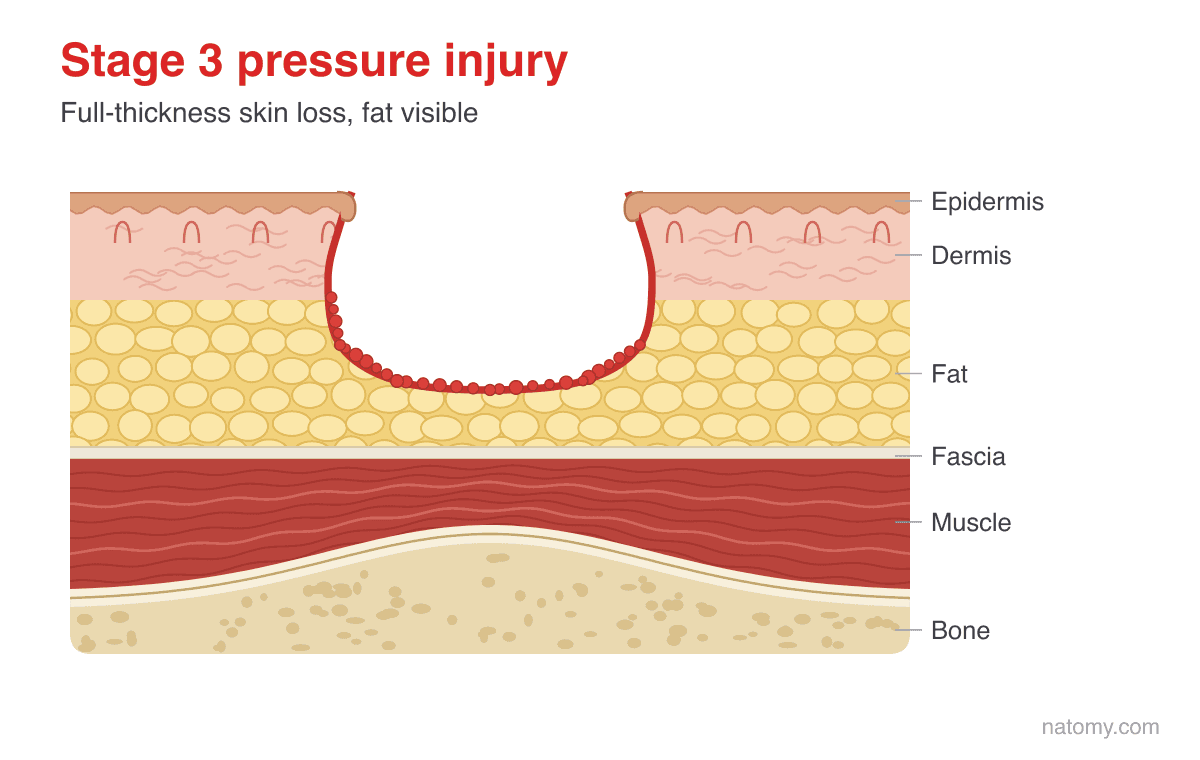
The wound goes through the full skin into the fat layer, but not into muscle. Fat is visible in the wound. Granulation tissue and rolled edges are common, and some slough or eschar may be present. Undermining and tunneling can occur. Fascia, muscle, tendon, ligament, cartilage, and bone are not visible.
Depth depends on the body site. Places with little fat, such as the bridge of the nose, the ear, the back of the head, and the ankle, can have shallow Stage 3 wounds.
Stage 4 pressure injury
Full-thickness tissue loss, muscle or bone exposed
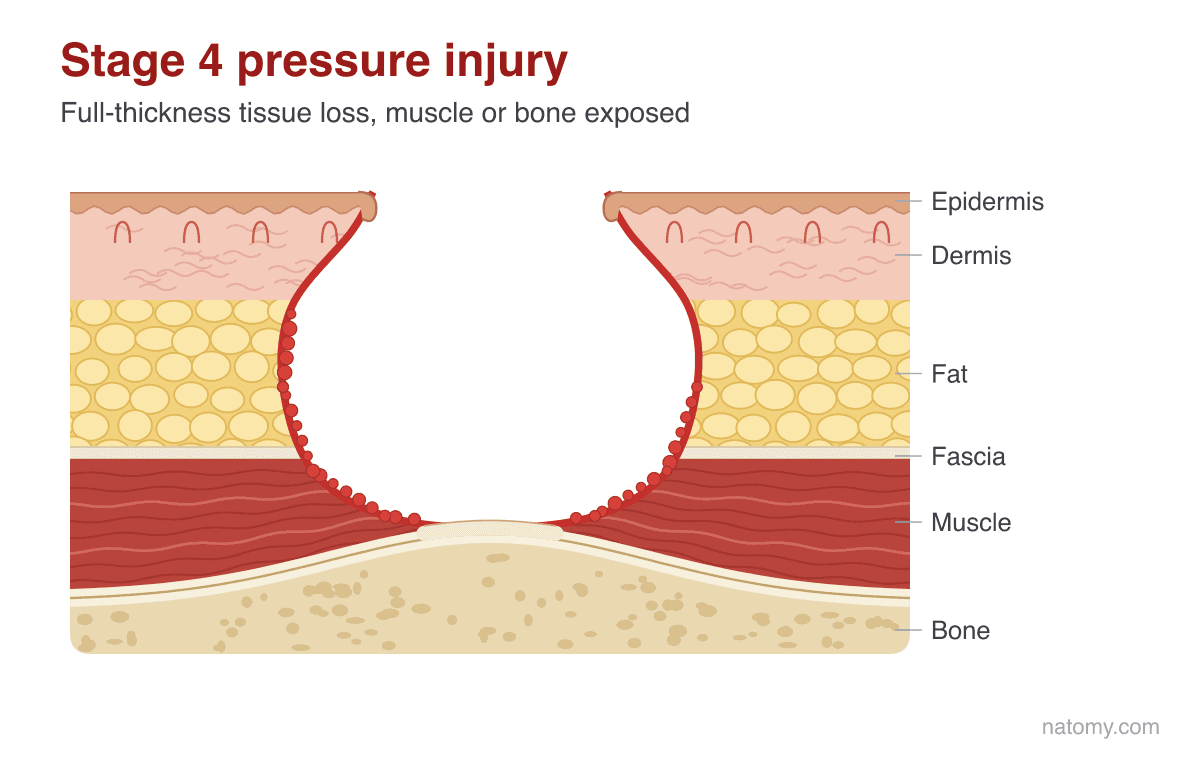
The wound goes through skin and fat to fascia, muscle, tendon, ligament, cartilage, or bone. Muscle, tendon, or bone can be seen or felt in the wound. Slough, eschar, rolled edges, undermining, and tunneling are common.
Exposed or palpable bone raises the risk of bone infection (osteomyelitis).
Unstageable pressure injury
Full-thickness loss hidden by slough or eschar
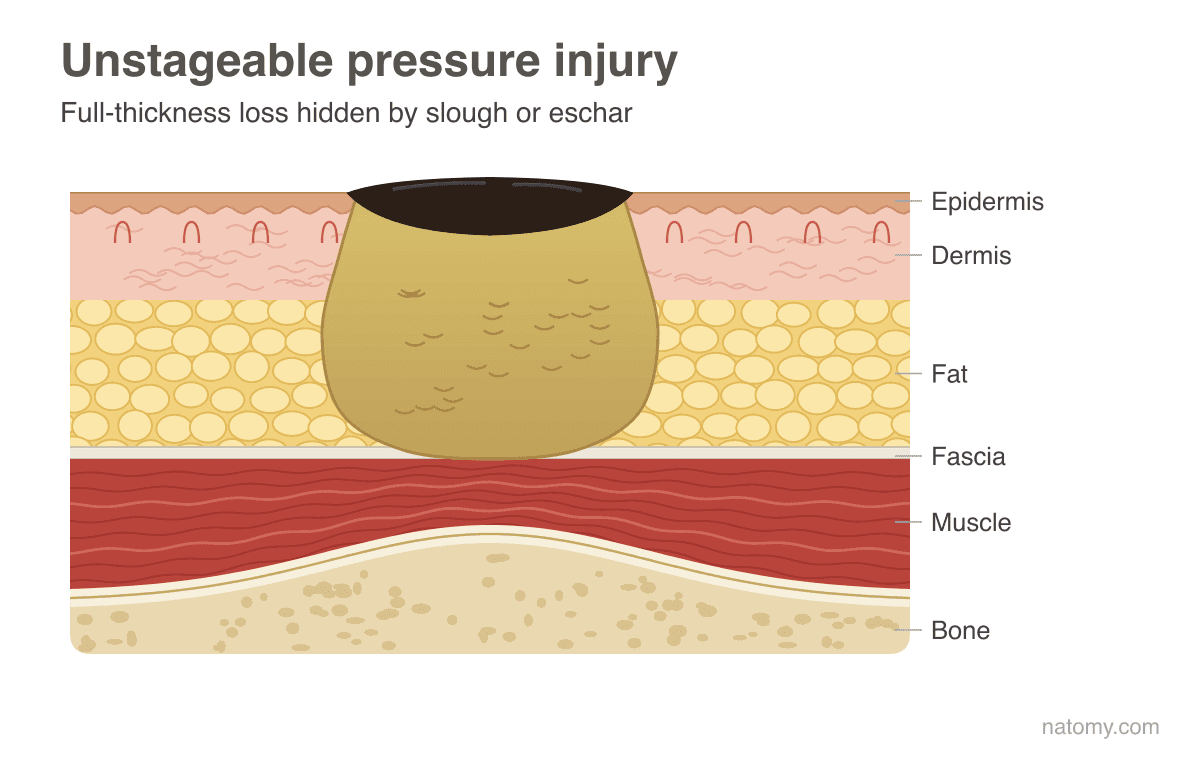
Full-thickness damage whose depth cannot be seen because the base is covered. The wound base is covered by slough (yellow, tan, gray, green, or brown) or eschar (tan, brown, or black dead tissue). Once it is removed, the wound will be a Stage 3 or Stage 4.
Stable eschar on a heel or an ischemic limb (dry, attached, intact, no redness or fluctuance) is usually left in place, not removed.
Deep tissue pressure injury (DTPI)
Deep red, maroon, or purple area, or a blood blister
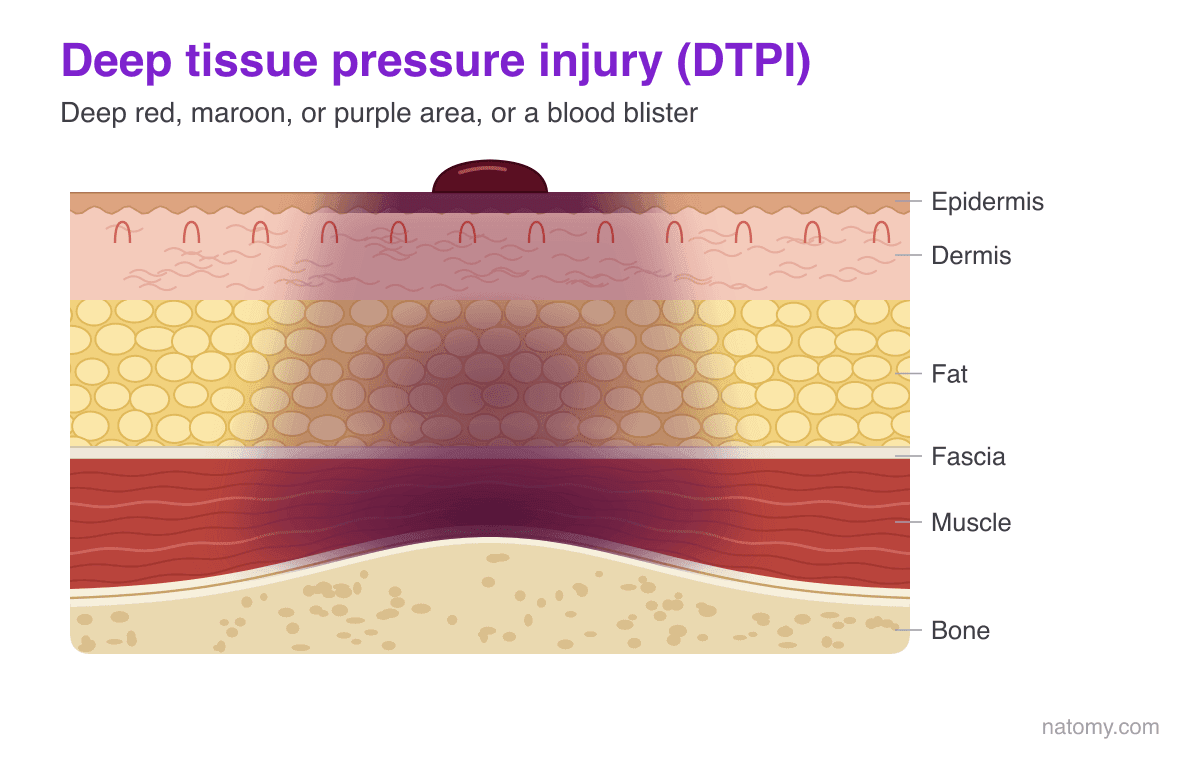
The damage starts deep, where muscle presses on bone, and can be much larger than it looks on the surface. Intact or broken skin with a deep red, maroon, or purple area that does not blanch, or a blood-filled blister. Pain and a change in temperature often come first.
It may open quickly to show the real extent of the damage, or resolve without tissue loss. Do not use it for vascular, traumatic, or neuropathic wounds.