What is the Rancho Los Amigos scale?+
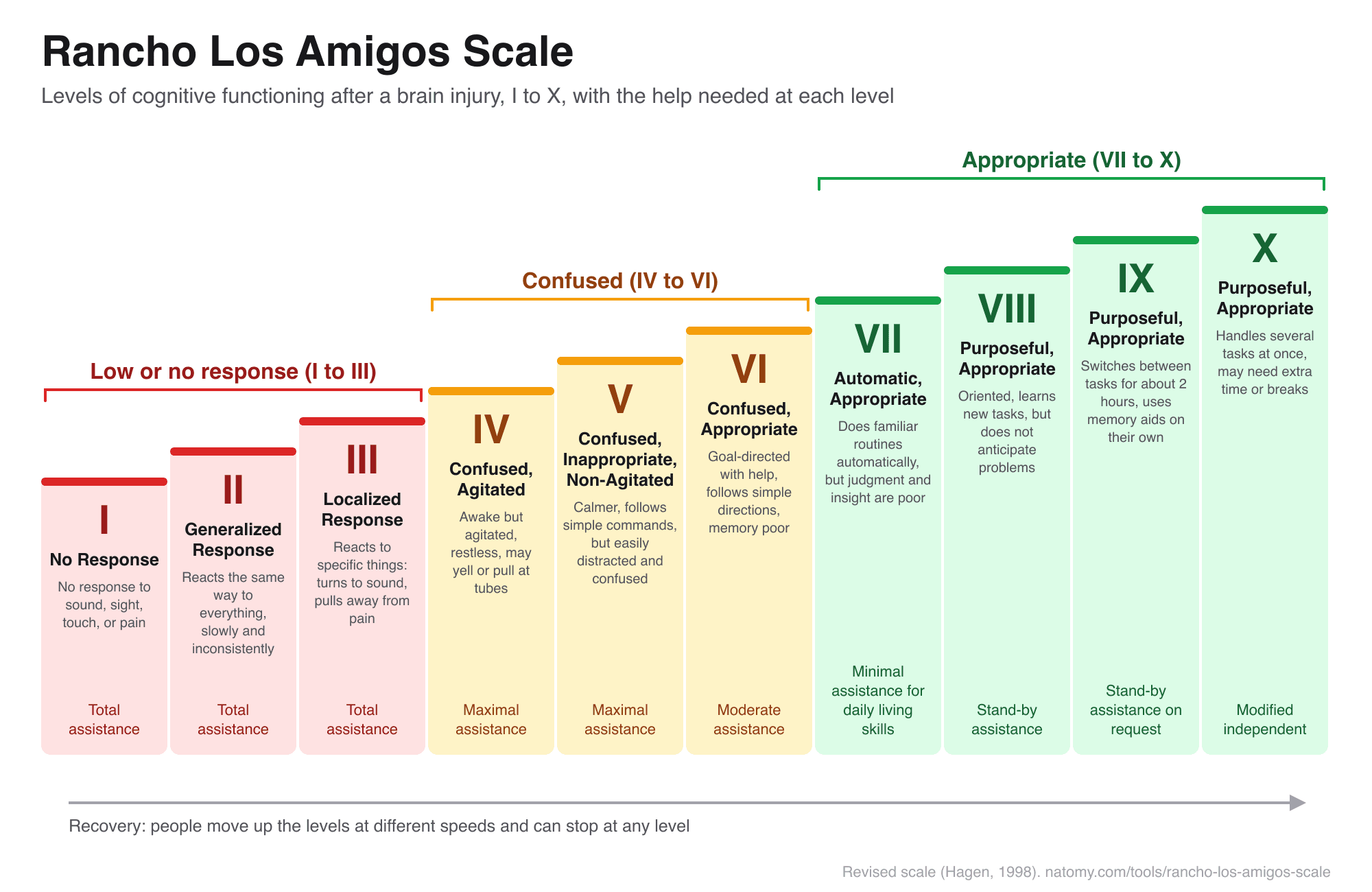
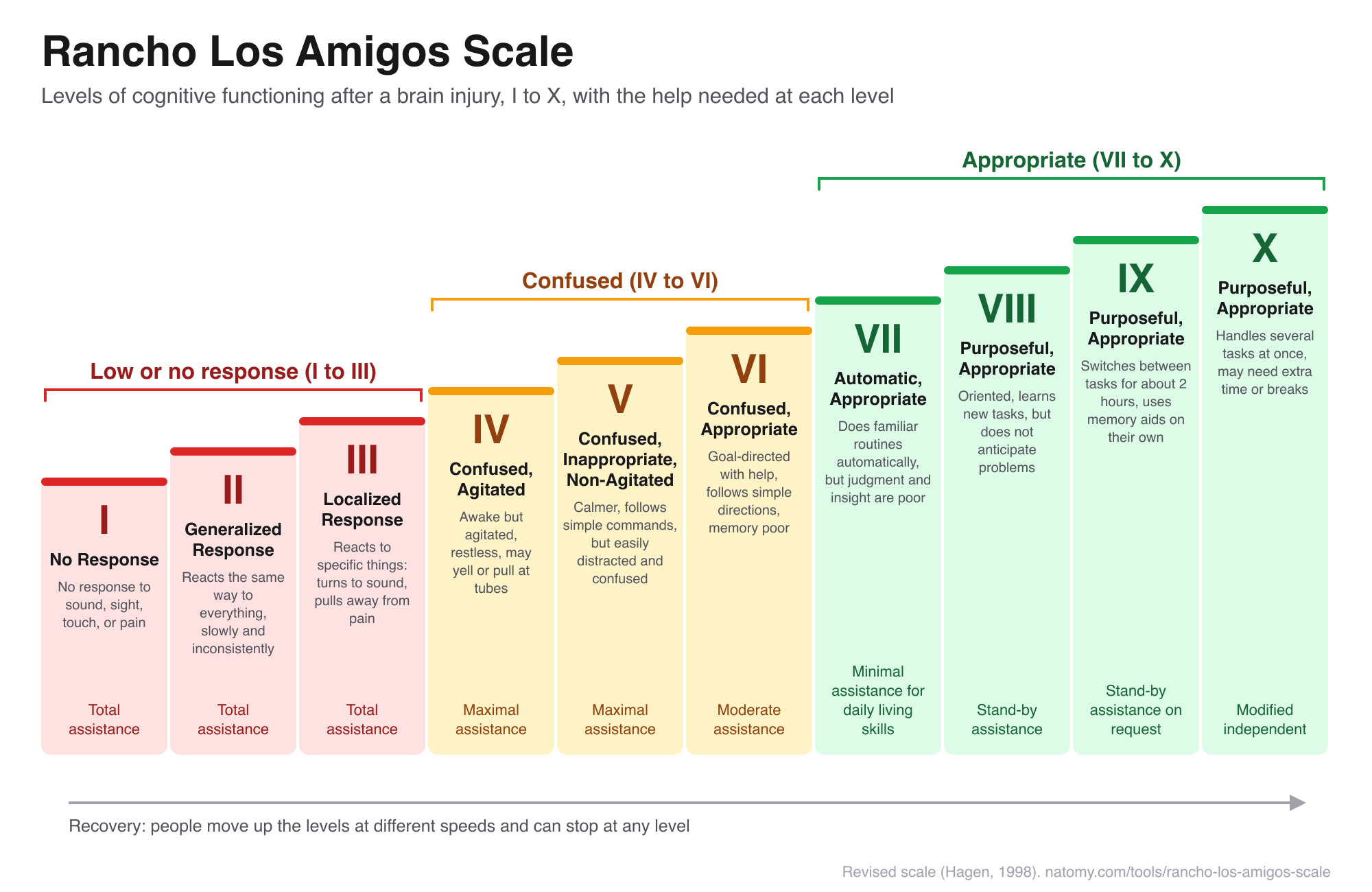
The Rancho Los Amigos Levels of Cognitive Functioning Scale describes how people think and behave as they recover from a brain injury, from no response at all (Level I) to purposeful, independent behavior (Level X). It was developed at Rancho Los Amigos National Rehabilitation Center in California and is used by rehabilitation teams to track recovery, plan therapy, and explain progress to families.
What is the difference between the 8-level and 10-level Rancho scale?+
The original 1972 scale has eight levels, ending at Level VIII, Purposeful and Appropriate. The revised scale from 1998 keeps Levels I to VII the same and splits the top level into three: Level VIII (stand-by assistance), Level IX (stand-by assistance on request), and Level X (modified independent). Both versions are still in use, so check which one a record uses.
How is the Rancho scale different from the Glasgow Coma Scale?+
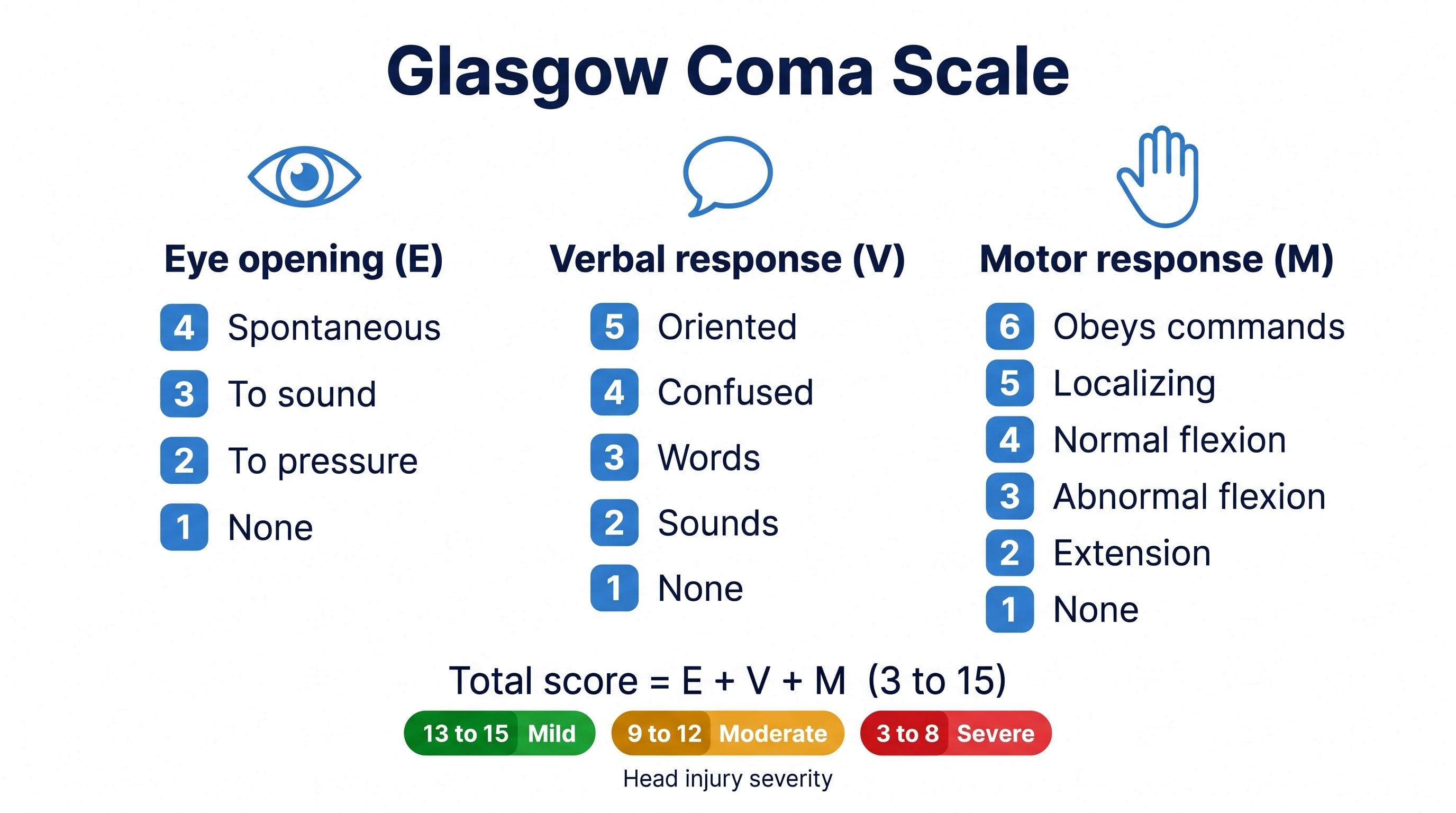
The Glasgow Coma Scale is a quick score of eye, verbal, and motor responses, used in the first hours and days to measure how conscious someone is. The Rancho scale describes cognition and behavior during recovery and rehabilitation, over weeks to months. A patient might have a GCS of 15 and still be at Rancho Level V or VI.
How long does each Rancho level last?+
There is no set timeline. Some people move through several levels in days, others stay at one level for weeks or months, and recovery can stop at any level. Levels can also overlap, with a person showing signs of two levels at once, and may slip back temporarily with illness, fatigue, or medication changes.
Why is someone at Rancho Level IV agitated?+
Level IV agitation comes from the brain injury itself: the person is awake but cannot make sense of what is happening and has almost no short-term memory. It is not intentional. A calm, quiet room, few visitors, and a steady routine usually help more than arguing or correcting.
Who assigns a Rancho level?+
The treating rehabilitation team, often the physiatrist, neuropsychologist, speech-language pathologist, and occupational therapist, assigns the level based on what they observe over time. It is a description, not a test with a score, so the level should be read with the notes that support it.
Why do lawyers look at Rancho levels?+
In traumatic brain injury cases, the Rancho levels in the rehabilitation records show how far the person recovered and how fast, and the level where recovery leveled off is a strong indicator of how much supervision and care they will need. Those needs feed into a life care plan and the damages claim.