What is the Beighton score?+
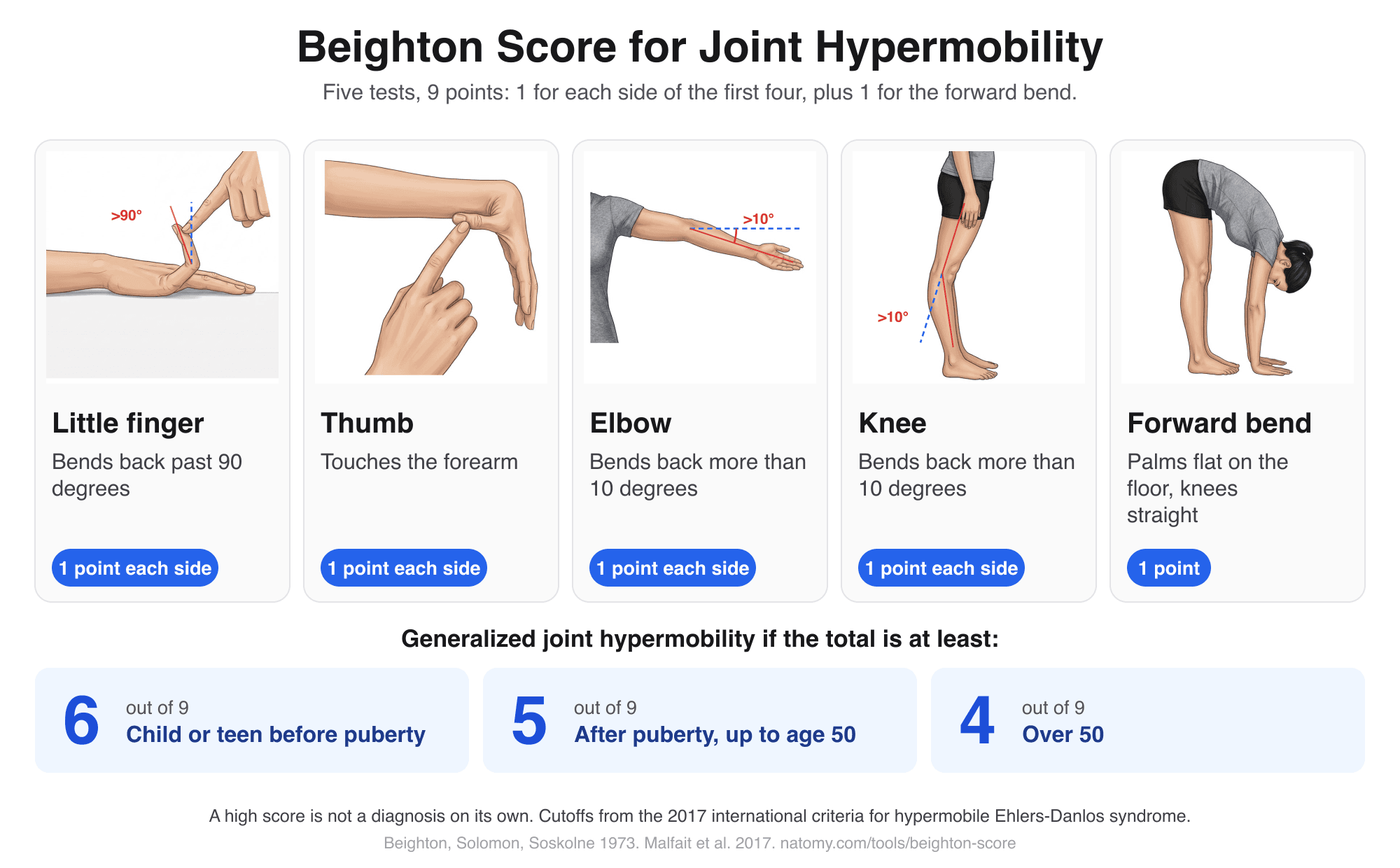
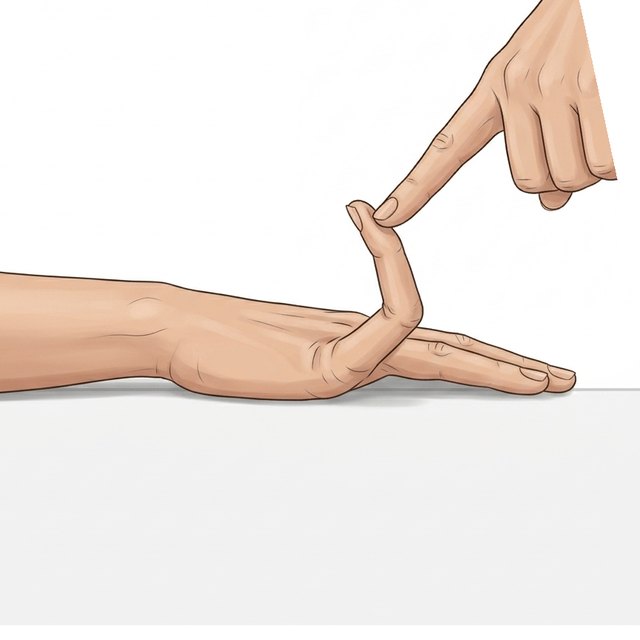
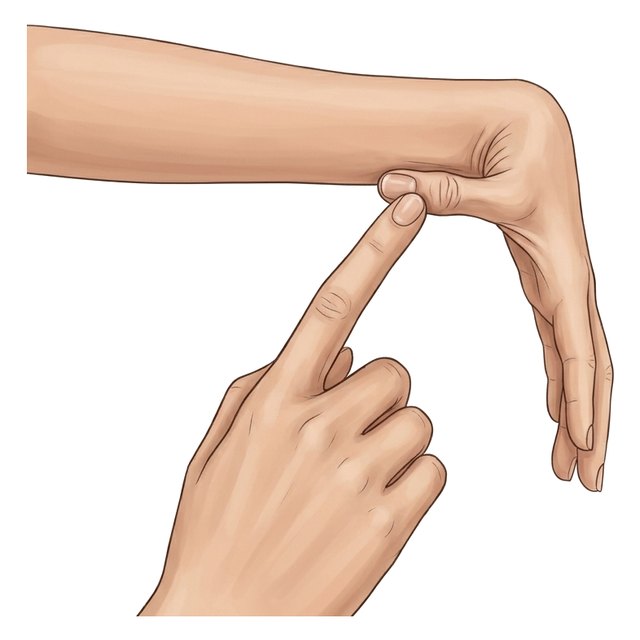
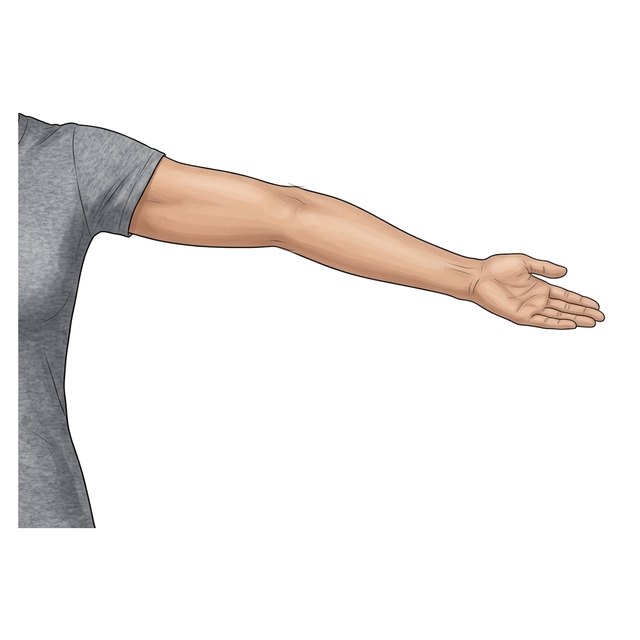
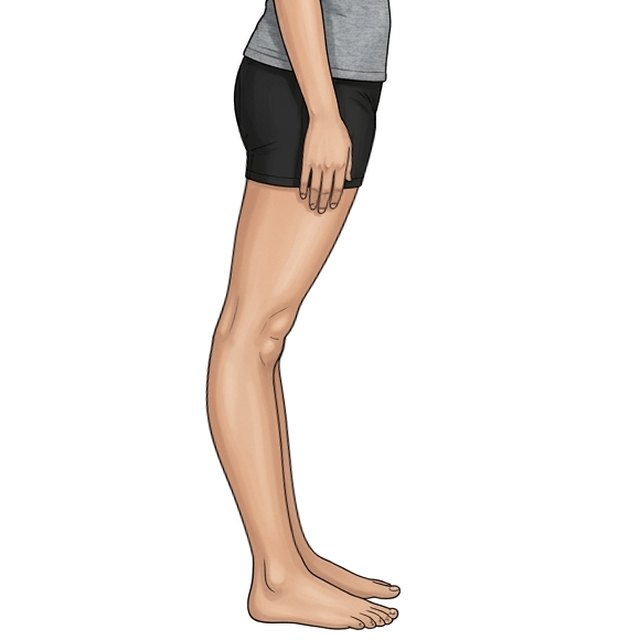
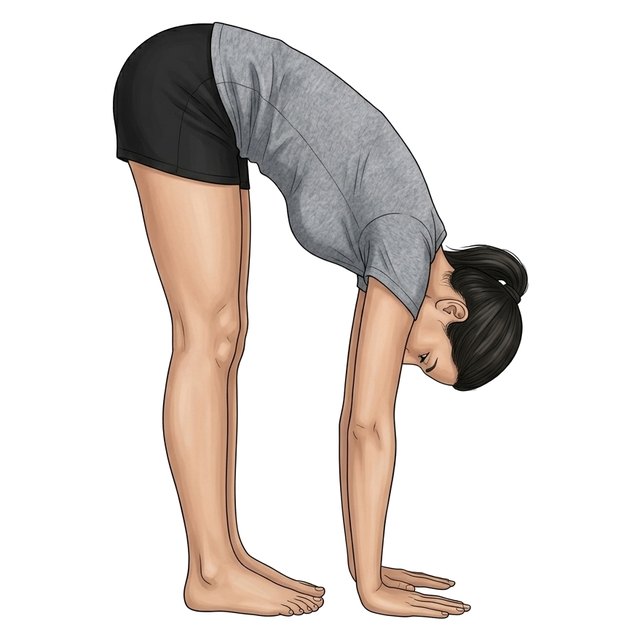
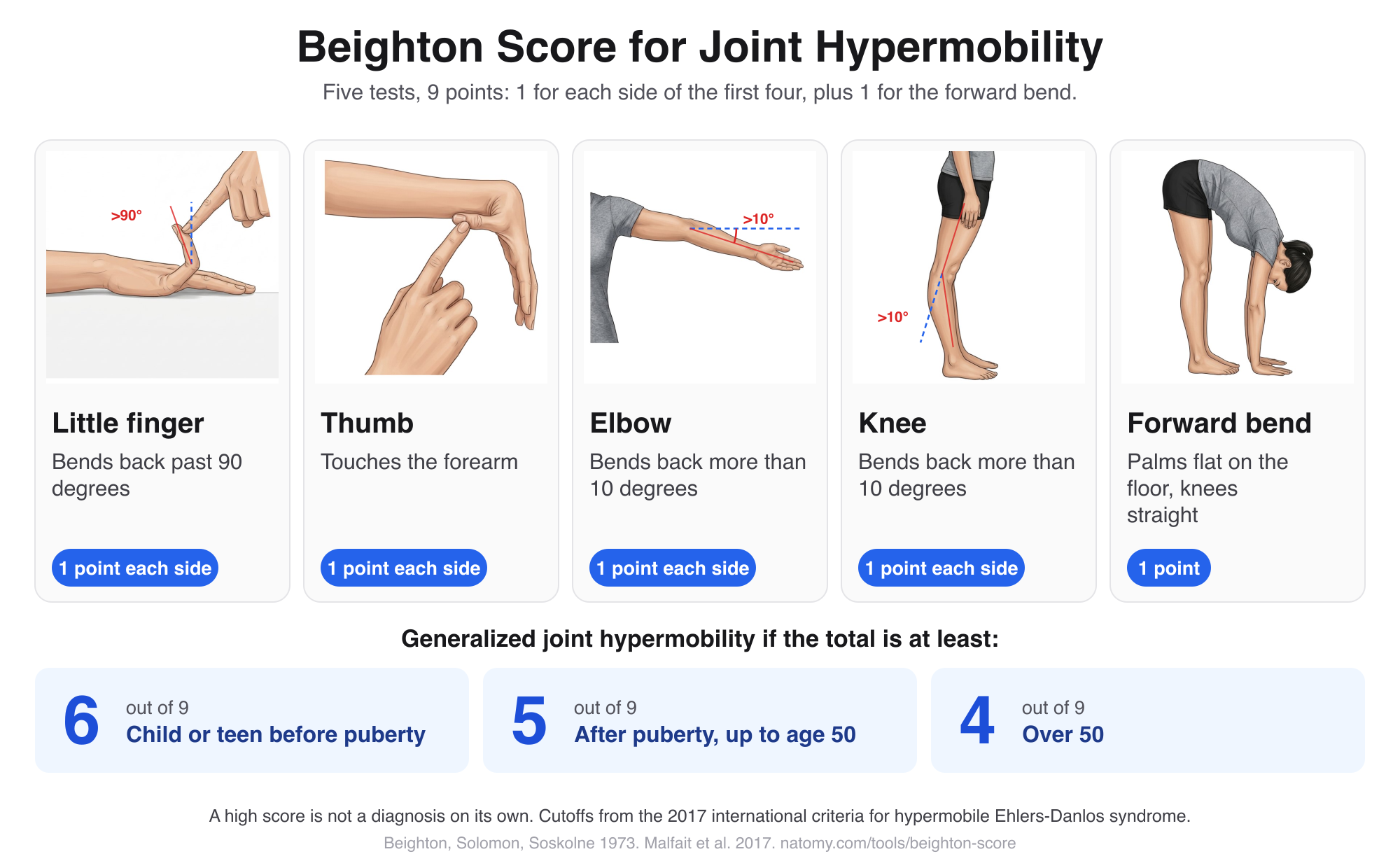
The Beighton score is a 9-point test for generalized joint hypermobility. One point is given for each side when the little finger bends back past 90 degrees, the thumb touches the forearm, the elbow bends back more than 10 degrees, and the knee bends back more than 10 degrees, plus one point for placing the palms flat on the floor with straight knees.
What Beighton score means hypermobility?+
Under the 2017 international criteria, generalized joint hypermobility means a score of at least 6 in children and adolescents before puberty, at least 5 after puberty up to age 50, and at least 4 over age 50. Older studies used other cutoffs, often 4 or 5 for adults, so check which one a report uses.
What is a normal Beighton score?+
There is no single normal value, because flexibility varies with age, sex, ancestry, and training. A score below the cutoff for the person's age group is not considered generalized hypermobility, and many adults score between 0 and 3.
Does a high Beighton score mean I have Ehlers-Danlos syndrome?+
No. Many people with a high score are simply flexible and have no symptoms. Hypermobile Ehlers-Danlos syndrome (hEDS) needs generalized hypermobility plus at least two of three groups of findings (a set of skin and connective tissue features, a first-degree relative with hEDS, and long-term musculoskeletal pain or instability), with other conditions ruled out. A doctor makes that diagnosis.
Can I do the Beighton test at home?+
You can try the movements to get a rough idea, but never force a joint. The score is most reliable when a clinician does it with the joints warmed up, moves each joint gently, and measures angles with a goniometer.
Can a Beighton score change over time?+
Yes. Flexibility usually decreases with age, which is why the cutoff is lower over 50. Training such as dance or gymnastics, warming up, injury, arthritis, and surgery can all change the score.
What does the Beighton score not test?+
It only checks five movements. It does not test the shoulders, wrists, ankles, feet, or jaw, and tests the hips and spine only through the forward bend, so a person can be hypermobile in joints the score misses. Those joints can be examined separately.
Who created the Beighton score?+
Peter Beighton and colleagues published it in 1973, adapting an earlier scheme by Carter and Wilkinson from 1964. It is still the most widely used screen for generalized joint hypermobility.