Rashes on Black Skin: Chickenpox, Measles, HSP, Shingles
These medical illustrations are for education and don't replace a diagnosis. If you're worried about a rash, see a doctor.
Rashes in Children
Chickenpox on Black Skin
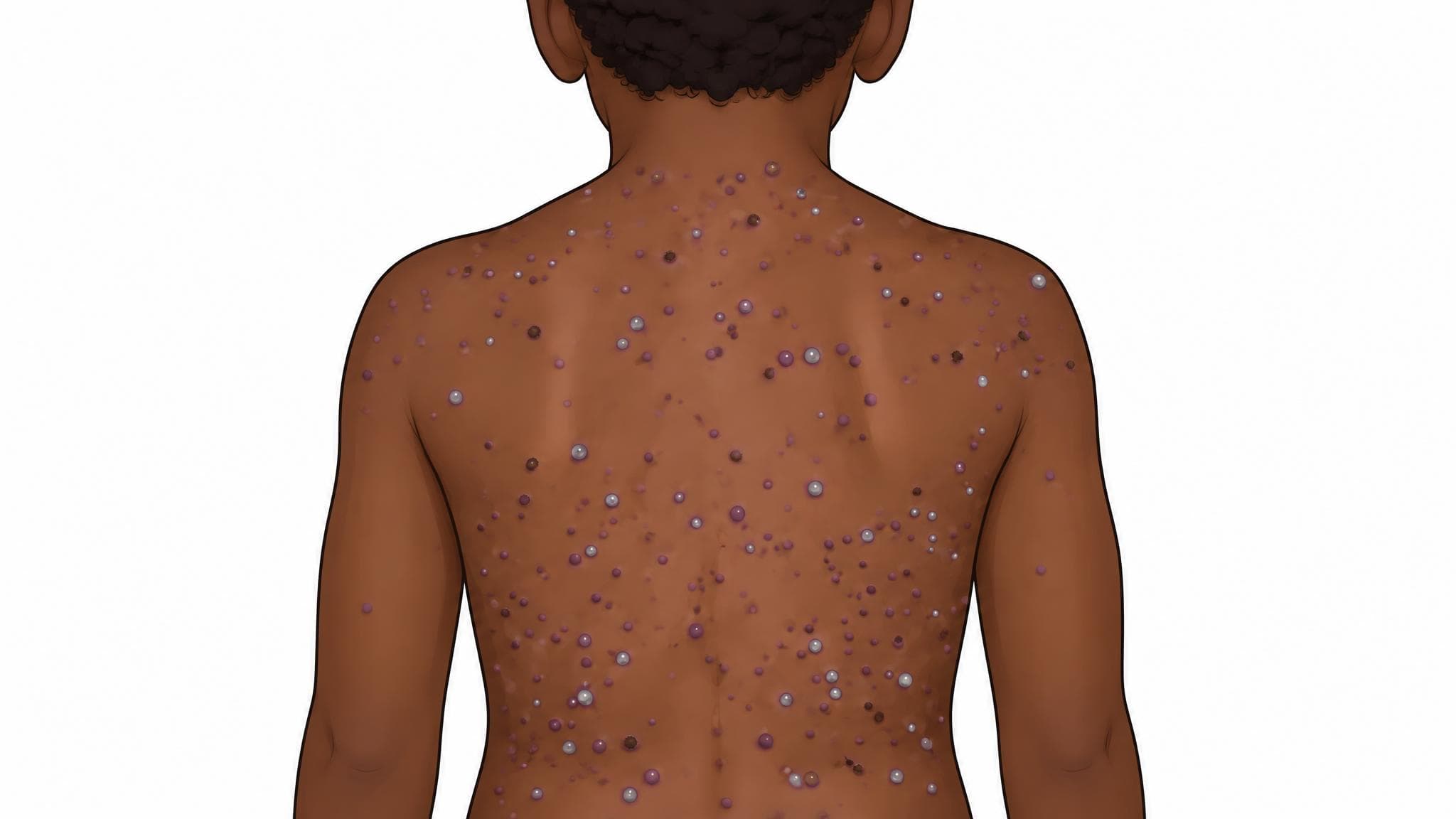
Chickenpox (varicella) is caused by the varicella-zoster virus (NHS; DermNet). It is most common in children under 10, though adults and unvaccinated teenagers can catch it too, usually with a more severe illness. So yes, Black people get chickenpox; it is just harder to spot in pictures that don't show dark skin.
What it looks like on dark skin:
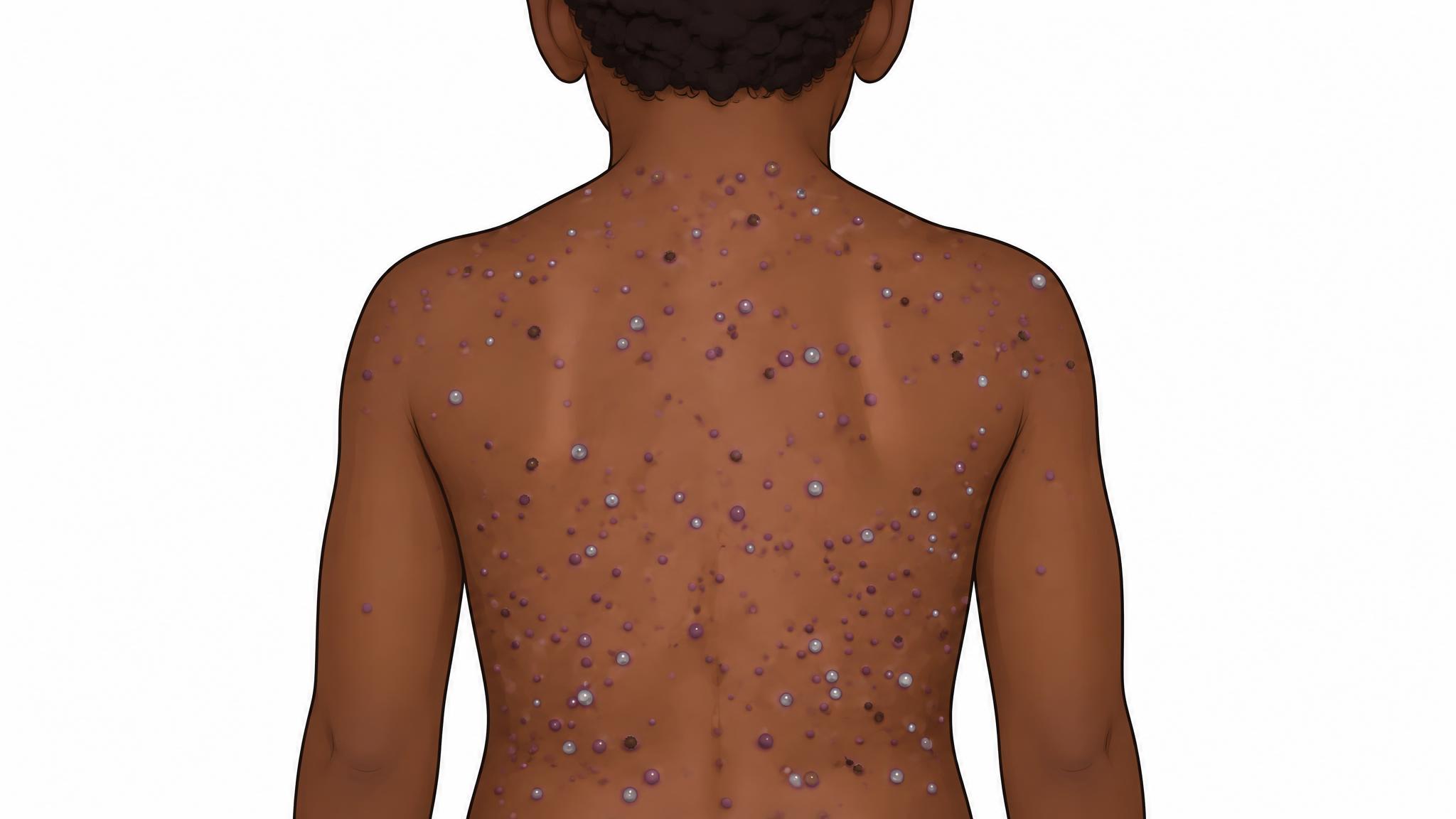
- Mixed stages at once. This is the key sign. New spots keep appearing in crops over three to five days, so small raised bumps, clear fluid-filled blisters and dark crusted scabs sit side by side.
- Clear blisters on a purple base. On light skin the blister sits on a red ring (the classic "dewdrop on a rose petal"). On dark skin that ring is purple, violet or dark brown, and the blister itself can look pale or greyish.
- Trunk first. Spots are densest on the chest, back and belly, then spread to the face, scalp and limbs. They can also appear inside the mouth.
- Dark marks afterwards. Healed spots often leave darker patches that fade slowly over months. Scratching raises the risk of scarring.
A child is contagious from about one to two days before the rash appears until every blister has crusted over, usually around five to seven days after the first spots (NHS).
Measles on Black Skin
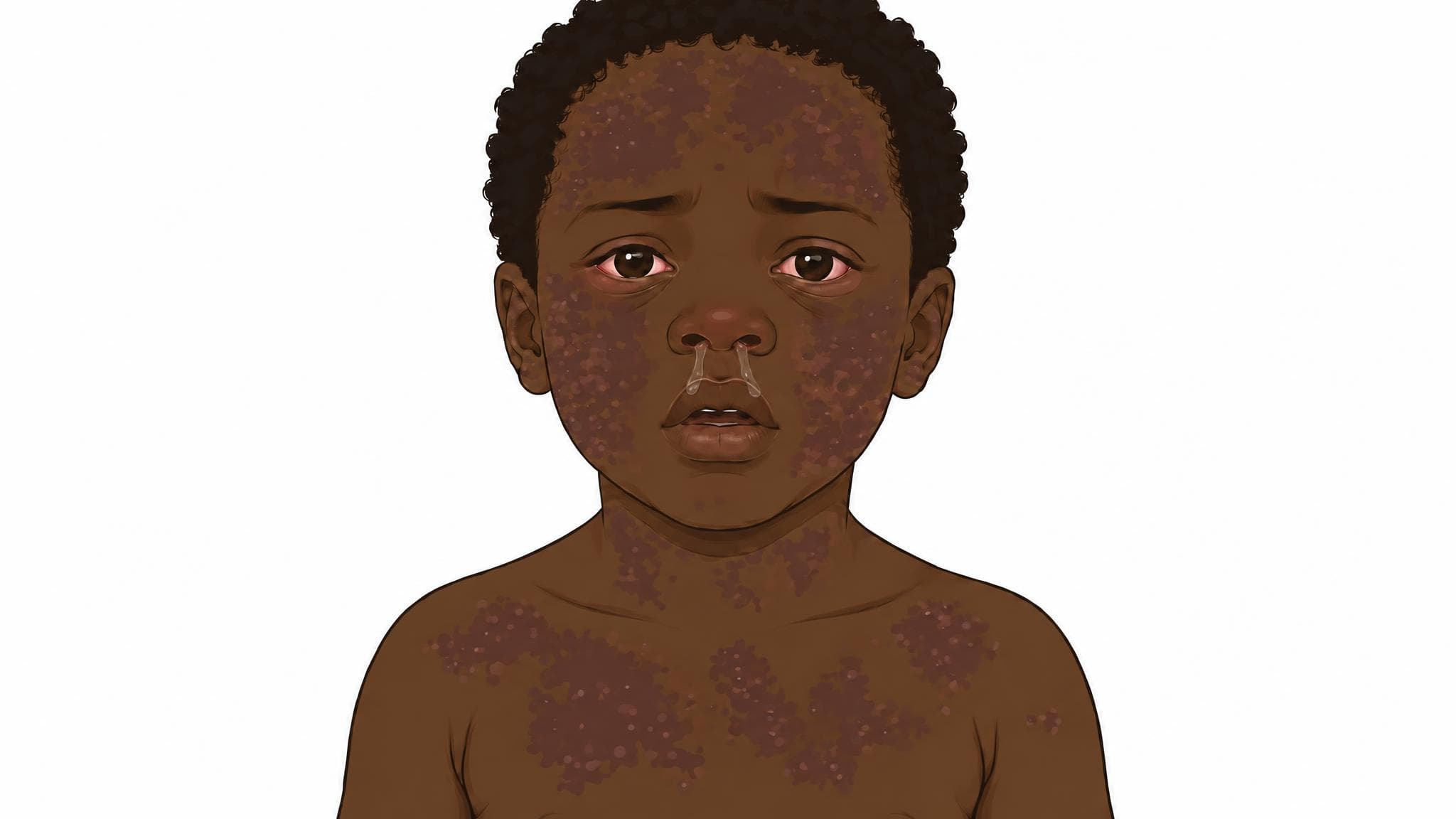
Measles is a highly contagious viral illness, most dangerous in young unvaccinated children (NHS; DermNet). On dark skin the rash can be subtle, so the pattern of the whole illness is more useful than the color of the spots.
The illness usually unfolds in this order:
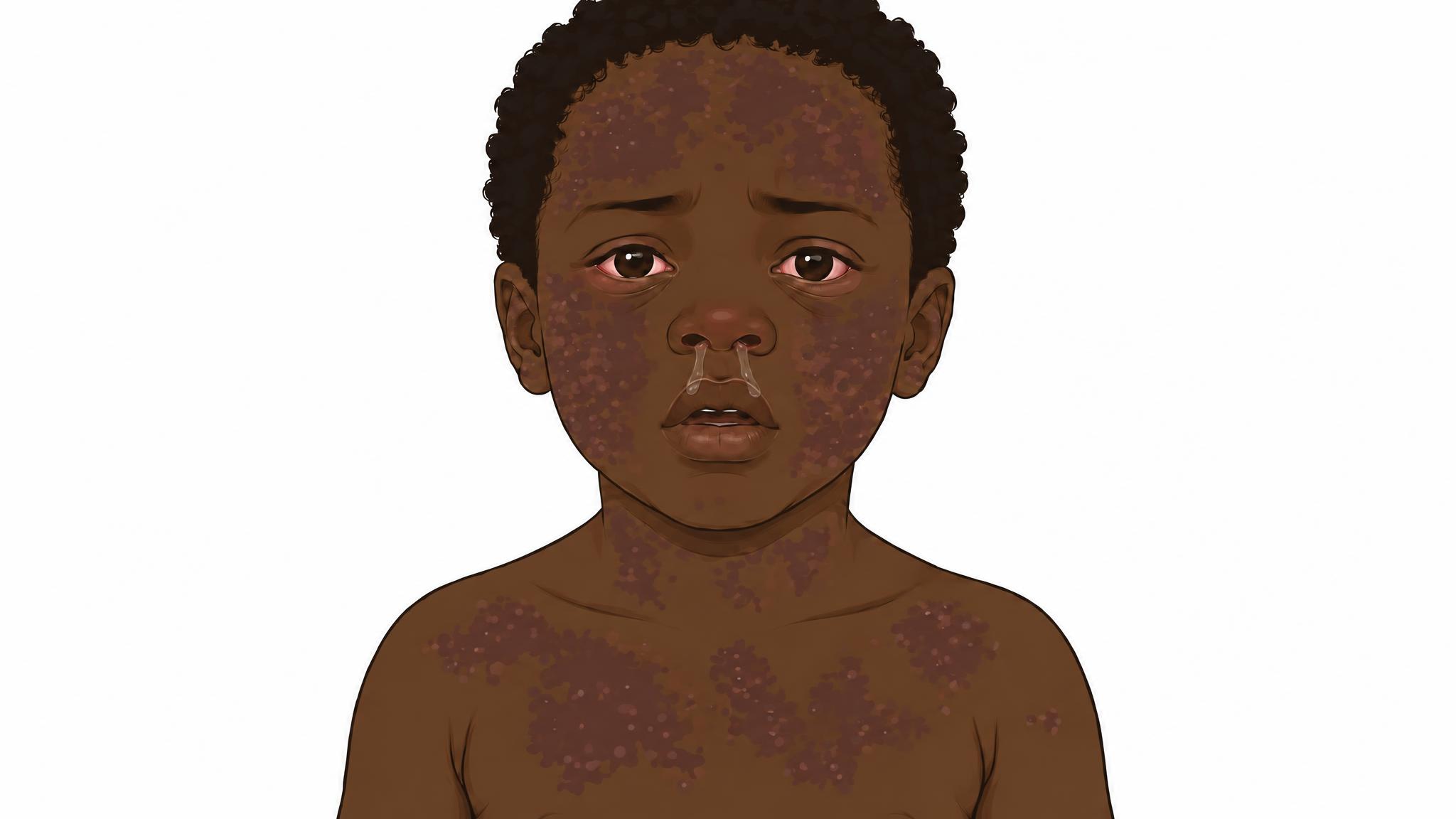
- High fever and the "three Cs": cough, coryza (a runny nose) and conjunctivitis (red, watery eyes).
- Koplik spots: tiny white spots on the inside of the cheeks, opposite the back teeth, about two to three days after symptoms start. Only measles causes them, and they are just as visible on dark skin as light skin.
- The rash, about three to five days after the first symptoms. It starts at the hairline and behind the ears, then spreads down the face, neck, trunk and limbs.
What the rash looks like on dark skin:
- Darker, blotchy patches in purple-brown rather than red, which merge together on the face and stay more separate lower down the body.
- Fine raised bumps and a rough texture you can often feel more easily than you can see.
- No blisters. Measles spots are flat or slightly raised. Fluid-filled blisters point toward chickenpox or another cause.
The CDC's measles photo page shows the rash and Koplik spots in clinical photographs.
Henoch-Schonlein Purpura (HSP) on Dark Skin
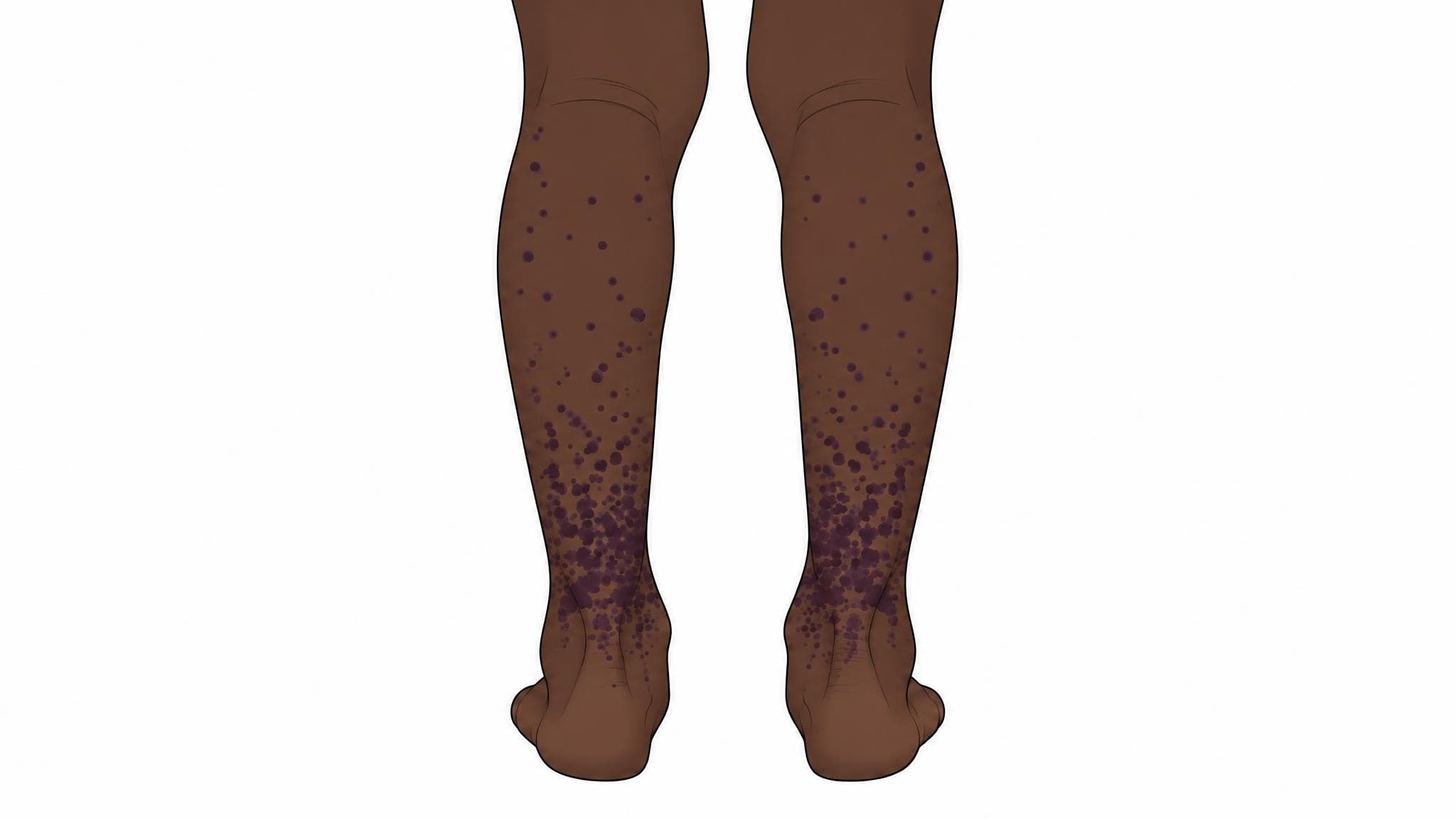
Henoch-Schonlein purpura (Henoch-Schönlein purpura, now also called IgA vasculitis) is inflammation of the small blood vessels. It is the most common vasculitis in children, and most cases occur between the ages of 3 and 10, often after a throat or chest infection (NHS).
What it looks like on dark skin:
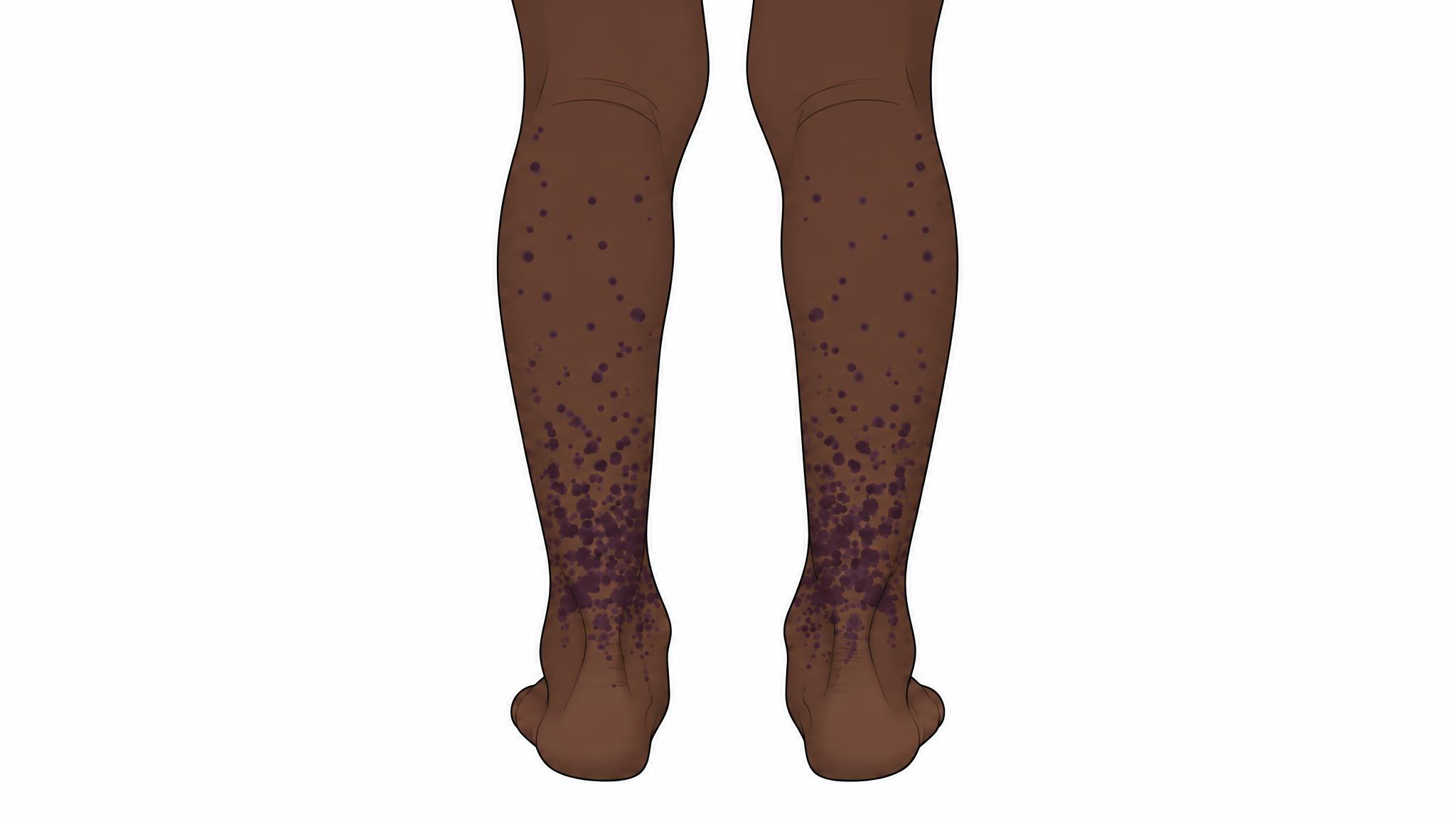
- Raised spots you can feel. The rash is "palpable purpura": small bumps that are slightly raised, not just flat discoloration. On dark skin, feeling for them is often the fastest way to find them.
- Dark purple, deep brown or nearly black rather than red or bright purple.
- Both legs, gravity-dependent. Spots cluster on the lower legs, ankles and buttocks, on both sides of the body.
- Doesn't fade when pressed. The spots are bleeding under the skin, so they don't blanch.
Other features to look for: joint pain and swelling (often knees and ankles), tummy pain, and kidney involvement. Because kidney problems can develop weeks later, children with HSP usually need repeat urine and blood pressure checks for several months. The Mayo Clinic's HSP overview covers the symptoms and follow-up in more detail.
Skin Conditions in Adults
Shingles on Black Skin
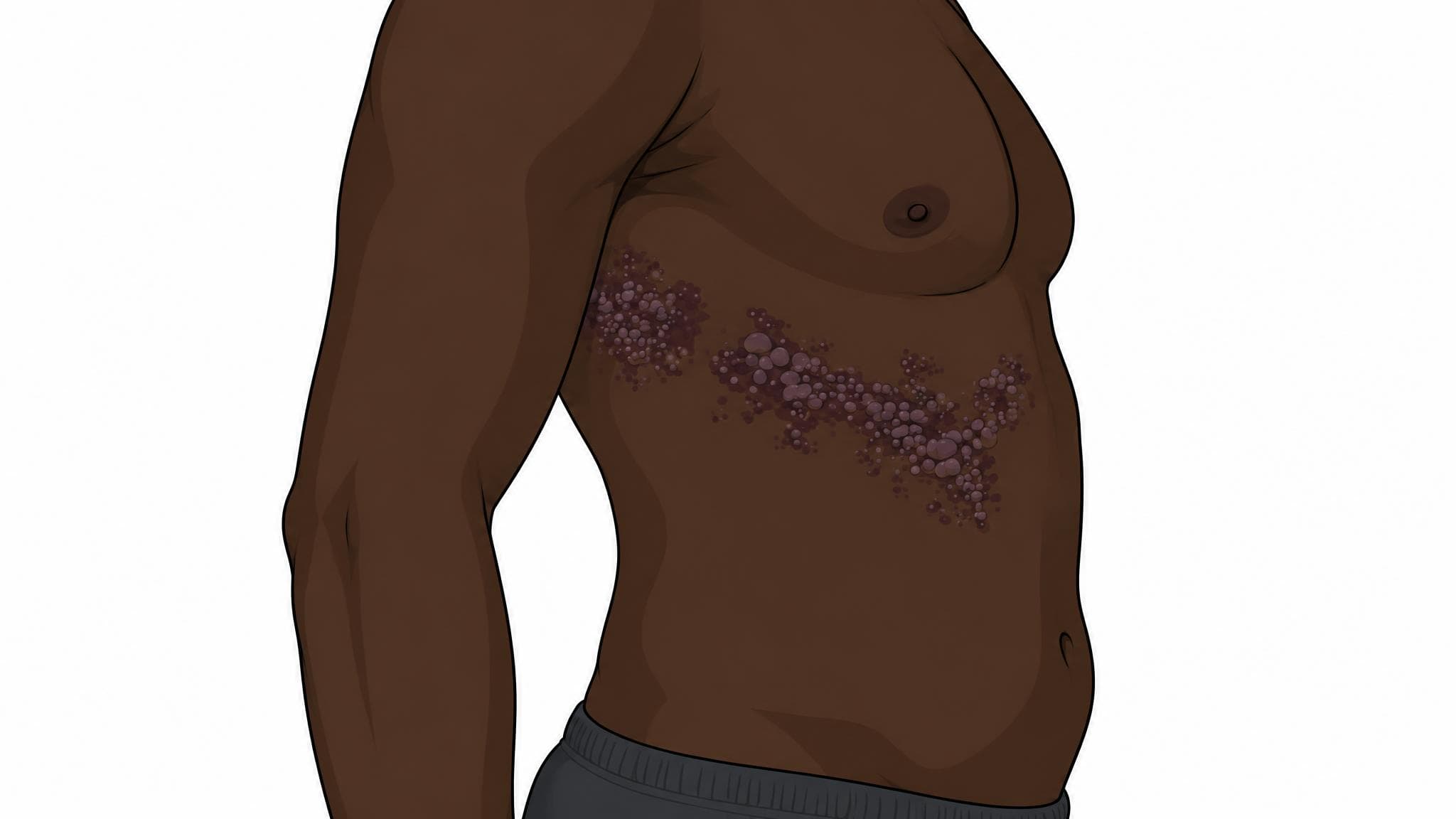
Shingles (herpes zoster) is a reactivation of the chickenpox virus, which stays dormant in nerve roots after the original infection. It is mainly a condition of adults over 50 and of people with weakened immune systems (NHS; DermNet). Black people get shingles too; a common myth says otherwise, but anyone who has had chickenpox can develop it.
What it looks like on dark skin:
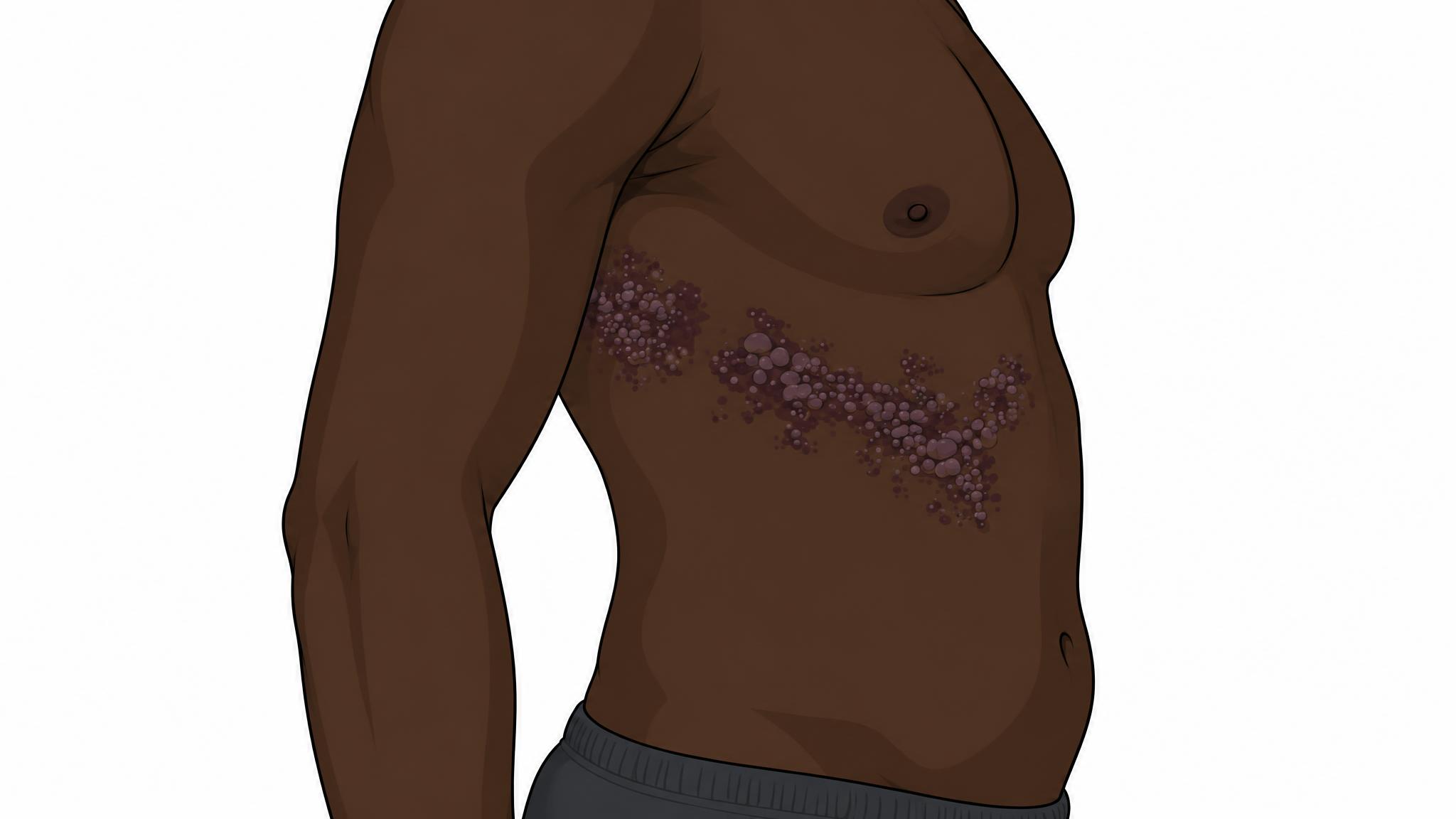
- One side, one band. The rash follows a single dermatome, the strip of skin supplied by one nerve. On the trunk it wraps from the spine around toward the front of the chest or belly and stops at the midline.
- Grouped blisters on a dark base. Clusters of small fluid-filled blisters sit on skin that looks dark violet, purple-brown or grey rather than red.
- Pain first. Burning, tingling or sharp pain in the area often starts one to five days before any rash. Early shingles on black skin may show only slightly darker, swollen or bumpy skin in that band.
- Lasting marks. Darker or lighter patches can persist long after the blisters heal.
Skin Sloughing on Dark Skin
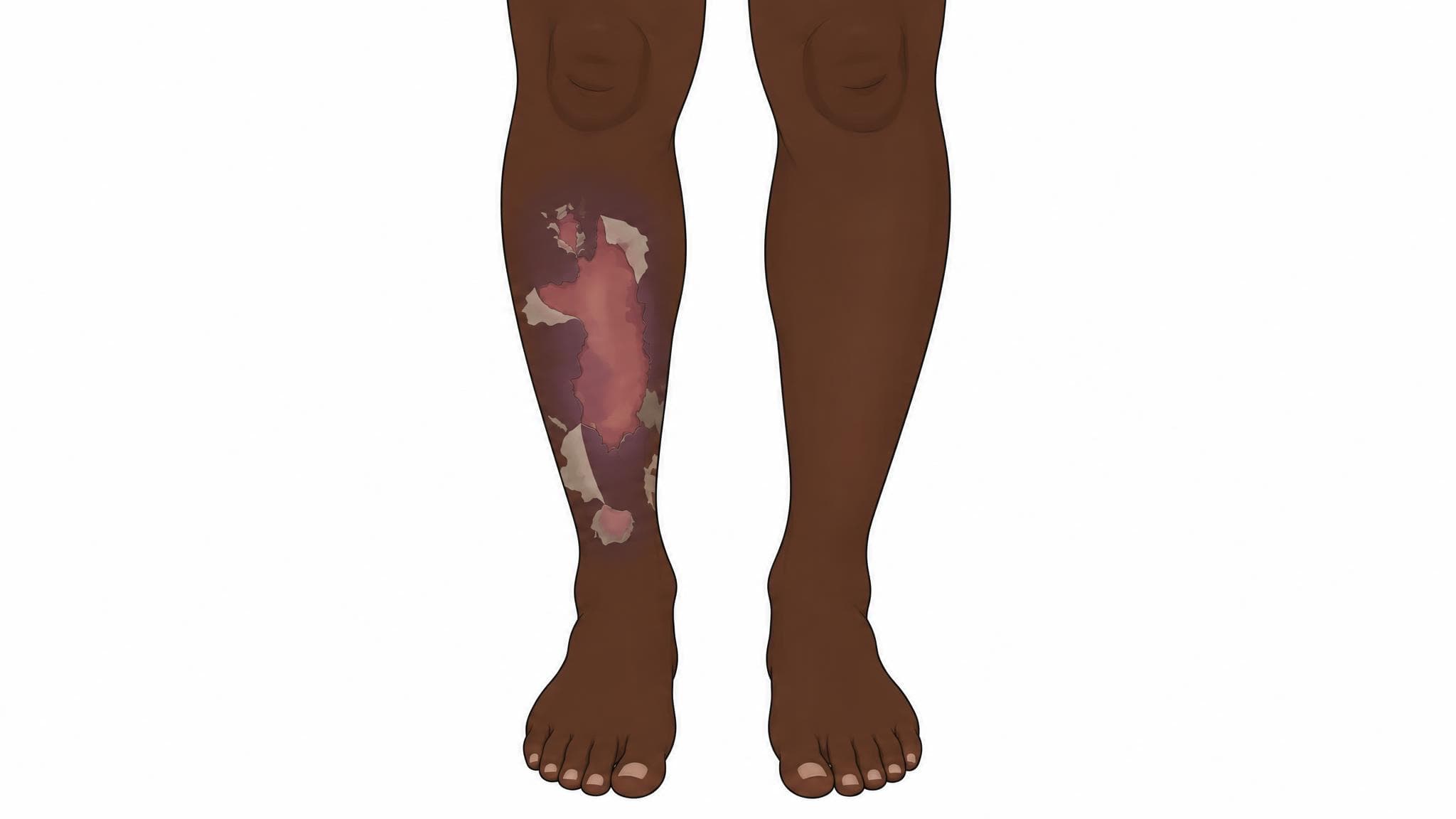
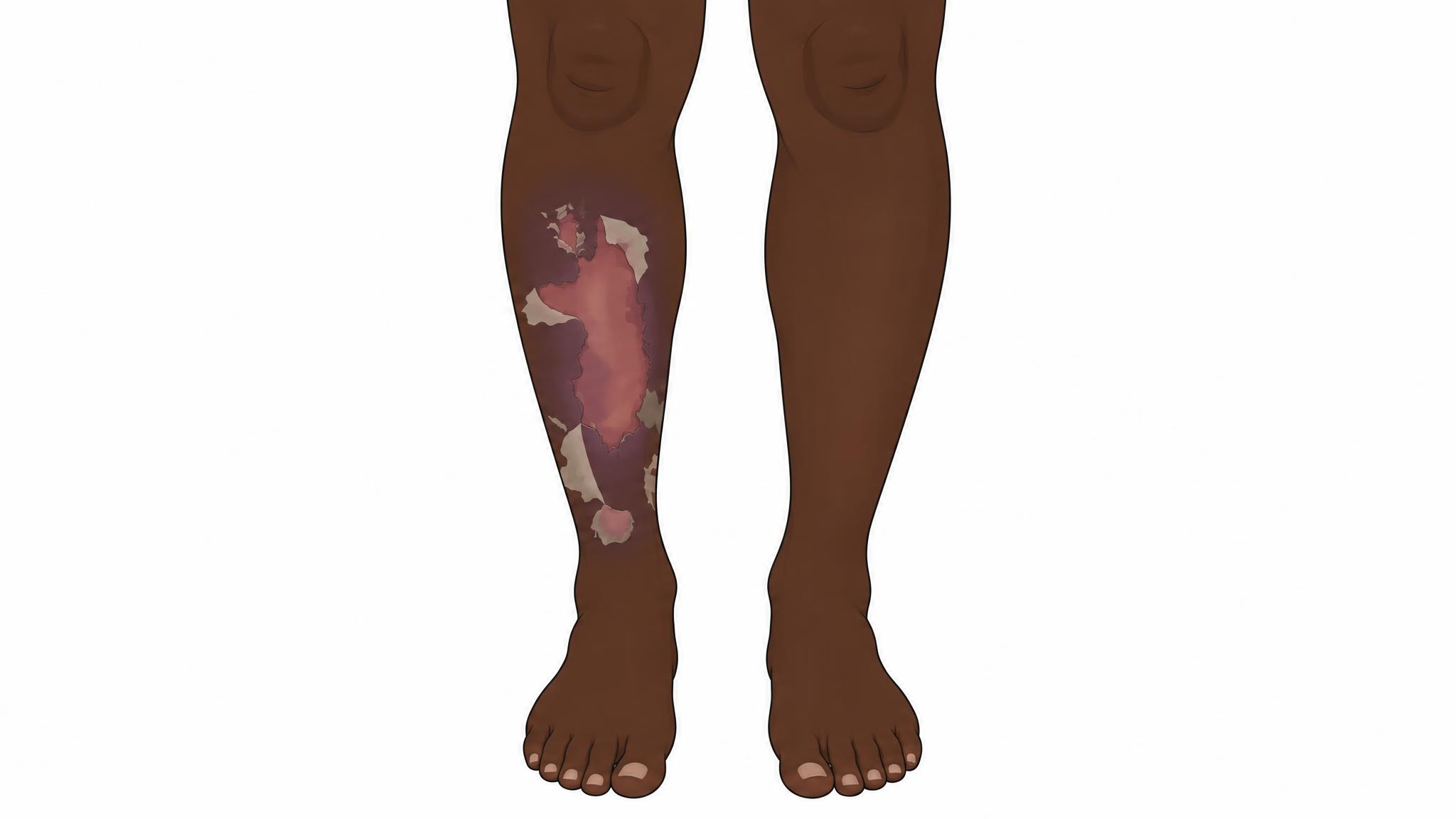
Skin sloughing means the outer layer of skin (the epidermis) separating and peeling away from the layer beneath (the dermis). It is a sign, not a diagnosis, and the cause decides how urgent it is.
What it looks like on dark skin: the detached skin forms thin, wrinkled, pale grey or white flaps. Where it has come away, the exposed dermis is moist and pink to red, clearly lighter than the surrounding intact skin. That contrast often makes sloughing easier to see on dark skin than early redness.
Common causes include:
- Burns, including scalds and friction burns.
- Friction, shear and pressure injuries, for example in people who are bedbound or who use a wheelchair.
- Severe drug reactions such as Stevens-Johnson syndrome and toxic epidermal necrolysis, which also cause blistering, painful skin and sores in the mouth and eyes. These are emergencies.
- Staphylococcal scalded skin syndrome, a toxin-driven infection mostly seen in young children.
- Fragile, thin skin in older adults or with long-term steroid use.
Two points are worth knowing for anyone documenting skin damage on dark skin. First, the early stage of a pressure injury is easy to miss because the skin may not look red or blanch; clinicians look for a purple, blue or darker area that feels warmer, firmer or softer than the skin around it (NHS). Second, "slough" means something different in wound care: the soft yellow or grey-white dead tissue in a wound bed, which is a separate finding from sloughing epidermis.
Sources
- NHS. Chickenpox.
- DermNet. Chickenpox.
- NHS. Measles.
- DermNet. Measles.
- Centers for Disease Control and Prevention. Measles photos.
- NHS. Henoch-Schonlein purpura (HSP).
- Mayo Clinic. Henoch-Schonlein purpura: symptoms and causes.
- NHS. Meningitis.
- NHS. Shingles.
- DermNet. Herpes zoster.
- American Academy of Dermatology. Shingles: signs and symptoms.
- DermNet. Stevens-Johnson syndrome and toxic epidermal necrolysis.
- DermNet. Staphylococcal scalded skin syndrome.
- NHS. Pressure ulcers (pressure sores).
- Mukwende M, Tamony P, Turner M. Mind the Gap: a handbook of clinical signs in Black and Brown skin. St George's, University of London.
About These Illustrations
These are Natomy medical illustrations, drawn specifically to show each condition on Black and brown skin and checked for medical accuracy against clinical descriptions and reference photographs. They are free to download for teaching, patient education and presentations using the button above each image.
If you need medical illustrations that show conditions accurately across skin tones, for patient handouts, lectures or case exhibits, visit Natomy to create your own.
FAQ
Can Black people get chickenpox?+
Yes. Chickenpox affects people of every skin color. On dark skin the spots sit on a purple or dark brown base rather than a red one, which is why it can look unfamiliar next to textbook photos.
What does chickenpox look like on Black skin?+
Small raised bumps, clear or greyish fluid-filled blisters and dark scabs, all present at once, concentrated on the chest, back and belly. The inflammation around each spot looks purple or dark brown.
What does measles look like on dark skin?+
Darker, blotchy patches that start at the hairline and behind the ears, merge together on the face and spread down the body. The rash often feels rough and slightly raised. Red, watery eyes, a runny nose and Koplik spots inside the cheeks are strong clues.
Do Black people get shingles?+
Yes. Anyone who has had chickenpox can develop shingles later in life. On dark skin it appears as a band of grouped blisters on a dark violet or purple-brown base, on one side of the body only.
What does early stage shingles look like on Black skin?+
Often very little at first: pain, burning or tingling in a strip on one side of the body, followed by slightly darker, swollen or bumpy skin in that strip before the blisters form.
Ready to create your own medical illustrations?
Upload a clinical photo and generate a professional illustration in seconds.
Try Natomy →