Abrasion: Types, Degrees, Healing & Scarring
An abrasion is a scrape that rubs off the top layer of skin. Learn the degrees, how it heals and when it scars. See it illustrated layer by layer.
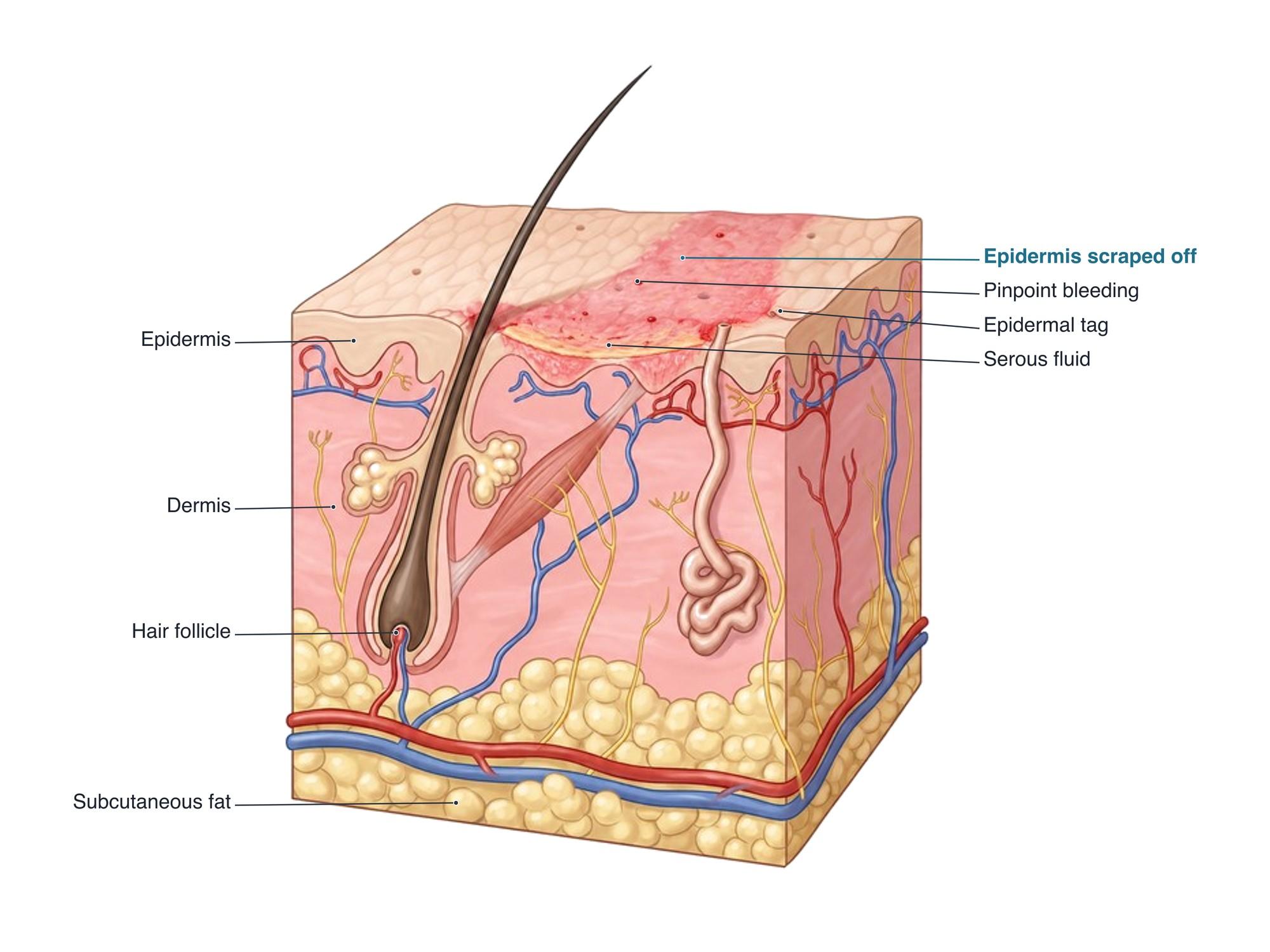
An abrasion is a scrape. Friction against a rough surface rubs away the top layer of skin, the epidermis. Deeper abrasions also remove part or all of the dermis, the thicker layer below. Most abrasions are shallow and heal on their own in one to two weeks. Deep or dirty abrasions can scar, become infected, or leave dark specks of embedded dirt. The figure above shows a partial-thickness abrasion, with intact skin at its edge for comparison.
The anatomy
Skin has three layers. The epidermis is the thin outer layer of cells. It has no blood vessels of its own. Below it is the dermis, a tough layer of collagen with blood vessels, nerves, hair follicles and sweat glands. The top of the dermis rises in small ridges called dermal papillae. Each papilla holds a tiny loop of capillaries. Under the dermis is the subcutaneous fat, also called the hypodermis.
This layout explains how a scrape looks. When only the epidermis is gone, the wound weeps clear fluid but barely bleeds. When the scrape reaches the papillae, it shows many tiny red dots. Each dot is a torn capillary loop.
Degrees of abrasion
Doctors often grade abrasions by depth, much like burns.
| Degree | Layers removed | What it looks like | Usual healing |
|---|---|---|---|
| First degree (superficial) | Epidermis only | Pink, moist, little or no bleeding | About 1 to 2 weeks, no scar |
| Second degree (partial thickness) | Epidermis and part of the dermis | Raw red base, pinpoint bleeding, oozing | About 2 to 3 weeks, scar possible |
| Third degree (full thickness) | All of the skin, into the fat or deeper | Yellow fat or deeper tissue visible | Weeks to months, often a skin graft |
Forensic doctors also describe abrasions by how they formed. A scratch is a narrow line. A graze is a broad scrape made by sliding. An imprint or patterned abrasion copies the object that pressed on the skin, such as a tire tread or a seatbelt edge.
Causes
Abrasions come from skin sliding against something rough, or something rough sliding against skin.
- Falls onto pavement, gravel or carpet
- Motorcycle, bicycle and scooter crashes (road rash)
- Car crashes, from seatbelts, airbags and broken glass
- Sports, especially on artificial turf
- Workplace accidents with machinery or rough surfaces
- Assaults and dog bites, where teeth or nails drag across the skin
The direction of the force often leaves a clue. Torn tags of epidermis pile up at the end of the scrape the object moved toward. That is why the figure shows a small tag at one edge.
Symptoms
- A raw, red or pink patch of skin
- Stinging or burning pain, often worse than the depth suggests, because nerve endings in the dermis are exposed
- Pinpoint bleeding that stops on its own
- Clear or yellow fluid oozing from the surface
- Dirt, gravel or grit in the wound
- A scab forming over a few days
Diagnosis
Diagnosis is made by looking at the wound. The doctor checks its size, depth and location. They look for embedded debris, which must come out to prevent infection and tattooing. They check movement and feeling beyond the wound to rule out a deeper injury to a tendon, nerve or joint. They also ask about tetanus shots.
For a legal record, the wound is measured and photographed with a ruler beside it. The pattern and direction of the scrape are written down.
Treatment
- Clean it. Rinse with plenty of clean water. Mild soap is fine around the wound. Remove all dirt, often with a soft brush after numbing for road rash.
- Stop bleeding. Gentle pressure is usually enough.
- Keep it moist and covered. A thin layer of petroleum jelly under a non-stick dressing speeds healing.
- Prevent tetanus. A booster is given if it is due.
- Watch for infection. Antibiotics are only needed if signs of infection appear.
Full-thickness abrasions may need surgical cleaning (debridement, which means removing dead tissue and debris) and a skin graft. Very large abrasions are sometimes treated in a burn unit.
Recovery
New skin grows in from two places. It spreads in from the wound edges. In partial-thickness abrasions, it also grows up from the hair follicles and sweat glands left in the dermis. That is why shallow scrapes heal fast and evenly. Full-thickness abrasions have lost those structures, so they can only heal from the edges.
Healed skin often stays pink or dark for months. Sun protection helps the color fade evenly.
Complications
- Infection, with spreading redness, warmth, pus or fever
- Traumatic tattooing, permanent dark specks from dirt or asphalt left in the dermis
- Scarring, including raised hypertrophic scars and keloids after deep abrasions
- Pigment changes, either darker or lighter skin
- Contracture, tightening of a scar over a joint that limits movement
An abrasion is also a surface sign. It can sit over a deeper contusion, a laceration, or a more serious soft tissue injury such as an avulsion or a degloving injury.
How abrasion is shown in a personal injury case
Abrasions are among the most common injuries in car, motorcycle, bicycle and premises claims. Photos show the surface, but they do not show depth. A medical illustration shows which skin layers were lost, why the wound bled and wept, and why a deep scrape leaves a scar. The location and direction of an abrasion can also help show how a crash or fall happened, such as a seatbelt abrasion across the chest. For how these images are used at trial, see demonstrative evidence and medical legal illustration.
FAQ
How should you treat an abrasion?+
Rinse it with clean running water and mild soap, and remove any dirt or grit. Stop light bleeding with gentle pressure. Cover it with a thin layer of petroleum jelly and a non-stick dressing, and change the dressing daily. A moist, covered wound heals faster and scars less than one left to dry into a thick scab.
What is another name for an abrasion?+
A scrape or a graze. Large abrasions from a fall off a motorcycle or bicycle are often called road rash. Doctors may also call a deep one a partial-thickness or full-thickness skin loss.
Will an abrasion leave a scar?+
A superficial abrasion that only removes the epidermis usually heals without a scar. One that reaches deep into the dermis can leave a scar, a change in skin color, or both. Dirt left in the wound can leave a permanent dark mark called traumatic tattooing.
How long does an abrasion take to heal?+
A superficial scrape usually heals in about 1 to 2 weeks. A deeper partial-thickness abrasion often takes 2 to 3 weeks. A full-thickness abrasion heals slowly from the edges and may need a skin graft.
What is the difference between an abrasion and a laceration?+
An abrasion is a scrape. Friction rubs away the surface layers of skin over an area. A laceration is a tear or cut through the skin, with edges that can be pulled apart. Lacerations often need stitches, while most abrasions do not.
When should an abrasion be seen by a doctor?+
Seek care when the scrape is large or deep, when dirt or gravel cannot be cleaned out, when it is on the face, hands or over a joint, or when you see spreading redness, pus, fever or red streaks. A tetanus booster may be needed if the last one was more than 5 years ago for a dirty wound.
Why does an abrasion ooze clear or yellow fluid?+
That fluid is serous fluid. It is plasma that leaks from small vessels in the exposed dermis. It is normal in the first days and helps form the scab. Thick, cloudy or foul-smelling drainage can mean infection.
Need this illustration for a patient or a case?
Describe the injury or upload a scan and get a clear, labeled medical illustration for a consult, a chart or a case exhibit.
Try Natomy →