Pelvic Congestion Syndrome: Causes & Treatment
Pelvic congestion syndrome is chronic pelvic pain from enlarged, refluxing pelvic veins. Learn the causes and see it illustrated beside normal anatomy.
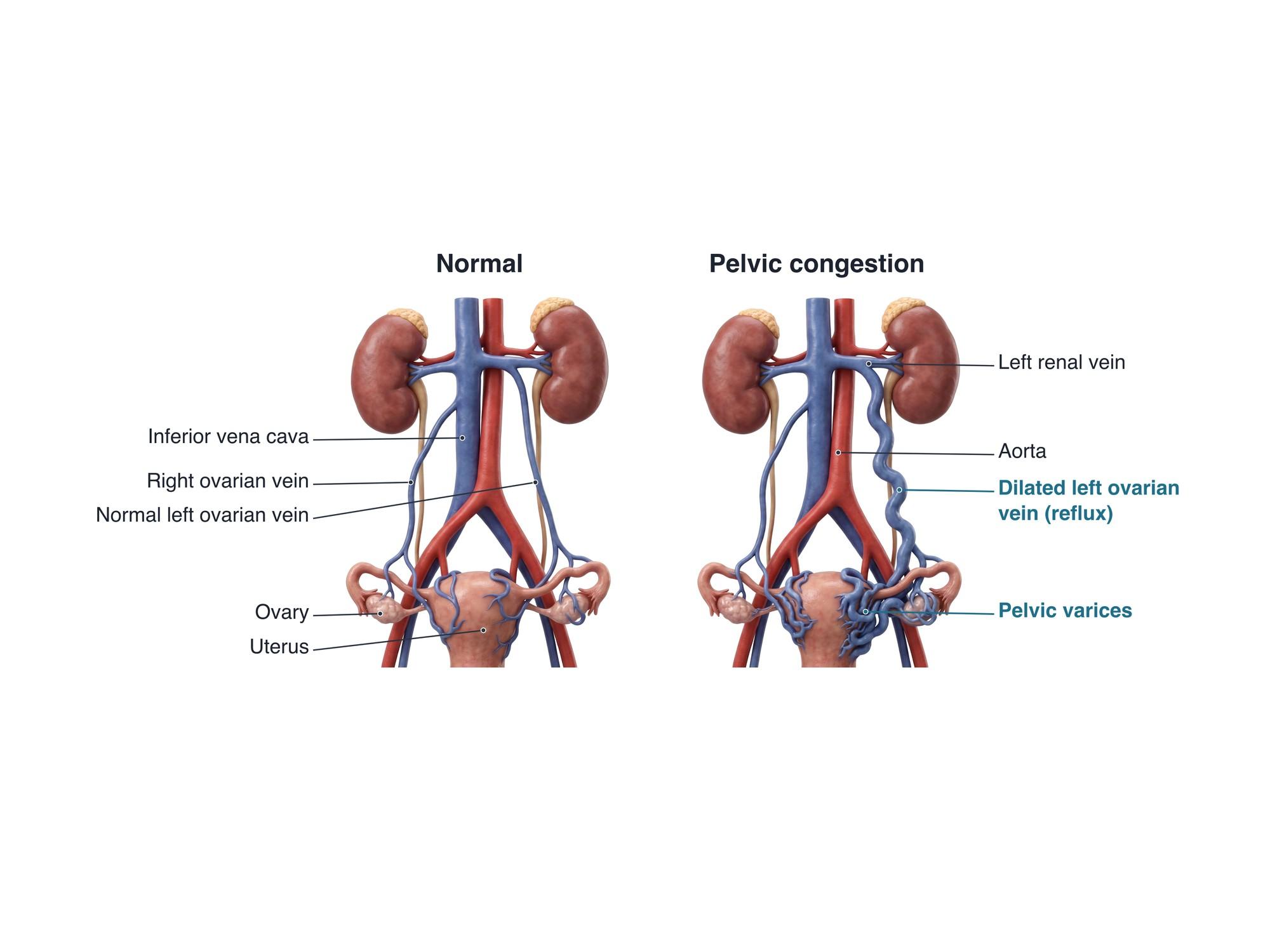
Pelvic congestion syndrome is long-lasting pelvic pain caused by enlarged, varicose veins in the pelvis. The valves in an ovarian vein fail, so blood flows backward into the pelvis instead of up toward the heart. The pelvic veins stretch and pool with blood, much like varicose veins in the legs. It mostly affects women between 20 and 50 who have had children. The illustration above shows normal pelvic veins beside a dilated left ovarian vein with pelvic varices.
The anatomy
Each ovary drains through an ovarian vein (also called a gonadal vein). The right ovarian vein drains straight into the inferior vena cava, the large vein that returns blood from the lower body to the heart. The left ovarian vein drains into the left renal vein, the vein from the left kidney. The left renal vein crosses in front of the aorta to reach the vena cava. Small valves inside the ovarian veins keep blood moving upward. Around the uterus and ovaries, the veins form connected networks called plexuses. For the normal organs, see female abdomen and pelvis anatomy.
The left ovarian vein is longer and joins the renal vein at a right angle. That is one reason reflux is more common on the left.
Causes
- Pregnancy. The main risk factor. Pregnancy widens the pelvic veins, raises blood volume, and adds pressure from the growing uterus. The veins may not shrink back afterward, and risk rises with each pregnancy.
- Valve failure in the ovarian vein. The valves are weak or missing, so blood refluxes down the vein.
- Hormones. Estrogen relaxes vein walls, which is why symptoms usually ease after menopause.
- Vein compression. The left renal vein can be squeezed between the aorta and the superior mesenteric artery (nutcracker syndrome). The left common iliac vein can be pressed by the right common iliac artery (May-Thurner syndrome). Both raise pressure in the pelvic veins.
Symptoms
- Dull, aching or heavy pelvic pain lasting six months or more
- Pain worse after standing or walking, and at the end of the day
- Pain during or after sex (dyspareunia)
- Pain that is worse just before or during a period
- Relief when lying down
- Varicose veins on the vulva, buttocks or upper thighs
- Lower back ache, and sometimes an urgent need to urinate
Diagnosis
There is no single blood test. Doctors first rule out other causes of pelvic pain, such as endometriosis, fibroids or infection.
- Doppler ultrasound. Transvaginal ultrasound shows dilated veins around the uterus and ovaries (often wider than about 5 mm) and backward flow in them.
- CT or MR venography. Cross-sectional scans with contrast show the enlarged ovarian vein and pelvic varices, and can show compression of the left renal or iliac vein.
- Catheter venography. Dye is injected directly into the ovarian vein. It shows the reflux clearly and is usually done at the start of embolization.
Varices can be seen in women without pain, so the diagnosis rests on the symptoms and the imaging together.
Treatment
- Ovarian vein embolization. The main treatment. Through a small needle puncture in the neck or groin, a catheter is guided into the faulty ovarian vein. The vein is closed with metal coils, a sclerosing foam (a chemical that seals the vein), or both. It is a same-day procedure, and most women report less pain in the following months.
- Treating compression. When nutcracker or May-Thurner syndrome is the cause, a stent or vein surgery may be needed instead.
- Medicines. Hormonal treatments that lower estrogen, and pain medicines, help some women.
- Surgery. Tying off the ovarian vein, or removing the uterus and ovaries, was used before embolization and is now rarely needed.
Recovery
After embolization most women go home the same day. They return to normal activity within a few days. Mild pelvic or back pain for a few days is common. Improvement in the chronic pain usually builds over several weeks to months. Some women need a second procedure if other veins also reflux.
Complications
- Chronic pain that limits work, exercise and sex
- Coil migration, where an embolization coil moves out of place, rare but serious
- Vein perforation or a reaction to the contrast dye during the procedure
- Recurrence when other pelvic veins later reflux
- Pelvic vein thrombosis, a clot in a slow-flowing pelvic vein, uncommon
How pelvic congestion syndrome is shown in a personal injury case
Pelvic congestion syndrome is not usually caused by an accident. It does appear in medical malpractice and disability claims. Examples include a delayed diagnosis after years of pelvic pain, or a complication of embolization such as a migrated coil. It can also matter when the defense argues that pelvic pain came from a pre-existing vein condition rather than an injury. A side-by-side illustration of normal veins and the patient's refluxing ovarian vein helps a jury see where the blood pools and why standing makes it worse. For how these images are used at trial, see demonstrative evidence and medical legal illustration.
Related pages
FAQ
What causes pelvic congestion syndrome?+
The valves in the ovarian veins stop working, so blood flows backward (reflux) into the pelvis instead of up toward the heart. The pelvic veins stretch and become varicose. Pregnancy is the main risk factor, because it widens the veins and adds pressure. Compression of the left renal vein (nutcracker) or the left iliac vein can also cause it.
What does pelvic congestion pain feel like?+
Most women describe a dull, aching or heavy pain low in the pelvis. It often lasts six months or more. It usually gets worse after standing for a long time, at the end of the day, during or after sex, and before a period. Lying down usually eases it.
How is pelvic congestion syndrome diagnosed?+
It is often missed on a routine pelvic exam. Doctors look for dilated pelvic veins on transvaginal or abdominal Doppler ultrasound, CT or MR venography. Venography, an X-ray study with contrast dye injected into the veins, confirms reflux and is usually done at the same time as treatment.
Can pelvic congestion syndrome go away on its own?+
Symptoms often ease after menopause, when estrogen levels fall. Before then the enlarged veins usually stay. Treatment is aimed at the pain, and many women improve a lot with embolization.
How is pelvic congestion syndrome treated?+
The most common treatment is ovarian vein embolization. An interventional radiologist threads a thin catheter into the faulty vein and blocks it with coils or a sclerosing foam. Hormonal medicines and pain medicine help some women. Surgery to tie off the veins or remove the uterus and ovaries is now rarely needed.
Is pelvic congestion syndrome linked to ovarian cancer?+
No. Pelvic congestion syndrome is a vein problem and does not turn into cancer. Pelvic pain should still be checked by a doctor, because other conditions can cause similar pain.
Can pelvic congestion syndrome cause blood clots?+
The enlarged veins have slow flow, and a clot in a pelvic vein can happen, but it is uncommon. Embolization coils can rarely move out of place. Sudden leg swelling or chest pain needs urgent care.
Can men get pelvic venous congestion?+
The same reflux in men happens in the testicular vein and causes a varicocele, swollen veins in the scrotum. Like pelvic congestion syndrome, it is more common on the left side.
Need this illustration for a patient or a case?
Describe the injury or upload a scan and get a clear, labeled medical illustration for a consult, a chart or a case exhibit.
Try Natomy →